Jump to content

Subforums

  1. The EOSHD YouTube Channel   (23,198 visits to this link)

    Follow Andrew Reid on YouTube

17,280 topics in this forum

    • 9.1k replies
    • 2.6m views
  1. Lenses 1 2 3 4 289

    • 5.8k replies
    • 1.8m views
    • 1.2k replies
    • 456.4k views
    • 0 replies
    • 1.4k views
    • 700 replies
    • 302.2k views
  2. Panasonic GH6 1 2 3 4 88

    • 1.8k replies
    • 746.2k views
  3. The GX85 "Super-16" project

    • 4 replies
    • 153 views
    • 11 replies
    • 344 views
  4. Canon C80 coming soon 1 2 3 4

    • 71 replies
    • 33.5k views
    • 14 replies
    • 543 views
    • 19 replies
    • 1.4k views
    • 10 replies
    • 443 views
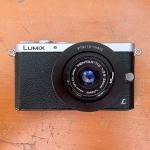
  5. LUMIX L10 - announced 1 2 3

    • 43 replies
    • 1.4k views
    • 559 replies
    • 256k views
    • 79 replies
    • 54.7k views
  6. C-mount lenses on smartphone 1 2

    • 26 replies
    • 19.2k views
    • 118 replies
    • 61.7k views
  7. DJI Pocket 3? 1 2 3 4 7

    • 125 replies
    • 55.8k views
  8. Smartphone Accessories

    • 3 replies
    • 1.7k views
    • 105 replies
    • 41.7k views
    • 17 replies
    • 1.7k views
    • 1 reply
    • 322 views
    • 15 replies
    • 787 views
    • 9 replies
    • 1k views
    • 0 replies
    • 452 views
    • 4 replies
    • 501 views
    • 10 replies
    • 1.2k views
    • 44 replies
    • 3k views
  9. Rushes

    • 1 reply
    • 354 views
    • 56 replies
    • 5.1k views
    • 1 reply
    • 453 views
    • 14 replies
    • 8.2k views
    • 1 reply
    • 413 views
    • 59 replies
    • 18.7k views
    • 32 replies
    • 6.1k views
  10. The Aesthetic 1 2 3 4 7

    • 122 replies
    • 24.5k views
    • 10 replies
    • 4.1k views
    • 5 replies
    • 788 views
  11. Nikon Zr is coming 1 2 3 4 24

    • 470 replies
    • 140.7k views
    • 8 replies
    • 901 views
  • Popular Contributors

  • Forum Statistics

    • Total Topics
      17.3k
    • Total Posts
      351.6k
  • Member Statistics

    • Total Members
      34,549
    • Most Online
      19,591

    Newest Member
    Saladaa
    Joined
  • Posts

    • Right. Recently I did some transfers from films for someone. Most were from the 1950s but some were 1960s and '70s. It's noticeable how the film stock improved. When they switched to Super 8 it was very much better having the larger area used for the image but it was more than that. Even the Regular 8 from the 1960s was better than earlier stocks. The collection came with the original boxes that were returned in the mail from the lab and it's the same stock and ASA, but manufactured 10 years later. Hope you're having fun figuring this out. I love this kind of thing.
    • My understanding was that Brandon literally helped make the genre with (what I like to call) "washing machine travel films" like Hong Kong Strong that are like you rolled and spun a camera through a city and then cut it with only match-cuts - they trigger my motion sickness pretty strongly and I literally can't watch them. However, people loved it and he got a bunch of TV appearances out of it: As previously said in the thread, he can make any camera from the last decade shine, and he has, and it's skill.  All true. What no-one else has said though, is that videos like this are film shoots.  They're not holidays, or someone filming while traveling (even slow travel).. These videos are researched, storyboarded, scheduled, and then shot on location with a cast (him and his GF, but often he recruits locals and will direct them like he's shooting a narrative) and crew (IIRC he's mentioned hiring people to fix, drive, translate, liaise, etc).  This is no secret, and his free BTS content shows this openly. I think he sits in a fascinating space that I don't see a lot of professionals operating in.  He shoots uncontrolled (and uncontrollable) situations, like markets and crowded public places, does so with talent and a shot list, but does so shooting relatively low-impact.   People shooting a travel doc will be shooting with talent in markets and in the streets but will have huge shoulder-rigs and will build up a little crowd of people who are just staring at the shoot and have to be choralled to keep them out of frame. People shooting relatively incognito in a crowd are mostly doing it without talent or a plan or shot-list.   Not a lot of people sit between those two scenarios, and even less will tell you how to go about doing it. I've paid a lot of attention to his BTS segments (which are excellent if you want to make videos like this) but as someone who travels for the enjoyment of it and shoots along the way, I can tell you that there is very little overlap between shooting while you travel and producing and shooting and editing a travel film.   I put myself on the email list for when he launched his course, and when it was released it was pretty pricey.  Probably good value as he obviously knows what he's doing, but too much for me considering the differences of our methods. Maybe it's an aesthetic thing, but his work looks dated to me now, including the Oppo piece.  I understand why he still shoots these things like this, because he's appeared on quite a number of videos like this that are posted on the manufacturers channel, rather than his own channel, so it's obviously how he keeps the lights on.  
    • I'm imagining that it will be lens-dependent too, as some lenses are built for sensors that are happy to detect light that hits the sensor at an angle, whereas others want the light to be coming from an angle more perpendicular to the sensor.  My understanding was that this is why some lenses vignette heavily on some cameras but not others, whereas some other lenses work fine across a wide range of sensors.
    • My film friend said that the edges were too sharp for S16, and gave me some examples of things printed on 2383 that look SUPER soft to me.   It makes me think that the look of film is really two looks: 1) the look of a neg scan (which is digital from then on) 2) the look of a negative printed to a print stock I wonder how much "film emulation" is actually emulating the first one.  I also wonder what look I'm going for.   It occurs to me that back in the day what we'd see on analog TV would be low-resolution film scans (having maybe 480 lines) but would have had semi-infinite horizontal resolution (bandwidth limited and all that I know) and would have had zero digital compression, so the grain would have been fully in-tact (and therefore loud and proud).  I suspect the aesthetics I absorbed (and are unconsciously referencing) would have been from music videos, sports videos, etc in the era of MTV (80s and 90s).  In this early time anyone with a low budget would be shooting on 16mm (or 8mm!) and often not the highest quality lenses or cleanest stocks etc.  I'm guessing I probably watched thousands of hours of pure-analog uncompressed 16mm or 8mm footage scanned and broadcast in SD, and those would have been quite DIY / experimental / creative etc, rather than the much more produced and formulaic outputs that came later on. Thanks! Like I said above, not targeting and specific pipeline, but I did calibrate the contrast on the first set of images from the GX85 to the DR of 2383, which was 5-6 stops in the linear range.   The goal is to get something that looks like it could have been shot on some unknown stock.  Realistically, this is a proxy for the images just not looking digital, and apart from trying to emulate VHS or Betamax, there aren't any other analog looks to draw from.  Plus, film did a ton of things that research says that are aesthetically pleasing, and I'm sure I also have some baked-in nostalgia or just acclimation to this look. Interesting you think of T-max, and think this is fine grain.  The grain on this is based on the 16mm preset in FLC, but modified to be softer.  More on this later. I looked around and found a few 8mm examples with high contrast, but most were much more faded-looking, even stuff that seems like it was shot recently. There's this video which has shots like this: or this one with shots like this: Thanks!  It's definitely more about training my eye to learn what I like rather than any sense of accuracy, however film has so many things that are desirable that there's so much overlap I couldn't do either one to any degree without also making huge progress in the other! The technique I'm using is to add the grain first, then soften the image.  This ensures that they have the same amount of softness and we're not dealing with these horrific combinations of sharp footage + soft grain, or the other way around.   The people I spoke with suggested that this tends to look a bit soft and so they either sharpen afterwards, or add a touch more grain on top.  These shots had a touch more grain on top. What I didn't do is match the grain to the image.  I added 16mm-sized grain to a sharp image, then softened that.  Maybe I should just add 65mm-sized grain so it matches the resolution of the image, and then adjust the amount and softening to match the stock. I definitely have more to test.  You're also right about moving grain vs frame grabs.  I'm reluctant to post video samples until I've worked out how much grain to force-feed into YT to get the right amount of it out again.  Definitely all considerations for a full-historic-emulation.   I'm not really chasing historical accuracy in the sense that you're talking about, although I might be chasing some specific something I saw once and loved, which is possible (or quite likely) considering I watched a ton of very creative and edgy films growing up, including a lot of early music videos and skateboarding videos, which are much more likely to have been hand-held and with the camera being used to express attitude rather than the restrained professionalism of documentary or narrative cinematographers. I'm still figuring this out, but I suspect that what I have in mind is a feeling that I'm chasing, or perhaps an attitude, and I'm trying to get closer to that on every level at once.  The colour and tone, the texture, the movement (motion cadence?), the compositions and camera movement, the choice of subjects, then in the edit the pacing and rhythm, the structure of shot combinations and overall arc, as well as the music which I plan to write as well.  It's the whole vertical stack from tech specs to final feeling and emotional aftertaste of the edit. I have always liked street photography, and for this project (which is sort of a subset of my Night Cinema project) it's really shooting high-attitude moving street images.  The gold standard for this is Illkoncept, who shoots travel videos on digital but has also shot some videos on his 16mm Bolex:   From what I understand the Bolex doesn't have that many lenses and the ones available are often very soft, so this 16mm footage is a lot softer than other examples. This is in contrast to a setup like this, where they have used Vision3 50D and shot on the Laowa Nanomorphs and scanned at 6.5K, so this is sort-of an example of an image pipeline where the negative itself is the limiting factor: The other thing I've heard is that over the decades they improved the film itself, and what I was lead to believe was that it doubled (or more) in sharpness, so late 8mm film matched early 16mm, late 16mm matched early 35mm, and late 35mm matched 65/70mm.   Great discussion..  it's forcing me to think about all kinds of things I hadn't really considered, which is the whole point, plus the result I'm getting are improving with each iteration.
    • The sensor isn't all one flat plane, there are filters in front of the photosensors and the dust is on top of the outermost filter surface. It definitely shows up more clearly at small apertures than wide open.
×
×
  • Create New...