


Danyyyel
-
Posts
818 -
Joined
-
Last visited
Content Type
Profiles
Forums
Articles
Posts posted by Danyyyel
-
-
23 hours ago, stephen said:
Nikon ZR vs Arri Alexa Mini Color (R3D NE, N-Log, Log C)
https://www.youtube.com/watch?v=mgJGK3YpIx0I always said how the Nikon colors were close to the Alexa one. I used to work as an on set photographer on movie shooting including Netflix in my country. And many times I had to match them to the Movie own colors that were mostly shots on Alexas. And they were damn close, as this test shows. I did not do video to video comparison, but Nikon colors have always been so good.
-
First time I see the reference to Fake RAw!!! Since when does the ZR has fake raw, in fact it is as RAW as it can be with zero noise reduction etc. I know the ZR does have its quirks, as lacking some good exposure tool for now in software and micro hdmi in hardware. But the RAW and image quality is their.
-
-
29 minutes ago, ND64 said:
Suddenly Gerald finds no problem in DR and 10 stops is good enough to declare "cameras peaked".

I saw one part when he was saying that it was a little annoying that they did not get exact time remaining for recording. The same guy said that it was totally unacceptable a cine camera did not give exact time remaining on the card. OK, it is written cine, but it is still a 2200 USD camera, and h265 by its nature is variable bit rate. Simple example on a sitting interview with a static background and the bitrate goes a lot lower, while have dynamic shot with lots of movement or movement in the shots and the bitrate goes up drastically.
The just couldn't find any thing to say positive at the camera except about Nikon color and his luts, that he sell!!!
-
28 minutes ago, ND64 said:
Suddenly Gerald finds no problem in DR and 10 stops is good enough to declare "cameras peaked".
14 minutes ago, Davide DB said:Maybe with the next camera, he will retire, thank God.
Don't worry, until Nikon is selling cameras, he will be reviewing... I mean criticizing them.
-
7 hours ago, ND64 said:
People fight over who has closer DR and latitude to Alexa 35, then apply a LUT that drops the DR to 6 stops to look like Heat 1995.
The thing is, not many people use the Alexa 35, those who know will get fantastic result. DR is the one thing that was missing from digital in the filmlook as film already had great DR. Resolution for sure is just too much. I don't want to shoot more than 4k, or at worst 6k to reframe a little bit. But it is already stretching it.
-
A couple of years ago, I was saying on Forums that Arri would fail, and people were calling me stupid. Ohhh its image is so special, etc etc how peasants could understand this. But the problem is you can't sell a lot of 70-100 000 usd cameras, the market is what it is, even more so when you have very capable cameras coming for much less. You reach a level where that 5% more cannot justify the 10, 20x the price. Before you had the highend market where camera cost/rent is peanuts compared to the overall cost, but that secondary market, the people that used to rent those highend cameras, can now buy a camera that will do 90% of what they need, and will rent only 10% of what they used to do.
Arri and most US/german companies are going to be eaten by the Chinese ones. They still live in the rental business, for camera and other gears light lighting etc. The principal of the Chinese is that they will produce affordable equipment for the many, that will help them also produce for few highend that they will sell. You will find Aperture/Godox/Nanlight models that will cost less than a hundred dollars, to 4k led light costing more than 10 000 USD. They will sell a thousands of the 300 USD 300 watt cob monolight, for perhaps every 10 000 USD 5000 watt one. But those thousands of 300 USD lights will help them for R&D for those big lights. same for camera, imagine if Arri had repackage the original Arri LF in a more affordable casing, taking out some features of frame rate and sell it for 10K. They would be selling thousands of them, perhaps at the detriment of their higher ends, but those thousands of 10k models would overall bring so much money.
-
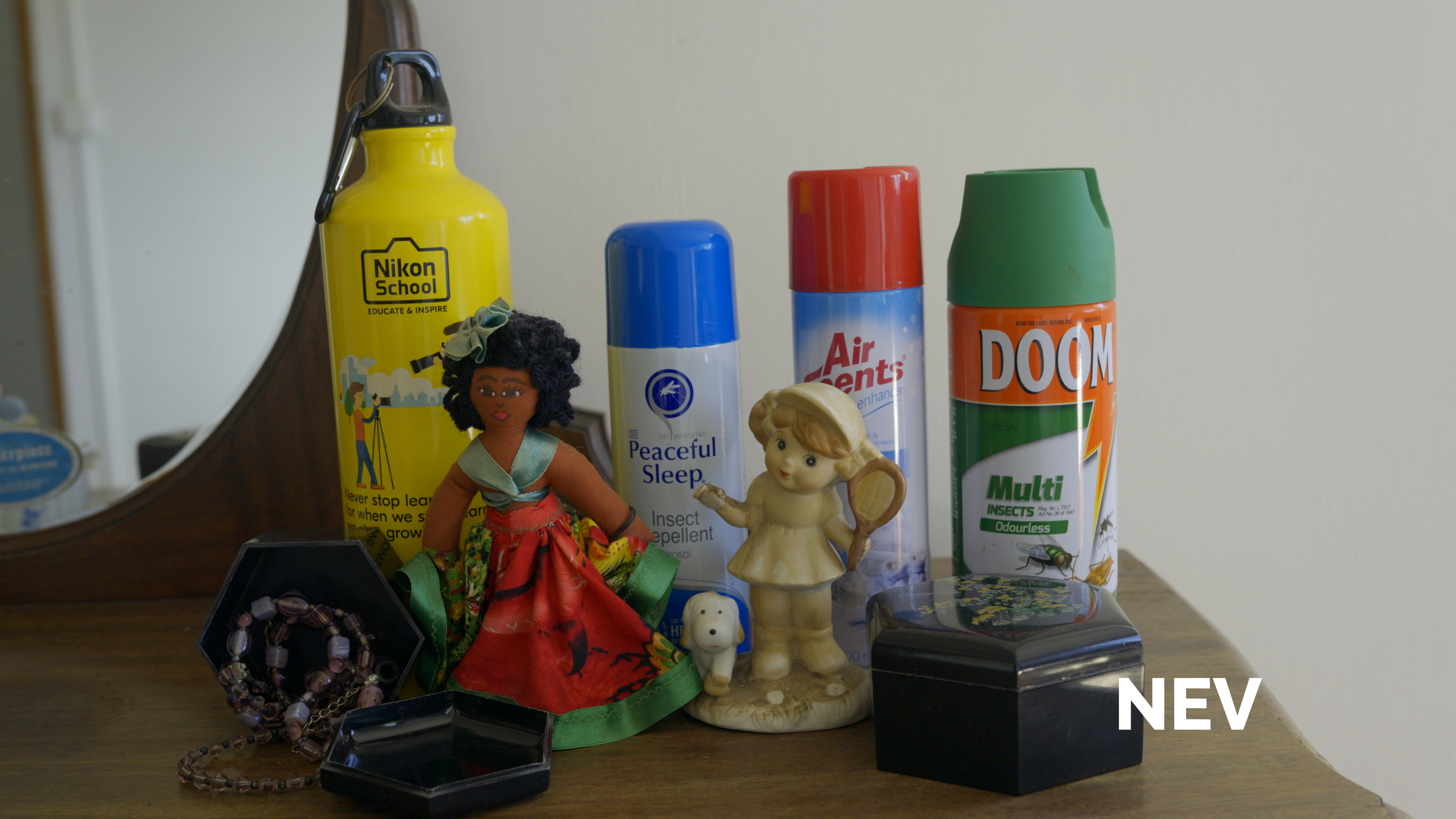
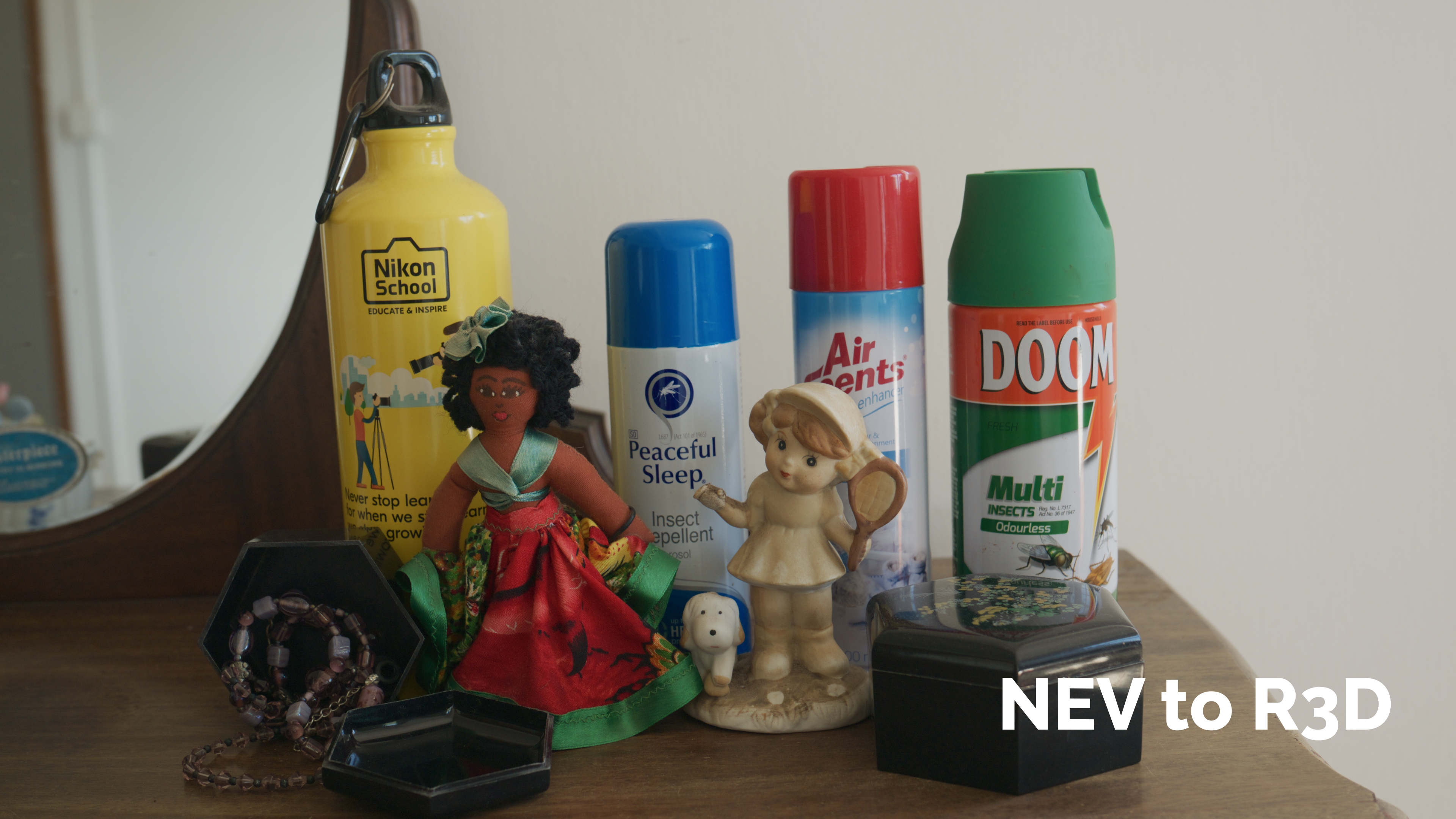
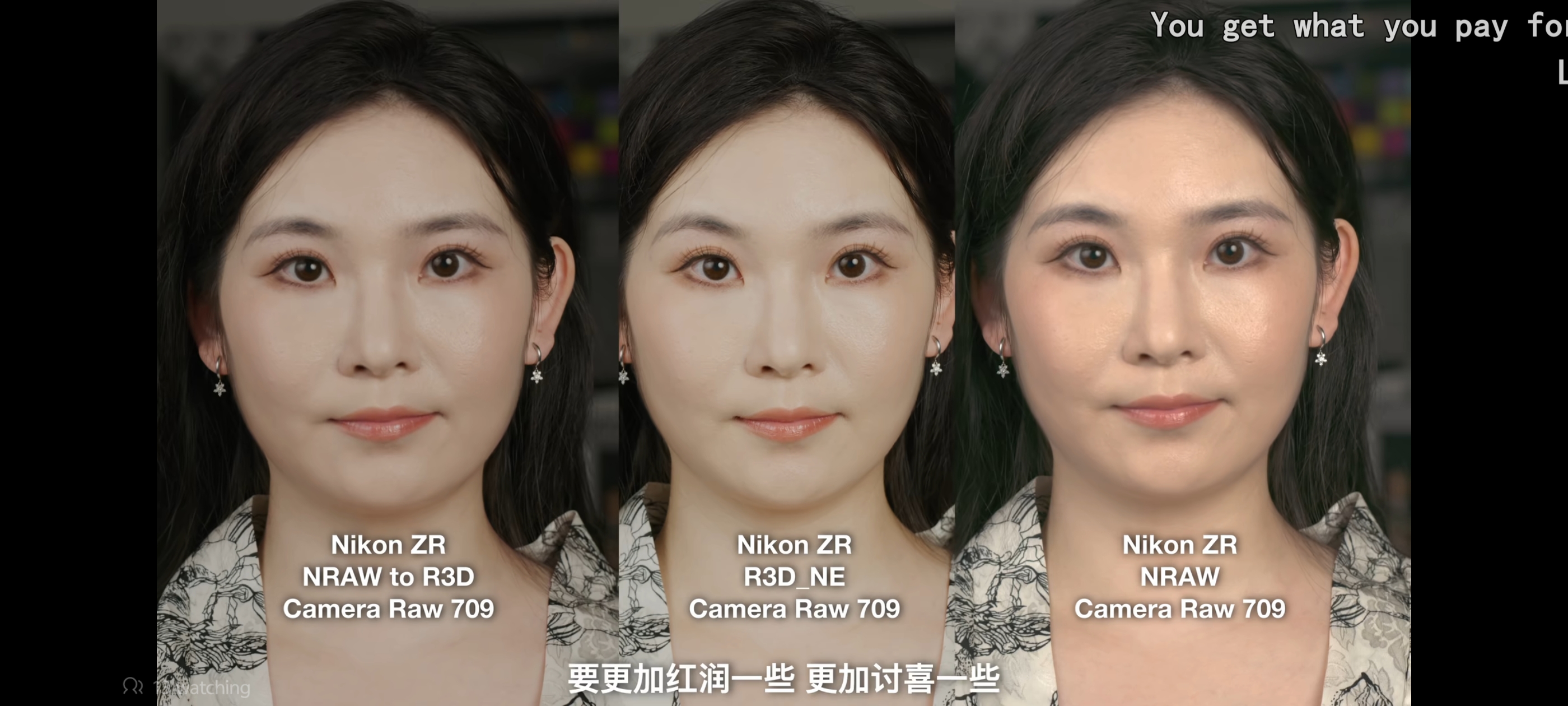
For now as a Nikon shooter, I am more inclined to shoot NRAW and do the renaming trick to R3D, than to shoot R3D as I am finding that the Nraw has more DR than the R3D and you can shoot the normal version that takes only about 370 mbs for 24 fps in 4k and 700 mbs for 6k. This is a little test of conversion of Nev to R3D. You have NEV (Nikon RAw), NEV but using the RED lut, Then the Nev to R3D renaming and finally the REDraw file. then So I need to make a little bit more test, with skin tones etc, but they are quite close to me, even more so that even between the different red cameras like the Raptor and Komodo, their is some color difference. The yellow are a little bit more saturated and the image is a little more toward yellow in the Nikon ZR redraw R3D files. On side by side test the ZR was the more yellowish of the red camera. So it might balance out in the end.

-
On 11/16/2025 at 11:11 PM, ND64 said:
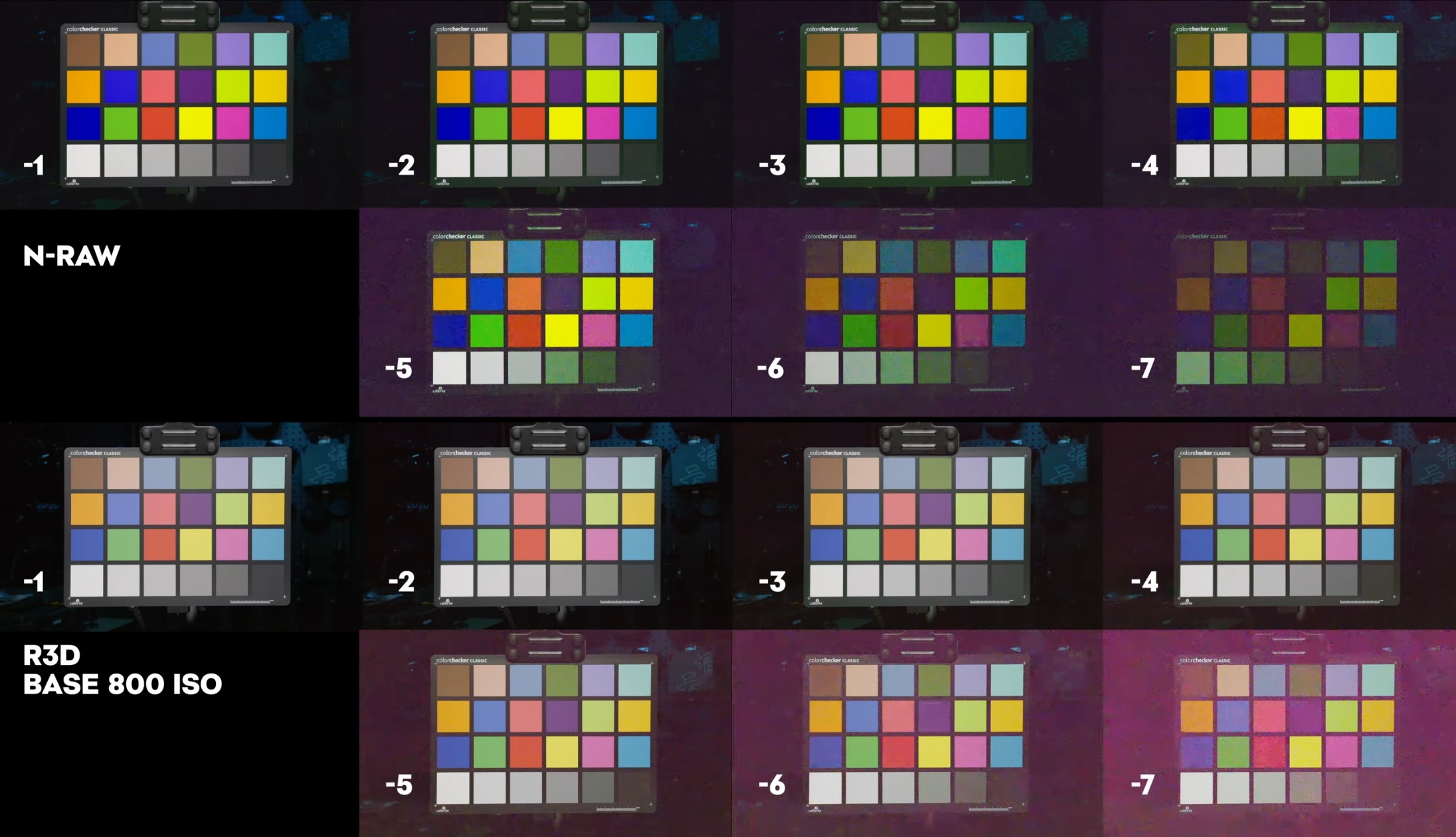
I wish someone in Nikon or RED explain what they did and what these codes actually do. NRAW show less purple noise at extreme underexposure but colors are all over the place. R3D NE is in a pool of purple noise, but colors are intact.
One thing this test shows is that the Nraw seems to have better DR and secondly the ZR has great DR/latitude. It is scoring 5 stop above and 3 to 4 stop below. So you are at 8+ to 9 stop of latitude which is very good. Very close to the Panasonic S1ii, Red raptor and for reference the Alexa LF is at 10 stops. I put the link to the video below, he has an English version sub, that is his own voice and not AI.
-
55 minutes ago, ND64 said:
Its just a name, probably because the guy who made that believes it works like EL. True EL Zone needs license from its patent holder.
If it comes from China, why would they care about Patent. Even I think Portkeys are doing a stop base false color system in their new monitor. I think it uses different colors and is customizable. It ill be difficult to patent something like that outside of the US.
-
55 minutes ago, ND64 said:
The difference is noticeable even by looking at the image
Thats funny to be honest
Even colors are different
I think Davinci is responsible for all this.
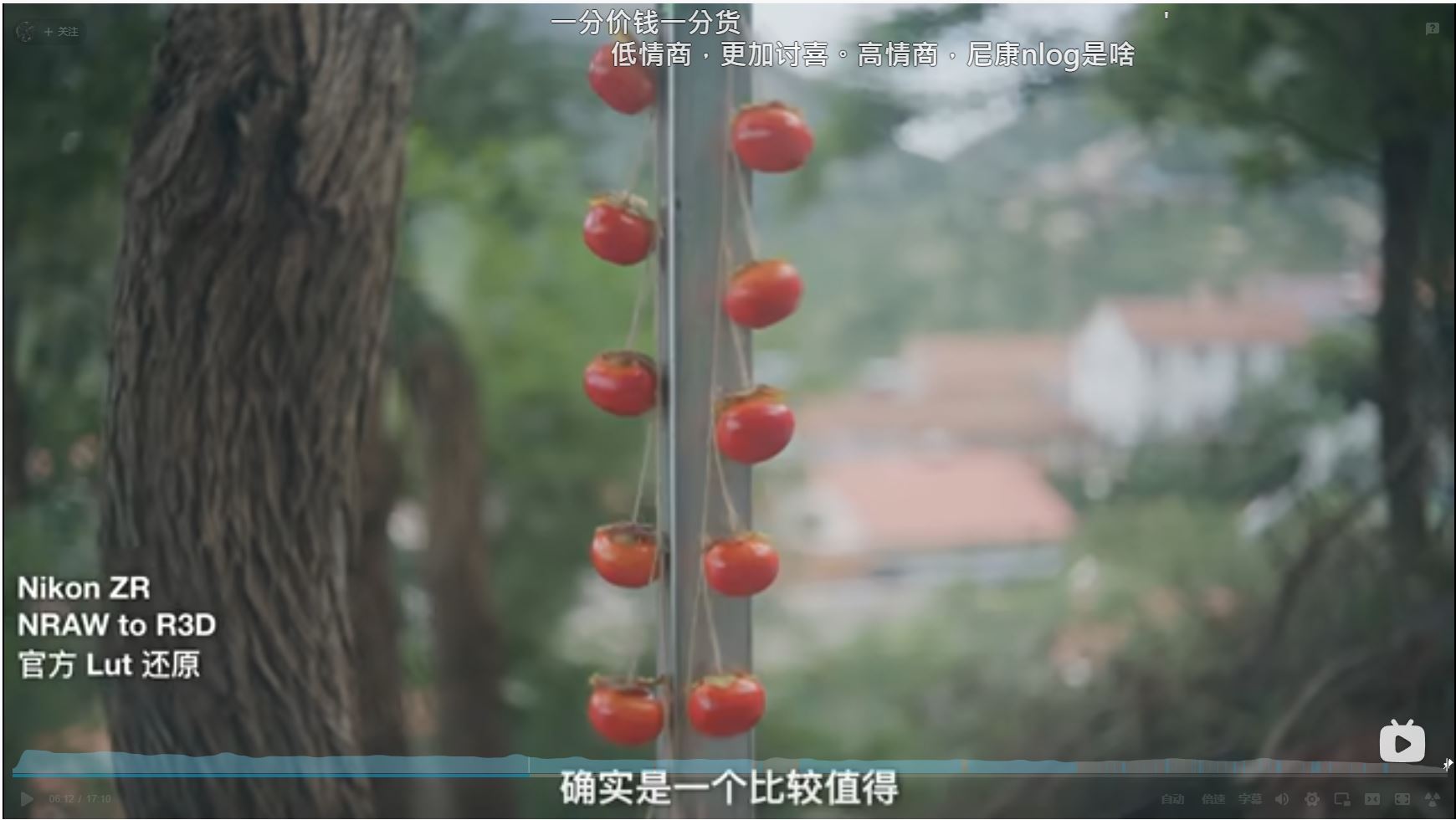
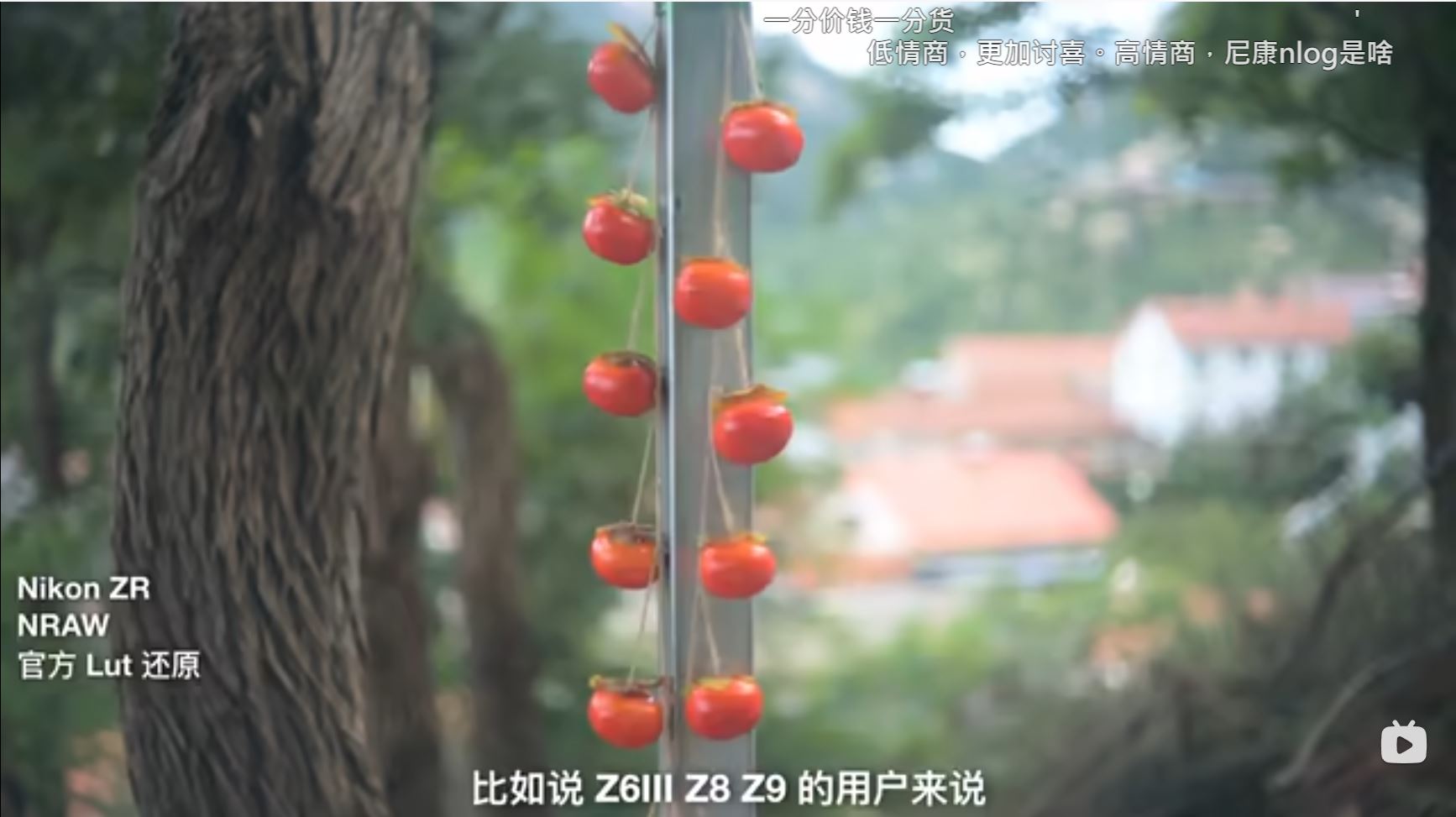
Do you use the app, I see like English subtitles. I am also asking myself if it is just noise to at least 11.9 to 12 stops. As the SNR 2 is about the same in the ISO 400 and 800 coverted to R3D. And then at 6 minutes you get that image with the tomatoes from the conversion of NEV to R3D. And perhaps you can just get back the DR in the Nev version with a simple curve, or the R3D has much more DR.
-
1 hour ago, ND64 said:
I found a false color LUT for ZR in a chinese forum. It was on a Chinese cloud host unavailable for foreigners, so I got it and uploaded to jotta:
https://jottacloud.com/s/433167a024c75694baa94438259ee5d1b8e
I see it is written ELzone, is it the ELzone system, or do you think it is traditional false color?
-
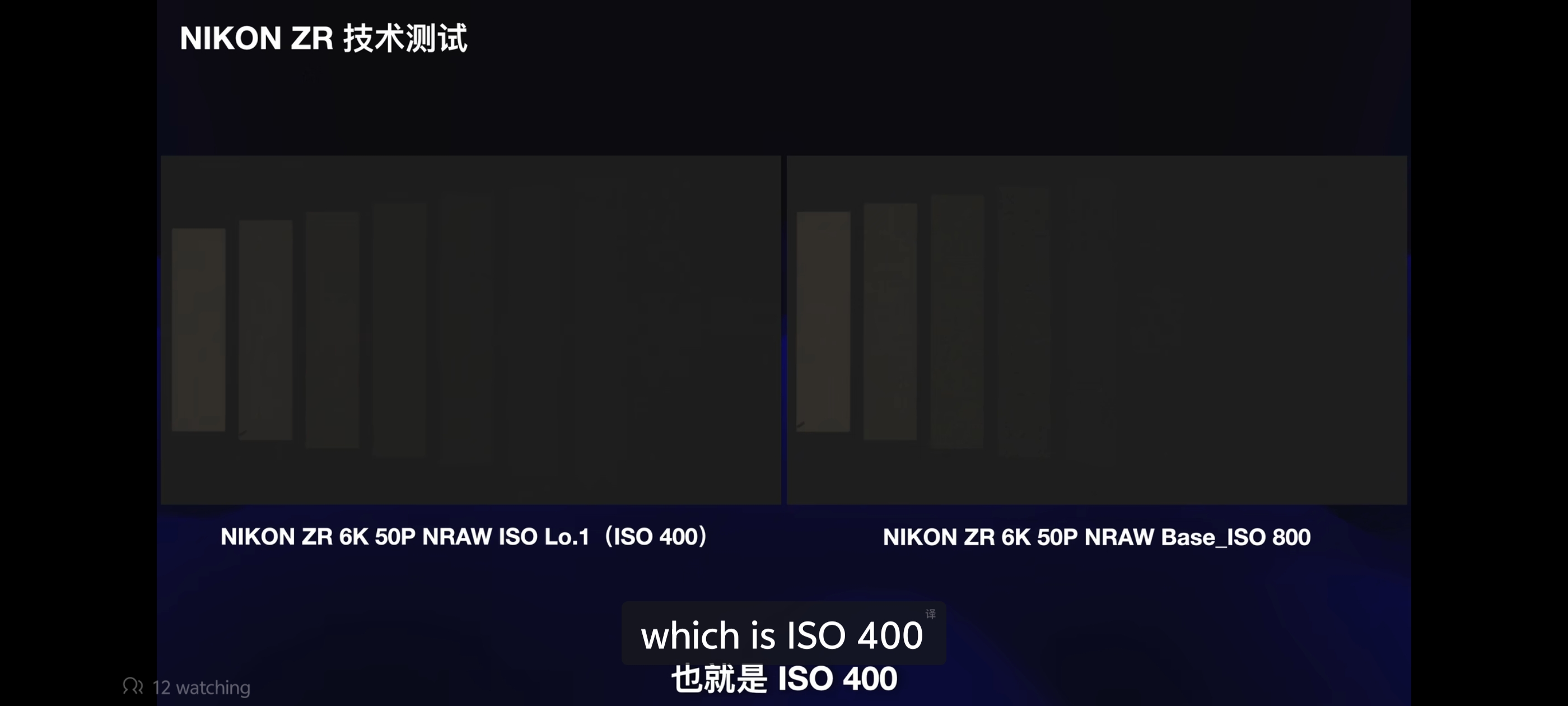
By the way to continue my my post above, I saw a very intriguing test by a Chinese Channel where he tested the ZR not only at 800iso but also at 400/ And the results are astounding.
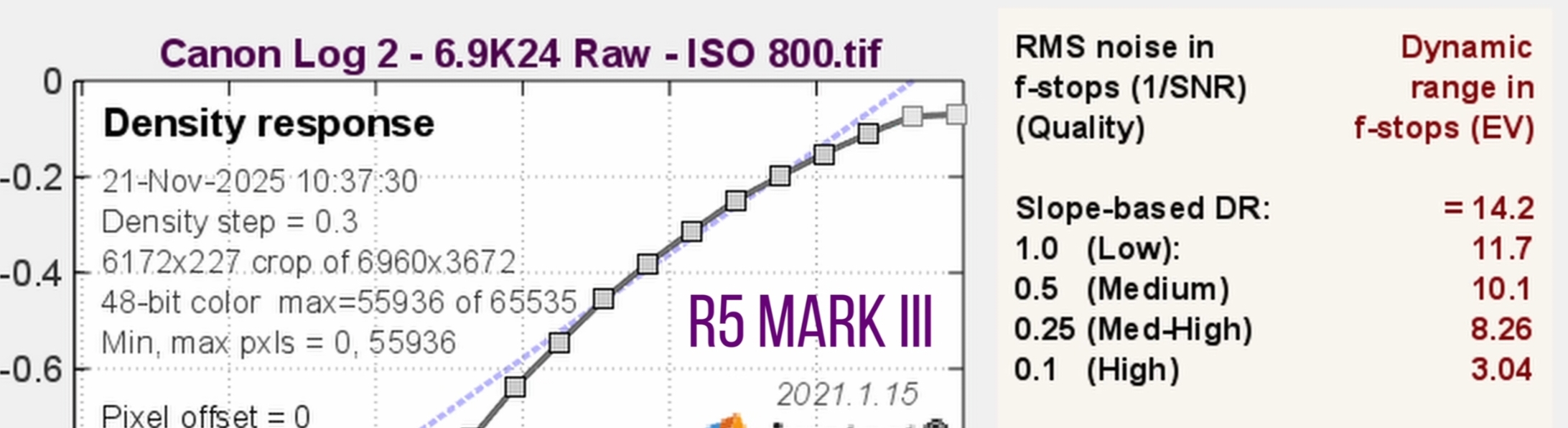
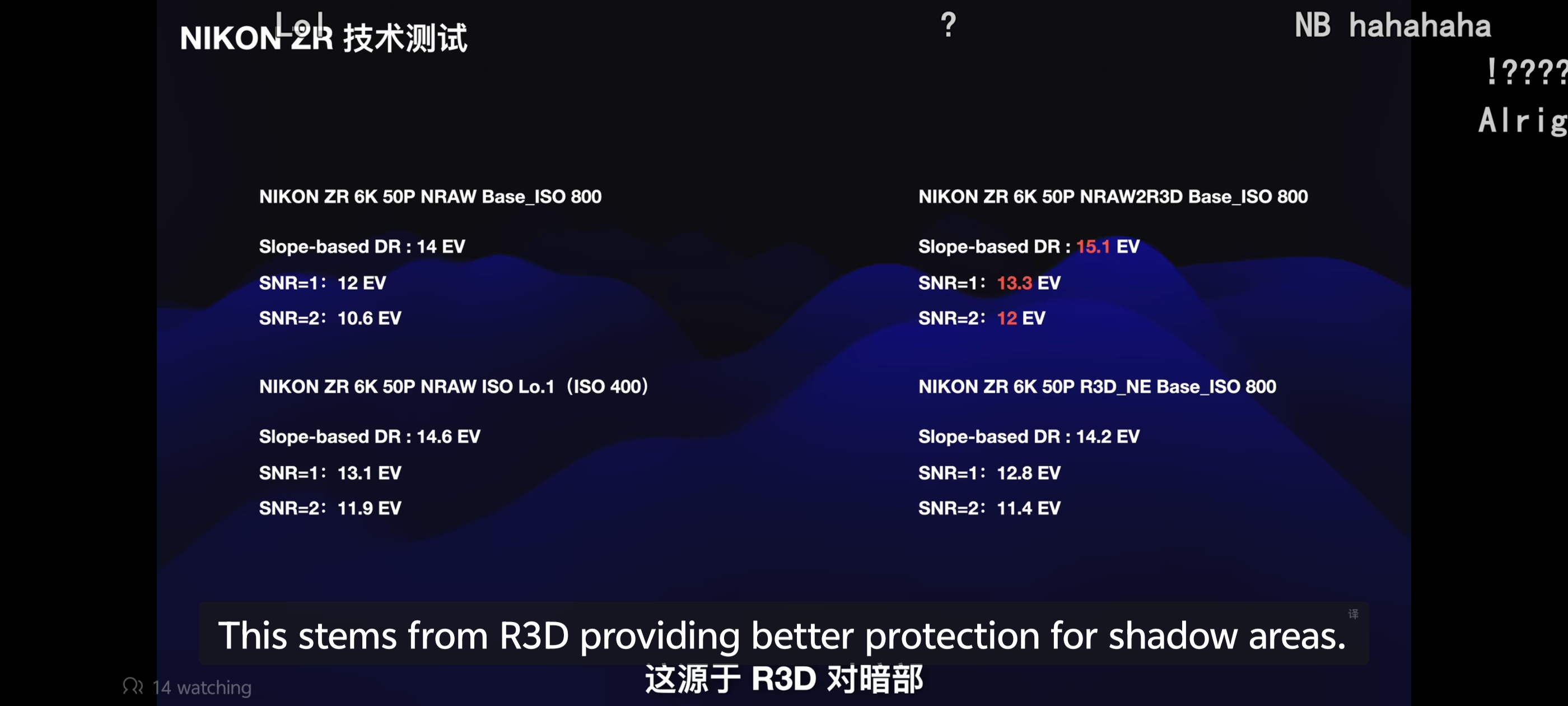
So he is getting more than a stop of DR at 400 vs 800 ISO in Nraw!!! at ISO 800, the slope-based DR is 14 EV, SNR=1 is 12 EV, and SNR=2 is 10.6 EV.
At ISO 400 (Lo1), the slope-based DR is 14.6 EV, SNR=1 is 13.1 EV, and SNR=2 is 11.9 EV.
Another surprise is with the NEV to R3D conversion. The measured DR for Slope-based DR reaches 15.1 EV, SNR=1 reaches 13.3 EV, and SNR=2 reaches 12 EV. These are incredible results.
His test using the Xyla chart looks very solid, perhaps the best and most detailed I have seen. I would have hoped he would have tested the R3D at 400 (Is it even possible?) and the latitude test with 400 so as to have a double check on the chart numbers. If anyone speaking chinese could translate in case I am saying stupid things, and has the app, as I can only see the video at 360 P. The channel name is 家硕_JiashuoMedia,"
https://www.bilibili.com/video/BV19KWkzQEq1/?spm_id_from=333.1387.homepage.video_card.click
-
15 hours ago, ND64 said:
The reason people don't see the difference reported with chart tests in real life is the saturation limit of modern sensors, and they're all in the same ballpark. Improvements are mostly in the readout noise, which is good to have, but nobody lifts the shadows more than one, or in rare cases two stops, anyway. I don't blame CineD for reporting 10 stops, as its what they professionally do and they have to be consistent. But calling it an "average" camera was personal, for whatever reason. Average between what and what? But its not just a CineD thing. I sometimes doom scroll Chinese social networks and there are also some video shooters over there who sounds angry that this camera exists! Which is crazy.
I have been a pro photographer for 20 years now and live in a tropical island with lighting ratios you can't even imagine in most countries. This is why I have been always very sensible to Dynamic range result/progress/testing for the last two decades, as most of the population including me are darker skin and we have very hard light. During that time I saw the first digital cameras (I would say from 2 to 3rd generation) depending on how you count, go from about 10 to 14-15 (SNR) DR test in RAW, as contrary to most videographers, photographers been shooting in raw for decades. I have seen what a 10 stops DR camera image look like and my ZR is no way as bad as this. Last week I had to film some B rolls for the launching of an international car brand here, where we had to mix some of our country shots with their own media. And as I had little time, I had to go around and shoot in less ideal conditions with harsh middle day shoot and some with harsh backlight and I had to dig deep into the shadows. This is start of the summer in the southern hemisphere, so the light was already hard even not quite as from December to March.
So to come back to CineD, I have enough experience to know their numbers/conclusion are just BS. In fact they are some of the reference that have educated me, mostly with the latitude test, which I consider the best test today. But when you take RAW numbers and pit it against mostly compress/NR based codec, guess what, it is disingenuous. Because if you had watched DR test for the last decade with Xyla charts and Imatest, you would know that Raw data tend to score much less because of noise, but in that noise is still a ton of Data. Gerald Undone who is himself not a Nikon Fan, does the explanation very well in the ZR dynamic range test. First he got 10.9 stops at 0.5 medium noise rating, which strangely jumps just a little bit to 11.1 on a normalized 4k timeline, and just adding a little NR, where as he says the details in the shadows are still very high he reaches 12.6. This is in the RED Komodo X range. I have seen other test from french (I am a french Speaker) to even Korean which were around same numbers and which corelate with multiple side by side test. And no way their are 2.5 stops difference between the KX and the ZR!!! But it is not the first time I see them cooking their numbers to support some kind of narative. But this time it was the exact opposite for the Sony A9iii. The one with the Global shutter that even with your eyes could see with a bad DR, but I remenber the guy putting so much NR to get 9STOPS of exposure latitude, to say it had great latitude. Yes it is a 1080p image, but doesn't mean it has 1080p details, which I pointed in the comments.
-
The Best video to debunk that hit piece from CineD about the ZR dynamic range test they did. This is a side by side of the ZR and the Red dragon Monstro and they are literally indistinguishable. The Zr tone curve seems to grab a little bit more highlight and loses a little bit in the shadows. They must be a bit pissed at CineD, no one is talking about the C50, hen they were flown to Japan to film a promo video.
-
18 hours ago, Video Hummus said:
On one hand, we have a video company (Panasonic) with a very robust video imaging pipeline, managing to squeeze an amazing amount of DR and latitude performance out of sensor that first appeared (lackluster; performance wise) in the Z6III. However, the camera was still heavily criticized for "terrible" rolling shutter performance and seemingly NOT being a SONY camera. Never-mind sony has released several cameras with terrible rolling shutter but people still shat their pants for them. The curse of being Panasonic LUMIX and not Sony Alpha.
Nikon's take-2 on the same partially stacked sensor housed in a new body--apparently designed less than 1.5 years after they bought RED (Press X for doubt) for a measly 85 million (RED probably had massive debts that Nikon absorbed). It seems to me they did their best to squeeze enough RED tech for marketing purposes into a camera that was clearly just designed to be a Z6III with a new body, minus EVF, and with a huge giant screen. More like a Version 0.5 of "Z Cinema" than a V1.0, IMHO.
Sincerely if anyone would have told me I would get so much quality for about 2500 USD in my country 5 years ago I would have kissed his feet. You talk as if it is some kind of BS camera it is based on. The Z63 did have some issues, with like half a stop less DR than the already very good Sony 24 megapixel sensor in the Z6. It also has some pulsating in the shadows which seemed to have been eliminated. But in the end for me, this could be the best ever reportage/documentary/weddings event/ content creation camera. Not just because it has superb image quality, but it hss 32 bit audio. This is the feature people forget to mention.
With this camera, I could fit two of them and some lens in a traditional photo bag and some small travel tripod and do a documentary. Perhaps I would add those small flat lights, a wirreles mic system and you are good to go.Now I can always get a cineback, rig it with an external monitor, wireless video transmitter, Vmount battery and shoot an advert. Their are just endless possibilities with that camera.
-
10 hours ago, Ilkka Nissila said:
Panasonic is reading the sensor slower in both the normal and DR boost modes, explaining how they can get more DR out of it than Nikon in their implementation. It may or may not be the same sensor. In any case Nikon's compromise is different from Panasonic's and these are both legitimate choices. The ZR was under development before Nikon acquired RED and what RED know-how they added in this camera is likely in the firmware (and post-processing support in the R3D NE format pipeline). In cined's testing the latitude test shows better retention of color across exposure adjustments in post-processing when using the R3D NE than N-RAW and so it would seem that the RED acquisition already paid off for Nikon to become more competitive in the video arena, and this is not just marketing if it benefits users. What Nikon should do now is try to make the h.265 a bit more competitive so that more people who cannot handle the raw data rates can still benefit from the camera. It would be very costly for everyone to shoot everything in R3D NE to get benefits from the camera. I personally am looking forward to seeing some Prores 422 HQ material shot with the camera and see how that fares in comparison with the Z8.
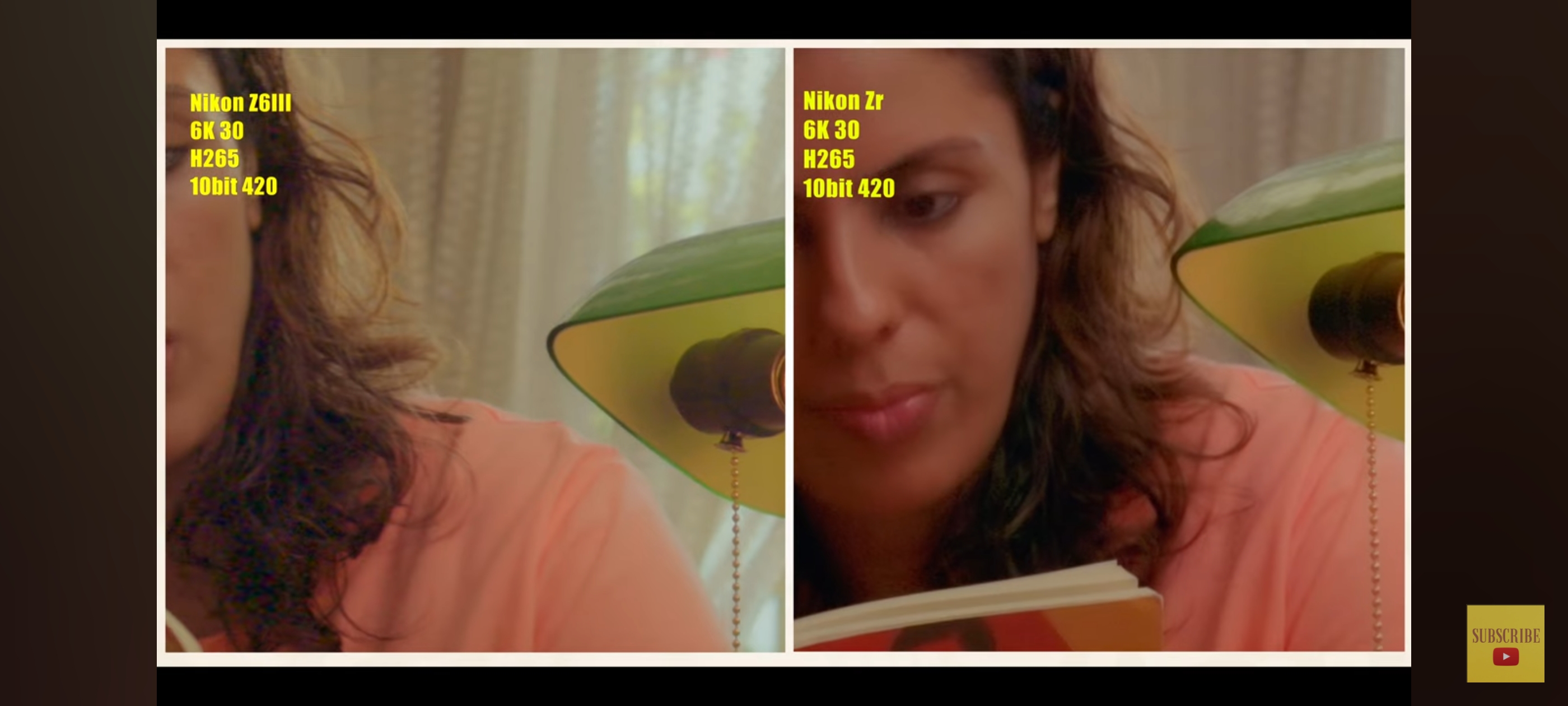
Someone posted this video. This is something I wanted to do when I get the camera, because until now Nikon compressed format have been damn solid. He compared the detail in the Nikon Flat profile and the Nlog in h265. And the Flat profile is much more detailed. Either people should test with sharpness a bit higher in camera, or someone at Nikon has made an error in the settings of the Nlog. As the Flat profile is so much more detailed than the Nlog one. At least it seems it could easily be corrected with a firmware update.
-
3 hours ago, ND64 said:
NR is stronger on ZR, but its not just NR. There should be something else.
I think they have been tweaking the Sensor since they launched the Z6iii. The S1ii showed them that this sensor was better than what the Z6iii was capable of, even without the DR boost mode. Perhaps the sensor was a bit rushed for the launched of the Z6iii and since then, with Sony, they have been able to refine the settings
-
-
Absolutely beautiful imagery. Some shots are very square, and some were asking if it was an opengate mode LOL
-
10 hours ago, ND64 said:
Optyczne published their review:
https://www.optyczne.pl/107.4-Inne_testy-Nikon_ZR_-_test_trybu_filmowego_Jakość_obrazu.html
Any English version?
-
On 10/10/2025 at 1:17 AM, Kino said:
I like the colors and overall image of this camera, especially for the low price, but Nikon definitely sacrificed DR for a faster readout. This is from G. Undone's test:
10.9 usable stops in 6K R3D NE is not great for a modern cinema camera. NR will get you another stop, but it's not an ideal starting point. By comparison, the Komodo 6K scored 12.5 usable stops in 6K R3D and the Komodo-X was at 12.9 when tested by CineD.
CVP's latitude test was also fairly extensive as it tested both native ISOs:
The good news is that you don't lose much DR when switching into the higher base. The bad news is that, no matter which base you use, most of its competitors have an extra stop in the highlights:
As for under exposure, it is usable to under 3, but no more. It is RAW after all, so this poor result is understandable when compared with the Sony cameras.
I have also been searching for the Nikon ZR DR/Latitude test, and result been a bit all over the place. I think one reason for the latitude test discrepancies is that the first reviewers were not able to use Davinci and had to use REd own software and it might have induced some errors...The Nikon Z6iii is better in the highlight than the Zr, which can't be true!!! . Their was also some talk that Nikon/RED got another stop of DR during their test/development.
Below is a test side by side with the Panasonic S1ii, which is a bit of the king in terms of DR/latitude and their might be neck and neck to half a stop of exposure latitude between both. Their are little discrepancy like light positioning that make me say that. He is at 4.5 over and 3.5 under that would give about eight stops, you could give another half stop to the S1ii in the highlight. For example, CINED gave the S1ii without DR boost a solid 9. This could be because they test at 1080p. If you reduce the size from 4k to 1080p, you might get another half a stop to a stop in the shadows as it would reduce the noise. For reference most Canons are at 7 to 8 stops of latitude, the Sony Venice is a 8 stops, the RED Raptor is at 9 and the Alexa LF is at 10 stops of latitude.
He also has test of the highlight rolloff and the Zr looked a little better and the flickering in the shadows. Which is not present in the REDraw file, but is in the Prores one!!!
In this one, with the french tester (You can get English dub), he gets about 5 up and 3 3.5 down.
You also have this korean tester with the DR test with the Xyla chart and Imatest software. He got like 13.5 in Nlog!!! And 12.9 in REDraw. His DR test starts at around 23 minutes. Last thing is that CineD responded on their page saying they had a ZR on test for a week (% days ago) but they had some problem that they were trying to resolve with Nikon.
-
6 minutes ago, eatstoomuchjam said:
Of course - the Komodo was designed to be a crash camera for big productions. Red really didn't plan for having a bunch of people using it for A cameras. It's always been an odd one out among their lineup. Anyway, I'd also say that it's pretty impressive that the OG Komodo, a 5+ year old camera with a (supersized)
S35 global shutter sensor is coming up about even in those tests with a brand new FF camera with rolling shutter.
Though I'd also guess that outside of that sort of over/under test, the ZR will have better apparent/usable dynamic range than the OG Komodo and maybe even vs the Komodo-X which is noticeably better than the OG.I think that there is almost no doubt that the S1 II will win it. 😄
They are from the same sensor and if the ZR can achieve the same as the S1ii, then it would already be very very good (RED Raptor territory). The S1ii has the DR boost mode which showed 10 stops of latitude, that is Alexa LF level, but with 27ms, which is not great at all.
-




.png.13a3d1654c1038b5e214a3a3b2dd704e.png)
.png.faee8eda5cb2e51e71d8f0796ba2253d.png)
.png.5c210029043c7ef8569638c1104b21d0.png)
.png.6cf955010d71b09b02651249f10965b8.png)
.png.68fe5b66d0773dbedc6e5dbd93c45000.png)
.png.7051147f68cd587063cd979c4329664c.png)
.png.17e408dbb7f6a9ce518b513bccc91041.png)
.png.d83c979d9a2c4812b78035ec79fc077e.png)
.png.76f827f0a05e22d4d1063bd6e390a33b.png)
.png.45da418cbc37a2a275edc63a480d61db.png)
.png.3b7f8a801eb8497160a3f76008ce8e06.png)
.png.2595df141434eed1ed6ab726fa9859d2.png)
Nikon Zr is coming
In: Cameras
Posted
I sincerely hope they correct this very fast. From my use, I would not say it is as bad as people are saying, but until now the h265 from my Nikons has been very very good.