

PannySVHS
-
Posts
2,940 -
Joined
-
Last visited
Reputation Activity
-

 PannySVHS got a reaction from kye in The GX85 "Super-16" project
2x digital zoom was without artefacts right? 4x has to be aliasing extravaganza though!:) I could test it myself. But then, why not ask a GX afficiando like you!:) I still love mine. Got a second one so I carry two sometimes when doing a phototour.
Up for a 2026 8bit challenge btw?:) Would be nice with more than two challengers though of course.:) @kye
-
PannySVHS got a reaction from kye in Smallest real 720p or 1080p P&S camera?
I treat the LX as camera for HD delivery. From my experience, it's the best ratio between size, quality, ergonomy and used market prize for good quality HD. GM1 with a 14mm is thicker, more expensive and handheld video turns out jittery very easily due to its tiny body not being equipped with a stab.
I have tested the video side with my slightly taller GM5 and it's not fun to use for video. The stabilized 12 to 32 zoom makes it thicker than I like to for considering it over a GX85. The LX15 has lens stab, which works in 4K as well for holding steady, panning and tilting. HD on it is just too brittle for my taste so I see it as a 4K4HD cam.
My two cents. Nice talking to you again, kye.:) @kye
-
 PannySVHS got a reaction from Emanuel in Smallest real 720p or 1080p P&S camera?
I treat the LX as camera for HD delivery. From my experience, it's the best ratio between size, quality, ergonomy and used market prize for good quality HD. GM1 with a 14mm is thicker, more expensive and handheld video turns out jittery very easily due to its tiny body not being equipped with a stab.
I have tested the video side with my slightly taller GM5 and it's not fun to use for video. The stabilized 12 to 32 zoom makes it thicker than I like to for considering it over a GX85. The LX15 has lens stab, which works in 4K as well for holding steady, panning and tilting. HD on it is just too brittle for my taste so I see it as a 4K4HD cam.
My two cents. Nice talking to you again, kye.:) @kye
-
 PannySVHS reacted to PPNS in Narrative films shot in uncontrolled cities
I've shot a no budget feature film (partially) as a DP under similar circumstances last year. we had some permissions here and there to shoot in metros and train stations for a few hours, but mostly it was outside in the busy capital city.
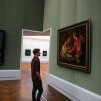
i'll share a still of it here, if somebody wants to see more stills I can DM a link, but at the moment I think it's best it mainly stays private considering the film is not finished yet.
i do kind of think best to push back against the idea of total minimalism, or austerity especially in regards to crew. Other than the director and I, we had a 1AD, a PA, a makeup artist, sound guy, a focus puller, and on some days a grip or a gaffer (on the few moments we weren't just relying on available light). our director was someone who was frankly underexperienced and would generally completely abandon our preproduction plans, change the script all the time and was unwilling to listen to anyone else's suggestions other than the actors, which caused some tension from time to time. having these other people on your side to keep you in line can make this experience a lot more pleasant since it's hard to make films, no matter how small the scope is.
this was shot on a largely rigged up BMCC6K with some SLR Magic primes, and mostly on a cine saddle. I guess we we're pretty lucky with not being bothered by strangers while shooting, other than having some random people staring at the camera in a wide shot.
also the thing with walking around in a medium 2-shot is that it is insanely boring, especially for a visual language. there's a reason that doesn't really happen in WKW's stuff.
-
PannySVHS reacted to Clark Nikolai in Narrative films shot in uncontrolled cities
When I was younger I got some idea that all movies were made this way. I don't know where I got that idea but maybe heard something about the methods on TV. I was surprised that, after a long time in the indie film and video art world to then enter the world of the commercial conventional film industry and see the scripts and crew people all the work to make sure things go exactly as planned. (It kind of takes the fun out of it.)
Wan Kar Wai's "look" really comes out of availablism. He was living there and went out and shot it. This was pre-handover Hong Kong where space was limited. The lights, colours and "sets" were already there. The art is in taking what's around you and framing it for a story.
-
PannySVHS reacted to mercer in Narrative films shot in uncontrolled cities
Yeah there's definitely an "I don't care what you're doing" thought process in NYC but I think it's more of a survival instinct than anything else. It's actually quite odd. You can walk by someone, make eye contact and nod or smile and they will completely ignore you. I'd imagine if you lived there you'd get used to it, but it seems like you're alone in a sea of people. But for filmmaking on the sly, that's great.
Without knowing the exact concept (I'm picturing a Before Sunrise kinda thing) I stand by the idea of keeping a small footprint and understanding the POV of the camera in the story. As @Bioskop.Inc said, if you can keep the dialogue minimal, by utilizing the mood and tone of your locations, then all the better. Also make sure to get clean dialogue takes so you can cut to a different take and use the dialogue over it... eventually people will look at you as they pass by. Otherwise stay small and nimble and flexible with your locations. If you can make a scene work on a park bench instead of walking... even better.
-
PannySVHS reacted to QuickHitRecord in Narrative films shot in uncontrolled cities
So far, we have:
The French Connection The Day Of The Jackal Escape From Tomorrowland Chubby Rain Woody Allen (Annie Hall, Hannah and Her Sisters, Deconstructing Harry) Lost in Translation I think this is a great list! I know that Sean Baker’s Tangerine was shot this way, but I’d rather not sit through another of his films.
I've written a drama short. Two characters, 11 pages, lots of walking around town. I live in Portland and I’ve shot all over town before without ever once being hassled (except by some in a crisis of mental health). But I’m really more interested in seeing what kind of aesthetic choices might even be available to me when balancing that with coverage needs, moving quickly, and not attracting too much attention.
I'm always so envious of New Yorkers for this very reason. You can fill the frame with sidewalk commuters and often no one will even bother to give you a second glance. I can’t think of any other US cities where this is true.
Lovely screen grabs, Kye. If any of these were publicity stills for a film, I’d want to check it out. Especially the 68mm shots. Great mood and sense of place.
I think that this quote sums up some of the decision-making that I am facing. I could totally go in there and “wing it”, just figuring out my shot as I went. But I want to rely on natural light, which means timing certain shots for certain times of day, and then that raises the question of how much planning I want to put into each scene, and ultimately how the visuals will compliment the story. I’d rather not lean too far into the documentary aesthetic.
After shooting my last five shorts with my C70s, I’m actually thinking about shooting this film on a hacked EOS-M with c-mount lenses. I’ve been collecting them for a while and have three sets of primes, plus some great zooms. I’d personally put the aesthetic available with this (windowed) sensor and these lenses up against anything, I like it that much. I think the reason that no one really wants to do this is because it’s one of the most difficult digital cameras to work with, AND on top of that, the most difficult lenses to work with. But I’ve been tackling the challenges presented by these one by one, and I think I have them pretty well sorted. We shall see!
Current plan is to hide a Deity PR-2 recorder with a lav on each actor and attach a timecode box to the audio input of the camera. Stabilize with a steadybag. Transmit the image wirelessly to a producer and make up artist in a car, along with refreshments for the actors. If I end up working with long zooms, I might give direction over a phone and provide a discrete earbud to each actor so that I could also monitor.
-
PannySVHS reacted to mercer in Narrative films shot in uncontrolled cities
What are you trying to do? As long as you don't have a big rig with lights and a shotgun mic, then you should be good. I've walked around Philly and NYC and see plenty of people shooting video everywhere with gimbals and even tripods sometimes... although I wouldn't recommend that. The key is to look like a tourist and find locations where there aren't many people passing by, or it's so busy, people don't even look twice at you because you look like a tourist. And be prepared to move to a different location if you have to. Philip Bloom, hardly a narrative filmmaker, but his use of super long lenses gives him the freedom to be a little far from the talent. Separation between camera and talent can be a good thing if you're trying to steal shots.
-
PannySVHS reacted to kye in LUMIX L10 - announced
I was very impressed with the results I saw from various people testing it. The GH7 sensor is good, the lens in the L10 is also good, and V-LOG and the codecs available are more than enough, so it should be a great combo.
In terms of the lack of IBIS, that's definitely a thing, but if you're able to steady it with almost anything (tripod, gimbal, monopod, even just a large handle of some kind) then it should be pretty stable.
-
 PannySVHS reacted to MrSMW in LUMIX L10 - announced
L10 update…
Shot 5x wedding ceremonies plus their day prior & post events exclusively on the L10.
Stills only so far…
The experience and results have been great.
Not S1Rii great or even S9 great (but in isolation more than good enough as a back up camera stepping up to do a job) the latter of which is supposed to be my back up camera but was in the shop being supposedly fixed…but as it turned out the fix was going to cost more than buying another mint used one, I bought another.
Also one week long family adventure as my sole camera. Also perfect for that.
However, now that I am back with 1.5x S9 camera bodies, I have decided to repurpose the L10 as; personal plus back up plus dedicated gimbal unit.
Bought my 4th gimbal but this time determined to actually use and keep it…my previous issues being a combo of; reliability, weight, too much kit, user ineptitude…but as it’s an RS4 Mini with the tracking unit and L10, it should be a pretty sophisticated and lightweight unit.
Only 3x more jobs that have video this year but at least it will be a good test ahead of 2027 where every job is hybrid.
Should be GH7 level results, albeit with a fixed lens and the lack of IBIS the L10 has removed and improved…
-
PannySVHS reacted to kye in The GX85 "Super-16" project
I had ruled out the GX9 for some reason, thinking it didn't have IBIS, and then I randomly heard that it did have IBIS and so I got confused about why I had written it off, so hearing about the crop made me wonder if that was potentially the reason.
200Mbps is a great bitrate, especially for HD! I don't recall hearing about this.
Yes - there's even a thread about it that just started!
I haven't looked at it myself yet, but if it's a one-stop solution for film emulation then it seems promising. I've heard it's pretty slow still, but it's still early days and perhaps optimisations will change that at some point.
For me, and this GX85 Super-16mm film camera project, it was more about the GX85 and me finding a place for it. I have equipment I like, shooting situations / scenarios I prefer to shoot, and images I like, and the goal is to find combinations that work well.
This project has resulted in me successfully discovering and developing the combination of:
GX85 plus 14mm F2.5 pancake lens at 1x / 2x / 4x digital zoom Shooting street scenes in uncontrolled / available light, hand-held, from waist height Passable S16mm film camera emulation for gritty images with a strong vibe I'm actually really heartened by the GX85 and will be testing how far I can push it in other ways. Emulating a S16 camera is a lot easier than a S35mm camera, for example, so I'll see how I go with that. I'm effectively done with the S16 film camera emulation but not done at all with pushing to get the most from the GX85.
-
PannySVHS got a reaction from kye in The GX85 "Super-16" project
That would make it perfect for my 10mm Cmount, not so perfect in regards of noise in 4K, compared to the GX85. The GX85 hack from @BTM_Pix allowed a forum member to get 200mbps HD running on the GX9. The stock HD is supposed to be very good in regards to resolution looking at the dpreview comparison tool. I am tempted to check this camera out sometime. I still love and use my GX85 btw. The 8bit 4K is indeed amazingly good for what it is and grades better than it should allowed to do in regards of spec sheet numbers. Nice results you are achieving with yours. @kye
-
PannySVHS reacted to MrSMW in LUMIX L10 - announced
I should have some soon @kye @PannySVHS
I say ‘soon’ as in shooting, but as to getting around to being able to even look at it…
Currently already in a 6 week log jam (see what I did there?) which gets longer week by week 🤪
-
 PannySVHS reacted to IronFilm in Is the EOS-M *THE* Digital Super-8 Camera?
Anybody checked out the "M-LITE"? A 3D printed modification of the EOS-M:
oh snap....
-
PannySVHS reacted to PPNS in Kinefinity Vista First Look
no 12 bit codec (whether it's PR444 or raw) makes it kind of DOA for me. that tended to be kinefinity's main selling point imo. conceptually its cool, but I just got a BMCC6K FF for 1500 euros second hand as a B-CAM. same sensor, same open gate capability, gives me an option to use an EVF as well, and it lets me do more in the grade.
-
PannySVHS reacted to MrSMW in LUMIX L10 - announced
OK, I have a black one inbound and should be landing tomorrow or Thursday…
I tried to get the LTD version but has to come from PannyBoy direct and they have zero stock, so black it is.
My S9 is still not fixed and I have missed it on the first 3 jobs of the year and with 5 more imminent, can’t wait any longer.
On the off chance my fixed S9 does turn up prior to these next 5 jobs I am away for, I’ll use both as a bit of a test but regardless, probably have a place more now for the L10 until an S9II comes along.
My experience of not having a mech shutter has not been the greatest and the role either of these units is destined for is more photo, so…
-
PannySVHS reacted to Clark Nikolai in The GX85 "Super-16" project
Thank you. I'm glad people are liking it. It was a lot of work and took two years to make. Most of the time by myself, out in the city with a tripod and camera. I met a lot of people doing it since the camera looks unusual. (It's common in Vancouver to see someone filming as it's a big film production town and has six film schools but people out shooting usually have more modern squarish looking cameras.) The themes and aesthetic came out of the photography I had been doing for several years already. I had been framing buildings to make geometric shapes. This was basically adding motion to that series. The music was from a friend who had I got to know when he acted in a short I did a few years earlier. https://testcardmusic.bandcamp.com It hasn't had a festival screen it yet but it did get an award in Sevilla, Spain. https://www.instagram.com/seviff.spain/p/DUTcVcGDLq7/?img_index=16
-
PannySVHS reacted to kye in The GX85 "Super-16" project
Wonderful! Great eye and great images. Definitely in the direction of Koyaanisqatsi etc, not only with the images themselves but the shifts in theme too.
Everyone should do themselves a favour and watch it!
-
PannySVHS reacted to eatstoomuchjam in The GX85 "Super-16" project
The trailer is gorgeous. Great job!
-
PannySVHS reacted to Clark Nikolai in The GX85 "Super-16" project
I use it both for my own films as well as I get hired to do music videos and events. I just finished a feature length experimental film shot entirely with it called Shapes, Colours, Patterns. (There's a trailer for it on my Tumblr. https://clarknikolai.tumblr.com ) I'm very happy with it, and of course the image from that camera is gorgeous. Something I've discovered with the Digital Bolex's footage, is that it looks the best projected rather than shown on an LCD screen.
I'm now working on a new project. It's a narrative, collectively written, performed and crewed by myself and three other artists. It's set in the present day in east Vancouver where three artists are working on their art projects. The characters are based on the people involved and their real lives (but fictionalized so we have more freedom.) We're using French New Wave and Availablism methods. Quick half-day shoots. It's self funded, using what we have around us, the equipment we already own, locations we already have, etc. (I think so far all we've spent on it was some coffees.) I plan to enter it in to film festivals when it's done.
Here's a picture with the camera mounted backwards on the shoulder rig. This is so the camera operator can walk forward while the talent is behind them and they don't need a spotter. It's tricky to learn how to move but it's going okay. It works fine with a wide lens but not easy when zoomed in (as you'd expect.) We have to flip the image in the monitor or it's disorienting.
-
PannySVHS reacted to Clark Nikolai in The GX85 "Super-16" project
Here's a pic from a shoot I did last December. I don't know the brand of the shoulder rig (as I got it used on Craigslist), the EVF is the (sadly discontinued) Kinotehnik LCDVFE. The camera attaches to the rig with a Niceyrig quick-release plate (that has feet). The lens is a vintage Angenieux 17-68mm zoom with a screw on wide angle adapter, on top is a Niceyrig top handle holding an Audio-Technica stereo mic and a monitor mount. A bit hard to see is an attachment that goes below the rails between the shoulder pad and the grips for two wireless mic receivers.
-
PannySVHS reacted to kye in The GX85 "Super-16" project
In a sense it's much better than people give it credit for.
In terms of bit depth, what matters is how close (or not) the bits are to each other in terms of what hues / luma they describe. We all know that 8-bit LOG is worse than 10-bit LOG.
In general, the below are roughly equivalent:
- 8-bit 709 == 10-bit LOG == 12-bit Linear
- 10-bit 709 == 12-bit LOG == 14-bit Linear
and the killer...
- 6-bit 709 == 8-bit LOG == 10-bit Linear
The challenge with 8-bit 709 is that the 709 from consumer cameras is essentially a creative picture profile, and so when you try to grade it there will be all sorts of tints or knees and elbows in the gamma etc. If you try and convert from 709 back to some sort of LOG space for grading it makes the image much more flexible, as I outlined in my 8-bit REC709 is more flexible in post than you think thread, which showed that with some care you can turn this:
into this:
However, this is a "naked" transform without any look applied, so once you add in a transform with some flavour (like the 2383 LUT) then you can get an even more consistent output, turning this:
into this:
@Framed_By_Dan the above thread is worth checking out as it has a lot more detail, but the crux of it is to make sure you're using the right colour spaces etc, which FilmConvert should be capable of doing I would imagine.. Adding a film look will help obscure any shot-to-shot differences, and would probably give a decent set of tools for making small changes that are normally needed between shots when working with footage not shot on a closed soundstage.
I think the reason people are so dismissive on 8-bit 709 is because when it was out, the colour grading tools people had access to were primitive and the colour grading knowledge was minimal, however when 10-bit LOG came in everyone needed to convert and people with specialist knowledge built LUTs that looked really good, and then after that the tools got a lot better and people started learning how to grade. I think had those tools and knowledge been around when 8-bit was the norm then people would have gotten a lot more out of it.
The examples above show absolutely unforgivable exposure and WB errors and the results are good enough to be amateur-level. Had these been the variations that someone even semi-competent would have in their footage, the results are likely to be basically flawless.
Indeed you should!!! 😆😆😆
Seriously, everyone has their own standards and looks for different things, so me saying it's good enough won't carry any weight for you using it on your projects (and it shouldn't) because we shoot differently.
The sensor is 4592px wide, which with its 10% crop in UHD, means the normal mode is reading 4174px across (which seems an odd number actually). If we assume the 2x is half that width (and not half the full sensor) then that gives us 2087px wide for the 2x crop. I always shoot 4K so I get the 100Mbps bitrate, but edit on a 1080p timeline, so any artefacts will probably be obscured in post for me. Depending on what you're shooting, how sharp your lenses are, and your timeline resolution you may get quite different results I'd imagine.
I've got a few S16 c-mount lenses and some have wider image circles than others, with my Risespray 35mm F1.6 c-mount even covering the full MFT sensor on my GH7! Definitely worth testing and they can add some great character to the image without taking up a lot of space and making the rig really big (unlike using adapters and vintage S35 or FF glass).
Also, definitely recommend using FilmConvert for this, as not only is it likely to be a more accurate film emulation (it's film emulation, whereas the Film Look Creator is just that, a Look Creator that creates Film LOOKS), but also it should have settings for input and output colour spaces, so if you set these correctly then you should be able to adjust exposure and WB in a pretty neutral way.
I've been using the Standard colour profile, with Contrast / Sharpness / NR all turned down to -5, and Saturation left at zero. If you're using different profiles then I suggest shooting some test shots in both Standard and your normal profile, then pulling them into FilmConvert and playing around and seeing which you prefer. All the profiles on the GX85 do quite significant things to the colour, rotating hues, lightening and darkening different hues, changing the saturation of different hues, etc, so there is no neutral profile and it's just a matter of taste.
If you get some good results I'd be keen to see them so please feel free to share them!
-
PannySVHS reacted to Ilkka Nissila in Internal 32-bit float stereo paired with lossless 120mm reach from a 20mm lens — all inside a genuinely pocket-sized 10-bit 1-inch sensor gimbal camera?
This is quite misleading as mirrorless cameras can be set up to do a similar thing where the image is tone-mapped and written to a rec 709 video, usable immediately. The use of a log format and pretending that it is meant for direct viewing and comparing that to a highly processed video from a different camera is a bit disingenuous when cameras have menus with processing settings that allow the user to get a video without editing, with less AI for sure, but with good algorithms that do a roughlysimilar thing more predictably and with higher quality. I am not familiar with how Canon or Sony cameras do things but on Nikon I often use ADL which is their tone-mapping algorithm and it allows me to shoot high contrast, suboptimally lit scenes and get good results without editing. Log video is specifically a storage format and not meant for immediate viewing, which you of course know.
Extremely edited night time footage where subjects have been dug out from the shadows will never look very good, and using appropriate lighting and/or making the video in conditions where the existing lighting is half decent is better than relying on extreme AI processing.
This is probably one of the reasons why compact cameras are enjoying a resurgence: people are sick and tired of the sickly-looking overprocessed results from smartphones, and even a compact camera that has a small sensor but does not overprocess the image is preferred.
-
PannySVHS got a reaction from kye in LUMIX L10 - announced
It seems like Panny is asking if we want a Lumix L2000- an L10 with a mount, full HDMI, IBIS and a headphone jack, for 1199 and a Lumix L1000, an L2000 with GH5 sensor, for 899. I'd say two times Yes, please! Keep em coming! I would go for the L1000.
The names are too cool, so I am looking forward to my L1000. Heck, why not, the L2000 will be it for me.
-
PannySVHS got a reaction from kye in The GX85 "Super-16" project
The GX85 with the 14mm is such a nice and pretty combo. Best bang for the buck for wide angle rangefinder style photography. I still got my GM5 but I'm thinking about selling it as its cuteness factor wears off quickly and the GX is just so much better in every regard.
I would have loved a Leica branded version with rock solid build and perfect button feedback and layout. I think this little Lumix is still well build and to me it is a classic indeed. It's my favourite small camera in regards of small form factor, great image and bang for the buck.
If it had Pannys great 10bit codec and HLG I would have called it a digital S16 camera. I do call it a personal cinema verité camera nontheless.
Anyway, awesome thread and interested to see your findings, kye! I've been using my two GX85 cameras for photography over the last couple of months, with a 14, 28 and 50, even a 75mm in use. Different 50s btw, C-mounts from Schneider and Zeiss. That Zeiss is astonishing, the Xenon painterly with its uneven focal plane and it other attributes. Would love to put em to usage for video. I guess this thread is a good starter for some GX85 motion picture love!:)
@kye I have not experimented with the 2x digital crop. Is it without artefacts? That would make it a usuable 2/3" camera, though with one bayer sensor instead of three sensor blocks of course. Kind of like an LX10, which in 4K has about 2/3" sensor size. Could the 2x digital crop be downsampled from a 2.3K image? I could test it myself, couldn't I? Shouldn't I?:)
@Clark Nikolai I would love to see a picture of your shoulder mounted D16. Awesome! Do you use it for personal occasions or for projects and what kind of projects?
Cheers and thanks for this fun thread!