All Activity
- Today
-
Yeah the Fp stuff was my gateway to him 😂
-
What a gem of a find that Japanese ARRI user is. Lots of nice Sigma Fp stuff on his channel as well.
-
 eatstoomuchjam reacted to a post in a topic:
LUMIX L10 - announced
eatstoomuchjam reacted to a post in a topic:
LUMIX L10 - announced
-
Ooooo, now we can talk about color dyes and developing? Anyone for a convo about silver-halide grains and subtractive color formation? Let's chat about how radiant energy is converted into the kinetic energy of electrons and how those electrons are then trapped by AgS contaminants in the AgBr crystal lattice. j/k. But if you want a rabbit hole, chemistry is a good one.
-
Apparently they can't even educate their own sales reps about their own products, so their ability to sell a camera that doesn't have the latest specs may be less than required. Emily said one thing in the video that was amusing, she said she had to hand it to Sony, as they have managed to brainwash their customers into thinking that larger sensors are better and that smaller formats aren't useful for anything. This is true, there is all kinds of misinformation out there that people are just constantly repeating to each other. The total amount of money spent on marketing must be absolutely unfathomable, but the thing is that companies will gladly pay for it because sadly, it works.
-
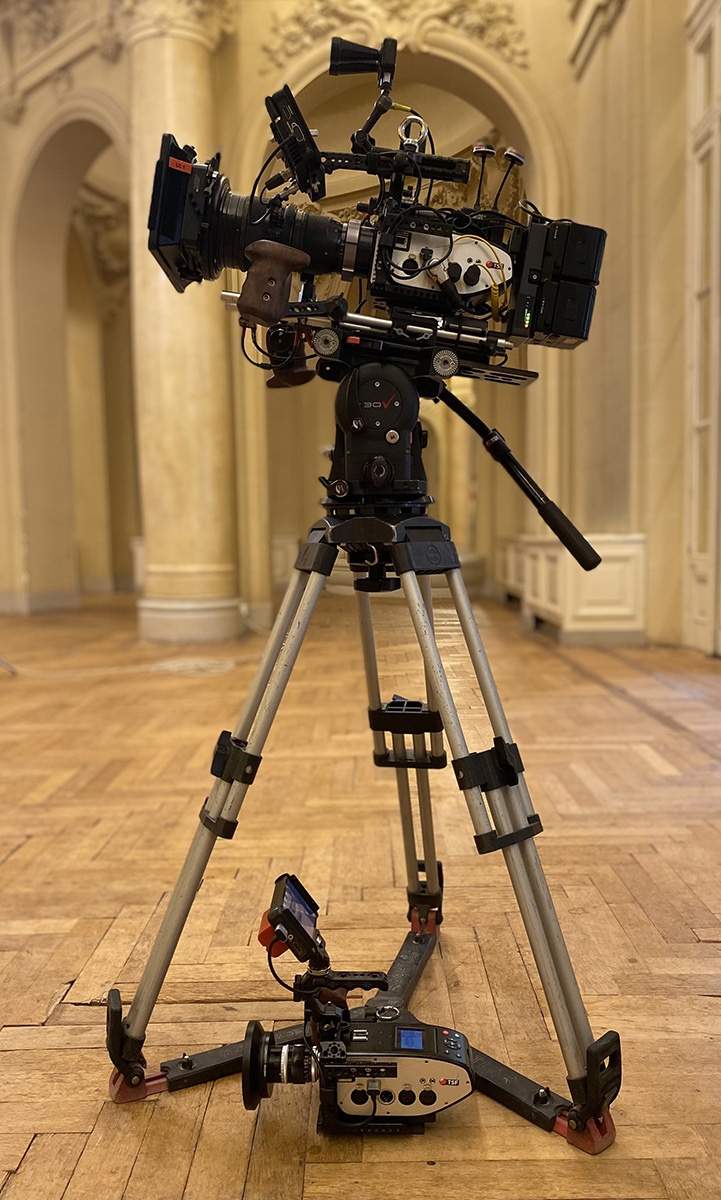
Their strategy is similar to the one that I've been taking for a little while now - I used to hard mount more things to the cameras, but now I'm doing more with nato mounts and arri rosettes, but still keeping things compact. I've also been experimenting a little bit with some of the newer locking quick swap stuff - hawklock from Smallrig and the spider crab stuff from ifootage. They're both alright. Their setup is really clean/nice, but if it's shown cabled up at some point, I missed it. That's the biggest problem I've had (and still haven't solved in a way that I find satisfactory) in moving away from hard mounting my rig/parts. That one is gonna need an HDMI going from the camera to the monitor as well as the power cable going from the battery to the monitor. Their short type c cable shouldn't be too intrusive when plugged in, but the rest of the cables can get/feel a bit obnoxious.
-
 kye reacted to a post in a topic:
Interesting Breakdown Of Arri Colour Science
kye reacted to a post in a topic:
Interesting Breakdown Of Arri Colour Science
-
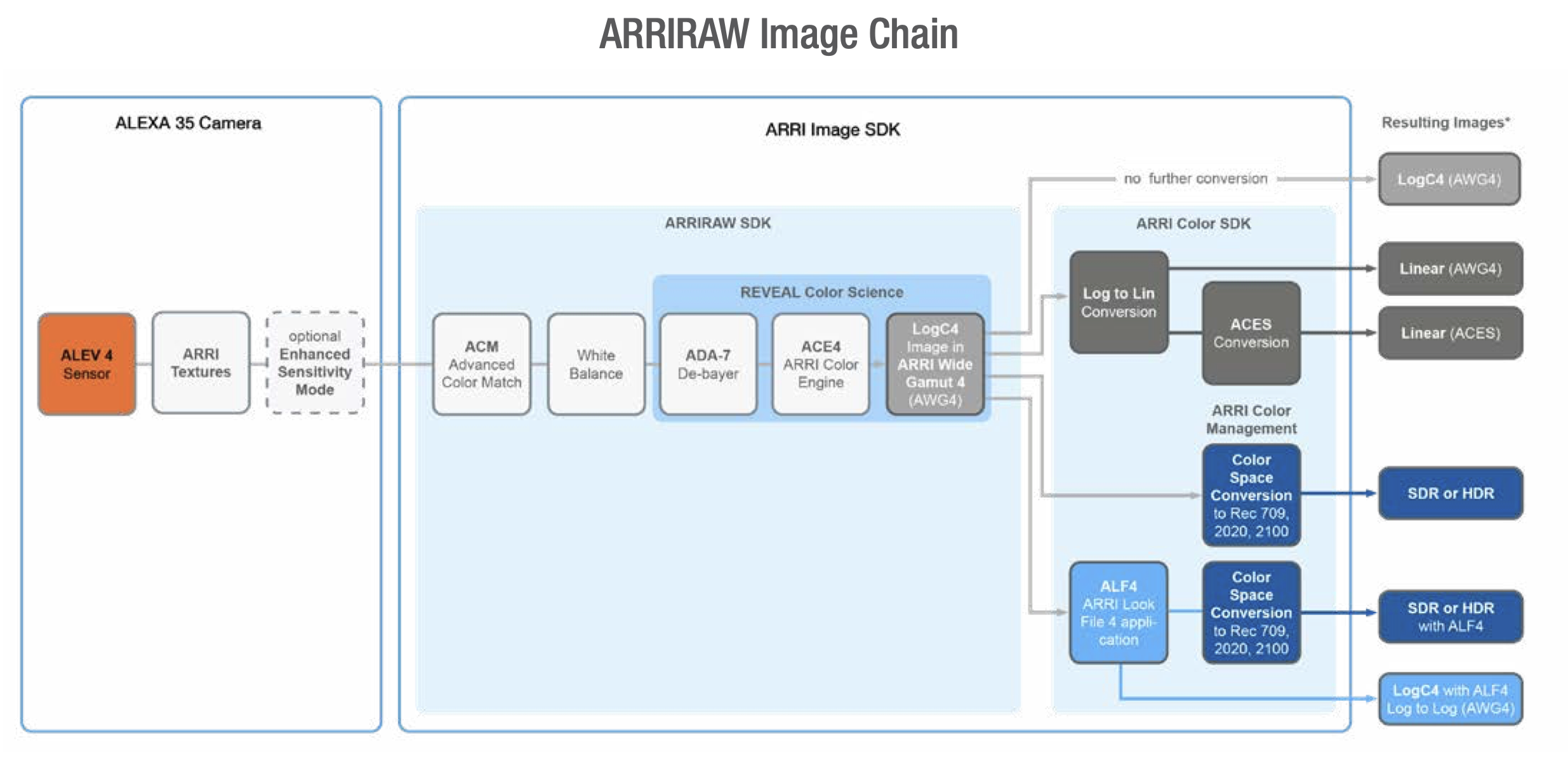
My understanding is that WB is Linear gain, so it makes perfect sense for it to be before debayering. The logic is sound - WB is a mathematical adjustment to the sensor read-out and needs to take place before any creative operations, which for ARRI includes the debayering operation itself. Photographers click the button and expect the file on the card to contain the RAW un-altered readout from the sensor, which they think is somehow pure and have all these rules about what you're meant to do that they all just parrot to each other without anyone actually testing them and actually learning anything. ARRI is light-years beyond this, doing all kinds of processing. As someone who learned photography and then learned video, my impression was that going from photography -> videography was harder and took far more work to understand than learning photography from scratch. I randomly found a thread many years ago where someone posted the five most expensive photos ever sold without revealing where they were from, and the reaction was complete derision, with people saying things like "out of focus" "not sharp" "wrong WB" etc. When the OP revealed these were sold for millions of dollars each the reaction was various combinations of "we are right and people don't know what a good photograph is".
-
The $700 price tag in the US is already there!
-
As a counterpoint, their marketing seems to be working, given that they are now reporting big delays due to higher-than-expected preorders. https://nofilmschool.com/panasonic-lumix-l10-delays Of course, that could also be marketing and/or indicative that they just didn't make many in the first batch to force Fujifilm-esque shortages. This is somewhat true, I suppose, but Sony is still announcing/releasing 4K full frame MILC cameras and people are buying them. Nothing says Panasonic has to release 6K or 8K in a tiny body. If Panasonic released a camera in the GM5 body with the sensor from the GH5 or GH5s for $700, I'd be all over it. In fact, GoPro is releasing an action camera with terrible ergonomics, a smaller sensor, and a 1" mount for $700 and there's all kinds of buzz/excitement around it. If GoPro can cool an 8K sensor in an action camera body, why not Panasonic in a MILC body with 2x the volume? How long can the new GoPro bodies record 4K without overheating? Bet it's "until the battery dies."
-
eatstoomuchjam reacted to a post in a topic:
Interesting Breakdown Of Arri Colour Science
-
Interesting that WB is placed before De-bayer. Photographers call it "white balance scaling" and prefer it not to be done by manufacturer, since its digitally boosting channels, which is irreversible process. After all its not like all things they're doing is science. Some decisions are just an engineer thinking its the best compromise.
-
kye reacted to a post in a topic:
LUMIX L10 - announced
-
kye reacted to a post in a topic:
PC build for editing | davinci resolve
-
Great to see it's still being used at this level. Looking at the linked image from above, I much prefer the handheld setup! I really wish someone would revive the same form factor and Kodak CCD sensor. Is it really doomed to be a one off? Can the same look ever be revived with a modern CMOS sensor? I have my doubts!

-
Andrew - EOSHD reacted to a post in a topic:
Interesting Breakdown Of Arri Colour Science
-
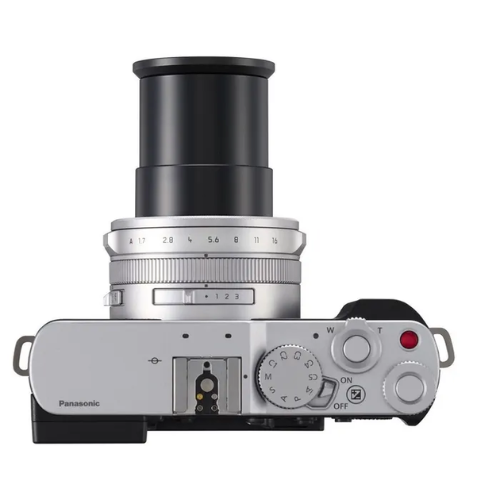
I have a GM5 and I'd love Panasonic to update it but the market usually always chooses "more features" over "tiny size" when given the choice. The Sigma Fp got slammed for no EVF, no IBIS. The Panasonic S9 gets passed over for being too limited, even though it's a similar spec to the S1H, with better AF! And with their 1 inch stuff like the LX15, nobody really bought it... all preferring RX100 VI etc, despite the fact the LX15 is one of the best compacts ever made with an F1.4 lens. If Panasonic made a mistake with the L10 it's the lack of a prime lens version to go after the X100 crowd. I also sense the age old marketing problems again with Panasonic. In Berlin, my local camera store (a very significant and long running one) has a Panasonic rep who is there very frequently, almost on a weekly basis. Panasonic have not even briefed him on the L10, let alone got a demo unit out for him to show to customers. Camera companies need to learn the marketing basics. If your strategy is to build hype around a big orchestrated online launch, have the camera in shops the next day, strike while the iron is hot. Why do the launch and actual release months apart and have nothing to sell?
-
I’d also make sure not to skimp on storage speed - having a fast NVMe drive for your active projects and cache files can make a surprisingly big difference to overall responsiveness, especially when working with larger footage formats.
-
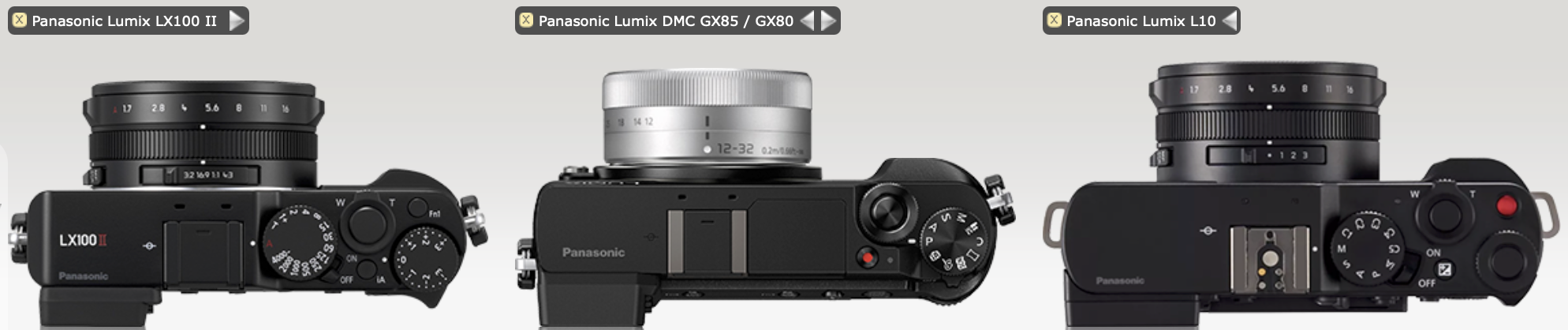
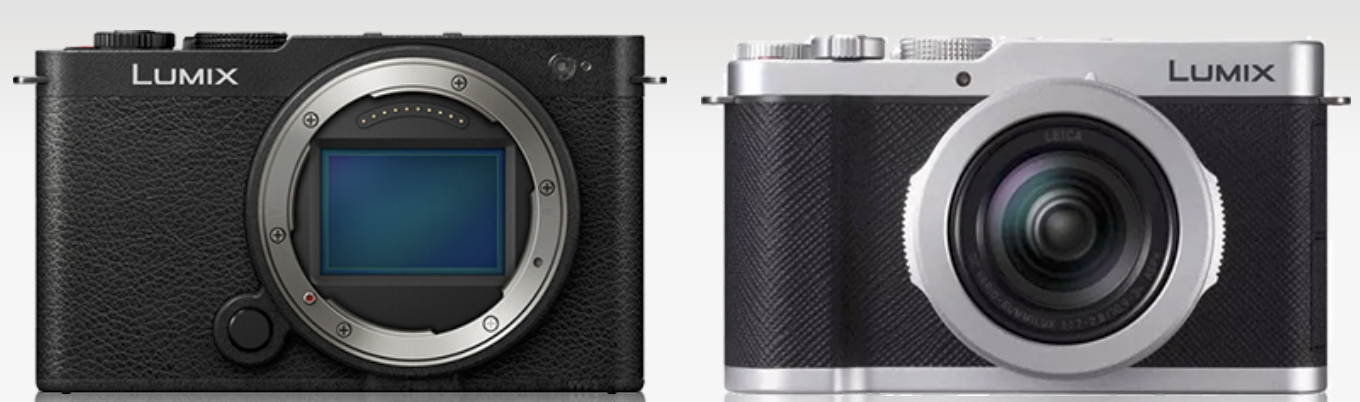
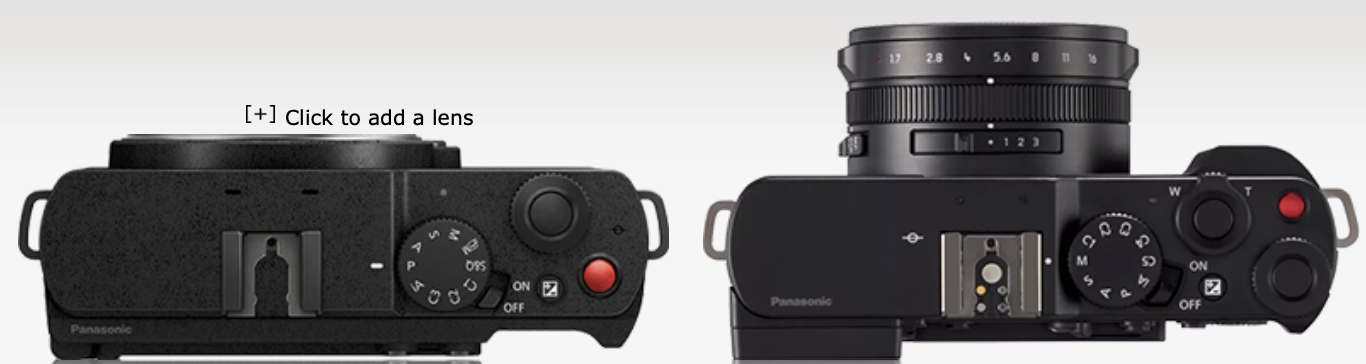
Emily talks about the L10 and MFT small cameras: The main point I took from this made complete sense to me. New cameras need to have new specs, new specs means current sensors and they need more power (both for the sensor and also processing much more data), and therefore there is more heat and larger batteries are required, therefore the chassis just needs to be larger. I note that camerasize.com now has the L10 in their database, so that means we can get comparisons! It is larger than the LX100, but not by a crazy amount... Emily did note that it's not pocketable, but also that after carrying it around Japan for 10 days she didn't feel that it was heavy or bulky at any point, so I guess there's a distinction there between pocketable and it feeling large / cumbersome / etc. It's also interesting to compare to the S9: Obviously the S9 needs a lens (unless you're an abstract filmmaker!) but the purpose of the comparison is that the S9 is a FF MILC camera with IBIS and the body is slightly narrower(!) than the L10, and the same height. So, I see no reason there couldn't be a GX100 in the S9 body as it would be the same except with a smaller sensor. Obviously the depth is different, but that is lens dependent, and anyway, if it's not pocketable then it's down to how large it is when it's in use, and at this point it seems the L10 grows more than Pinocchio running for President: I'm sort-of hoping for a GX100 as it would be extremely tempting, and also hoping it won't happen, as it would save me from being extremely tempted, and draw my attention away from my GX85 that (apart from it gradually turning into a film camera) I am remembering how much fun it is to use!
-
Distinctive vocal, nice guitar work and live:
-
 Aussie Ash reacted to a post in a topic:
Interesting Breakdown Of Arri Colour Science
Aussie Ash reacted to a post in a topic:
Interesting Breakdown Of Arri Colour Science
-
Yeah, there are differences for sure. Some situations show larger differences than others. One theme is that the Panny versions are much more saturated in skin tones than the Alexa. Coming from the kings of colour science, this has got to be deliberate, so even ARRI aren't trying to match the Alexa. I think that instead of asking "are they identical", the better question would be "does this impart some magic". I mean, everyone agrees that ARRI has the magic but their cameras don't even match each other between sensors, so it makes no sense to have a higher bar for the Panny version than we'd apply for ARRI themselves. My impression was that the ARRILogC profile and the ARRI709 LUT is the most like the Alexa, with the V-Log -> CST -> ARRI709 LUT not being as good. This makes sense as whatever colour / gamma secrets ARRI applies in-camera can be put into that profile as it's customised to the Panny sensors and also safely locked inside the camera away from prying eyes (unlike anything they put in their LUT). However, the Alexa also responds differently in the spatial dimension, with the far-red response including a more spatially distributed response from skin tones. We also know that Alexas process the image spatially in-camera due to their texture options and processing. Who knows what is going on with texture in there. IMHO the texture of Alexa images is right up there in importance as their colour response. None of this includes temporal aspects either. While I struggle to think of what processing might be occurring in-camera between frames, there might be some (we can't tell), and that's beyond the possibility that the hardware itself has some sort of secret properties that contribute to the image. FDTimes did an entire episode on the Alexa 35, with interviews of over a dozen people and 100+ pages: https://www.fdtimes.com/pdfs/free/115FDTimes-June2022-2.04-150.pdf Here is the image pipeline in the Alexa 35 (page 59): To give some idea about how stunningly out of our depth basically everyone on the internet is who talks about this stuff, starting on page 116, Dr. Tamara Seybold talks about Textures.. "For example, the debayering already needed to obtain the full color image doesn’t only generate RGB values but also influences the perceived sharpness and grain rendering. And many more steps influence the clarity and grain that are important aspects of the texture of an image. So we, in the image science team, pushed hard to obtain the best results by really optimizing each and every step in the image processing pipeline, not only for the best color rendition but also for the best texture, as we call it. We did that in a holistic way, optimizing steps in the beginning of the pipeline together with later steps so that the overall result would be best. At some point, this came down to having more than 30 parameters that we had to optimize together—a huge amount. We specifically had to build a small “texture grading machine” to be able to optimize all these parameters together." (emphasis added) I don't know about anyone else here, but I would struggle to even list 30 parameters, let alone identify all the parameters, isolate the 30 that matter, then find the sweet-spot (or sweet spots) in a 30-dimensional space. This is regarding the Alexa 35, but I remember reading in there somewhere that the innovation of the Textures feature is that you can choose different profiles on the new camera, whereas on the old ones you only had the one, and that on the previous models they had chosen a texture configuration that was their best attempt at a one-size-fits-all. So the inference was that the previous cameras were also doing this kind of processing. By implementing their colour science inside the camera, they could be doing all sorts of stuff. They could have things that analyse the image and then apply different treatments depending on the scene the camera was capturing. They certainly have a team capable enough and a camera with enough processing power to have a dozen, or a hundred, or a thousand, LUTs or algorithms inside it and be changing these things based on context or WB setting or sensor temperature or whatever the hell else they found was useful. The sheer depth of knowledge that has gone into their image science is incredible. In 2009, Glenn Kennel joined ARRI as their CTO, which was a new position at that time, and in 2010 he was promoted to President and CEO. Glenn had previously worked for Kodak from 1980, and worked on various things that involved the gradual digitisation of the pipeline, including things like telecines and film scanners etc. My understanding is that his contributions at ARRI were pivotal for the development of the Alexa, which was the first digital camera to gain wide acceptance within the industry and did so due its film-like response. A bit of searching revealed some interesting discussions we already had during lockdowns..
-
mercer reacted to a post in a topic:
Interesting Breakdown Of Arri Colour Science
-
-
kye reacted to a post in a topic:
Interesting Breakdown Of Arri Colour Science
-
kye reacted to a post in a topic:
Lightning Rig ALT CINE
-
I'd imagine it'll be somewhere between exorbitant, ridiculous, and "this is just an action camera - WTF".
- Yesterday
-
yer me too, also still wondering about the pricing here in aus
-
https://drive.google.com/drive/folders/1ayD92_55eZom1FTxYGxE6KA_fnjkNwHn
- 1 reply
-
- 2
-
-
It’s not even close.
-
Yeah, nice images! What I have learned in all my research is that there are tiny little sweet-spots in every aspect of the image. People lust after OLPF filters with just the right amount of softening, people marvel at skin tones with just the right amount of compression and hue manipulation, or lenses with just the right amount of distortion. Each of these imperfections / distortions / non-linearities has a certain feeling and aesthetic and comes with a range of associations. Combinations of these will have synergies, or won't, or will clash by pulling in different directions. When we moved from cameras that shot in the publishing resolution and recorded colour in the publishing colour space and gamma to cameras that had higher resolutions and log colour spaces etc, we went from looking at the image that professional imaging scientists tuned into a final commercial product to taking an image that was designed to be manipulated and then applying our own (likely far less skilful) texture, colour, contrast, etc. It's taken me a good decade to start reliably getting images I like, and even then, I'm using a film emulation plugin that is doing most of the heavy lifting.
-

Any used camera suggestions for under $400 for YouTube?
fuzzynormal replied to srgkonev's topic in Cameras
All that's true, but, honestly, I just always liked the image coming out of the GX7 better than the GH5. One's 1080 one's 4k, but ... something about that GX7 sensor. It's a damn old camera and this is a tangent from the OP, but did anybody ever figure out what was the secret sauce from that era of M43 LUMIX? I don''t think I imagined it. 😉 I mean, I look at stuff I did over a decade ago and still think, "shoot, that particular 1080 has a certain quality I like better than things I've done recently." For instance, from 2014: -
Not quite. It's announced, but not available yet, last I checked - unless the latest Resolve 21 beta included it. Though if there's really something to inclusion of additional near-infrared wavelengths making the subtle difference for skin tones is true and if BMD's ir cut filter removes that wavelength, there would always be at least some difference. That said, a lot of the way that guy describes things remind me of someone explaining why they think their $4,000 toslink cable is giving richer midtones than someone else's $30 toslink cable. There seems to be a mix of some genuine understanding of things mixed in with pseudo-scientific bullshit. Regardless, even if were all 100% true and based in pure science, a decent colorist is a big equalizer for a bunch of differences in the SOOC image. 😅
-
Looking at the bigger picture the current lead that ARRI has in this field can be eroded over the next few years by other camera manufacturers.As an example Black Magic is already up to Generation 6 color science and each generation is a step better than the last
-
100%. ......and if you switch the question from "is it visible" to "is it important for the content of the video" the answer gets even clearer!