



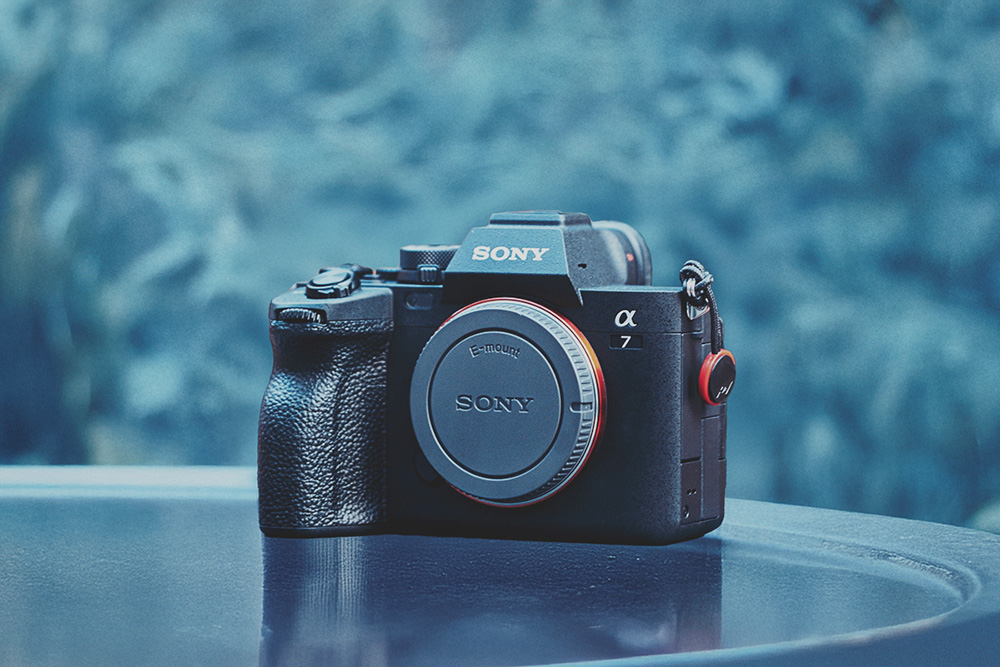
(Photo credit: John Mak)
The release of the Sony a7v has been met with a wave of negativity, especially now that the supposed ‘standard model’ mid-range camera price has been bumped to nearly $3000 + tax and a lot more in some regions, like in the UK where the USD-converted price works out at an insane $3600 inc. VAT, despite the Japanese yen being at historically low levels versus the British Pound.
The Sony a7v specs are equivalent to the Nikon Z6 Mark III which is over $1000 less expensive and a mint condition used Z8 a little cheaper also, with far better specs in every area – especially in the cinematic-video department.
The Sony-badge premium appears to be a real thing – and it is putting Sony at a disadvantage vs Canon and Nikon. The Canon EOS R6 Mark III is a better spec and also less expensive, for video it is almost a different league of spec altogether with 7K RAW and Open Gate. The price of the a7v also gets close to a used Sony a1 flagship professional body, the full fat stacked sensor of which there is nothing ‘partial’ about, and the Canon Cinema EOS C50 full frame Nikon Zr competitor, which is just £400 more than the a7v!
But as usual online, people tend to want to believe that only one opinion can be true at once.
Quantum camera
In fact the Sony a7v is a prime example of quantum physics.
A superposition of two different opinions, where both can be true at once applies to this camera.
All the negativity has it’s basis in the truth.
And all the positivity and people putting down pre-orders for it are right as well.
And it all depends on the observer.
It is true that the Sony name now demands a premium, more so than ever before – because E-mount is the best mount. Pure and simple. It has been around the longest out of all the full frame mirrorless cameras, benefits from Sigma’s range and the best cheapest full spectrum of Chinese lenses, and it has the best selection of glass all-round, native or otherwise. For those who are ‘locked-in’ to a mount, it doesn’t matter how much Nikon Z undercut Sony on price with a Z8 or Zr if you have to spend $6000 on lenses and go through the pain of using shitty eBay to sell your Sony glass.
At the same time, it is true the spec is closer to the Nikon Z6 Mark III end of the market than $3000, and somewhat a safe release with nothing that special to jump up and down about – but at the same time, it is closer to the flagship a1 series than a standard a7 has ever been, and corporate price gouging is only part of the picture – the Trump tariffs have pumped up prices even in the UK, where the USD price seems to dictate to other countries what they can charge for cameras. Thanks very much America.
And yes, Sony are now the new Canon. They have a captive, locked-in loyal user-base in the millions, who are happy with what’s being offered and don’t see the appeal of switching systems just to get some niche video feature or whatever.
This is what Panasonic is finding out with the S1R II and S1 II which are fantastic cameras with the broadest range of features ever but nobody but a small number of Lumix loyalists cares.
This is the hard truth of the camera industry in 2025, sadly.
The negative chatter about Sony recently, is not just regarding the a7v though. The firmware bootloop problem is a topic that really deserves a negative discourse and yet as usual, the mainstream camera advertorial media is not talking about it.
This is a situation worthy of a class-action lawsuit, where it appears Sony, knowing there was a software issue with recent firmware updates across all their top models – rather than come clean and do a recall programme, chose to charge people out of warranty to swap out perfectly fine hardware like sensors and mainboards at the cost of thousands of dollars claiming it was the fix.
Thousands of Sony cameras are mysteriously failing, but Sony isn’t telling
But as my adventure with the bootloopy a7 IV shows, the mere act of updating the firmware again (for example from 5.0 to 5.1) completely cured the issue, and that it was likely due to some corrupt software settings, because of bad programming by Sony’s firmware engineers in Japan.
For this, Sony definitely deserves the negativity.
For the Sony a7v, not so much. It’s a perfectly fine camera, even if it doesn’t set the Earth on fire.
