All Activity
- Past hour
-
Anecdotally, yes, from reddit threads and even Photography Life who have separate pages for the two models and both contain MTF charts that seem to be different (it's not the same image) but the curves appear identical. https://photographylife.com/lenses/panasonic-lumix-g-14mm-f2-5-asph https://photographylife.com/lenses/panasonic-lumix-g-14mm-f2-5-ii-asph The announcements from Panasonic also use the same description - V1 - from Panasonic announcement: V2 from DPReview (I couldn't find the announcement of V2 on Panasonics website? Why do you ask? Your review at the time was quite favourable.
- Today
-
As a naive shooter myself, my challenge is that I know what I want in general (the vision) but not specifically what will accomplish that vision, like which compositions I need to capture so that when I edit them together it creates a seamless sequence that gives the desired vision. In your case it seems like you know how to think about coverage and how to edit things together to achieve a range of different visions that a client might want, but perhaps you don't have a clear idea of what vision you want to achieve? Opposite problems!
-
 kye reacted to a post in a topic:
This guy makes any camera shine.
kye reacted to a post in a topic:
This guy makes any camera shine.
-
MrSMW reacted to a post in a topic:
This guy makes any camera shine.
-
So true. Our training and experience give us an eye for composition and framing. Last winter when I was in Mexico, as a tourist, I started shooting with my iPhone. I thought it was boring so I used an app that replicates grainy, dirty Super8 and shot with that. I realized that I also needed shoot like another person. I needed naïveté in my shooting, so I chose "1960s dad with his Super8 camera". So, I did things like shoot the waves in the ocean with a slow pan to the shore, signs, cars going by, etc. It was refreshing not to have to be so perfect all the time. (Now unfortunately I have to edit it and the footage is not exciting me, but that's a different story.)
-
I oscillate between a number of concepts.. Embracing the idea of looking like a tourist. This has the advantage of being true, but it also gives you a certain license to accidentally commit the odd faux pas (I try not to do these intentionally), which often goes with the territory of shooting in public which some/many people think is un-ethical / immoral / illegal etc, so to a certain extent the entire activity is already unacceptable. Appear more like a local. This means you won't stand out as much, and will get afforded less social lee-way along with the higher expectations. It means you have to do an incredible amount of work to pull it off, including clothing, bags, body language, walking speed, etc etc. Even if you can actually pull this off, you'll still appear like a local shooting in public, which may or may not be socially accepted. Become invisible. While requiring the most work to not only look like a local, but also look like a local who isn't shooting when you actually are, this has the worst penalty for failure, as if someone does realise you're shooting then this is when the sneaky / creepy associations take full effect and you will be treated to the highest level of public hostility. There are also a number of practical limitations to these. When I was in China my wife and I were often the only white people. Our first trip was for two weeks and during the entire trip we saw less than 20 white people, and if you exclude the Unesco World Heritage site we visited, and the street markets, I think we saw 3. Kids would openly stare at us - some like we were the first white people they'd ever seen in real life and like we'd just stepped out of a TV. Old men would stop talking and the whole group would turn to stare at us as we passed by. Old women would look at us and then look away when we looked at them. This was in a city of 2+ million people, so wasn't some tiny town in the middle of nowhere. There were obviously other tourists from other cities and other parts of Asia. My wife recognised people with different accents from the other parts of the country (she watches a lot of Chinese dramas!) and I recognised accents from Singapore and other parts of SE Asia. But basically, as the only westerners in the area, and being over 6' tall, and carrying a large camera, good luck not appearing like a tourist there! I also think there's some authenticity with just appearing as what you actually are. I've heard from a number of westerners living in Japan that even though they've been living there for decades and speak completely functional Japanese, locals will still switch between Japanese and broken English when talking to them, and there isn't really anything they can do to make the local just talk to them in Japanese. So these people are literally locals, and yet because of their appearance still get treated like they can't even speak the language properly. I've also noticed a significant difference in the vibe when out shooting between different places. In some places the locals don't like you shooting in public (and they will let you know - subtly or otherwise!), in some places the people don't like it but won't say anything (e.g. Japan) and in some places the people will freely speak their minds but don't care (e.g. China). I've heard some parts of SE Asia are also indifferent to people shooting in the street. One thing I have learned though, is that body language and your instincts seem to be universal. I've had many experiences where it felt like something was off (despite logic not indicating this) and it turned out to be that way, and also in times when logic would have suggested things weren't right, but my instincts said things were ok and they turned out to be fine then as well. An example of that was that I was in Cambodia and walking around in the back-streets and alleyways at night, and my logic was saying "are you crazy???" but my instincts said things were fine, and I discovered that what looked like a warehouse district was actually family homes (you could see the ancestor shrines through the cracks in the huge industrial doors each home had) and the commotion around the next blind corner was actually young kids riding their bikes and playing. I still see the benefit of a small camera and not dressing like a caricature of your home culture, but authenticity begins with your appearance matching what you are, which the people around you may or may not like, but you won't get the negative reactions associated with misleading people and them finding you out. I seem to have 'composition brain' that turns on quite a lot as well. I find that when I am travelling it helps me to appreciate the aesthetics of my surroundings and makes me really look at where I am, rather than just drift along as the place washes over me and is immediately forgotten. It is definitely something I am very conscious of though, and I turn it on and make sure I do it properly, and when appropriate I turn it off and don't think about it at all. This means I can fully enjoy a location, or a meal, or an interaction / conversation with someone, and also fully enjoy shooting as well. I'm sure when I'm shooting I'm missing moments, and when I'm not shooting I'm missing compositions, but keeping them each 'pure' prevents me from trying to do both and accomplishing neither and just wasting that time.
-
kye reacted to a post in a topic:
This guy makes any camera shine.
-
kye reacted to a post in a topic:
This guy makes any camera shine.
- Yesterday
-

What is the significance of Homer's "Odyssey" ?? in 3 minutes
eatstoomuchjam replied to Aussie Ash's topic in Cameras
He's also harmful in that I've dealt with more than one director who said that we wouldn't be taking the time to light things on set and referenced him. "We're going to do this more like Malick - natural light only, no lighting." "Right, but have you seen most of his films? They don't look very good." "That's the aesthetic I'm going for." "Cool, well I'm out then. Wish you the best with your film." (Their shorts, when done, made you long for a Malick film) -
 eatstoomuchjam reacted to a post in a topic:
What is the significance of Homer's "Odyssey" ?? in 3 minutes
eatstoomuchjam reacted to a post in a topic:
What is the significance of Homer's "Odyssey" ?? in 3 minutes
-
sanveer reacted to a post in a topic:
What is the significance of Homer's "Odyssey" ?? in 3 minutes
-
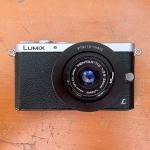
Is the 14mm F2.5 II the same optically as the original?
-

What is the significance of Homer's "Odyssey" ?? in 3 minutes
Andrew - EOSHD replied to Aussie Ash's topic in Cameras
Let's change the subject. Terrance Malick is the most overrated boring director ever, adored by hipsters, hated by real filmmakers. -
Ha, me, everywhere all the time. I cannot step out of my house without continually working out how to shoot in any given environment whether it’s public transport, a restaurant, a bus, an elevator… It’s something that is just hardwired into you! 😂
-
Yeah, this was my job for a while in the middle of my career. It's a hell of a thing to learn. People, or tourist (especially tourists) going about their lives tend to look unattractive while also being ostentatious. A shooter, depending on what one needs to do, has to mitigate that or leverage that in various ways. Anyway I can't be a tourist anymore. When I visit places I'm always looking at situations with my videographer's bias and can't seem to be in the moment.
-
 eatstoomuchjam reacted to a post in a topic:
What is the significance of Homer's "Odyssey" ?? in 3 minutes
eatstoomuchjam reacted to a post in a topic:
What is the significance of Homer's "Odyssey" ?? in 3 minutes
-
MrSMW reacted to a post in a topic:
This guy makes any camera shine.
-
 leset71917 joined the community
 -
kye reacted to a post in a topic:
The GX85 "Super-16" project
-
Here* is the announced 17 stops of dynamic range, what else? ; ) * https://thenewcamera.com/dji-pocket-4-pro-release-date-and-global-availability/ And the most solid candidate to discuss the sales with:
-
Any takers over this corner?
-
Emanuel reacted to a post in a topic:
X-M5 New Fujifilm Creator Focused Camera
-

What is the significance of Homer's "Odyssey" ?? in 3 minutes
Aussie Ash replied to Aussie Ash's topic in Cameras
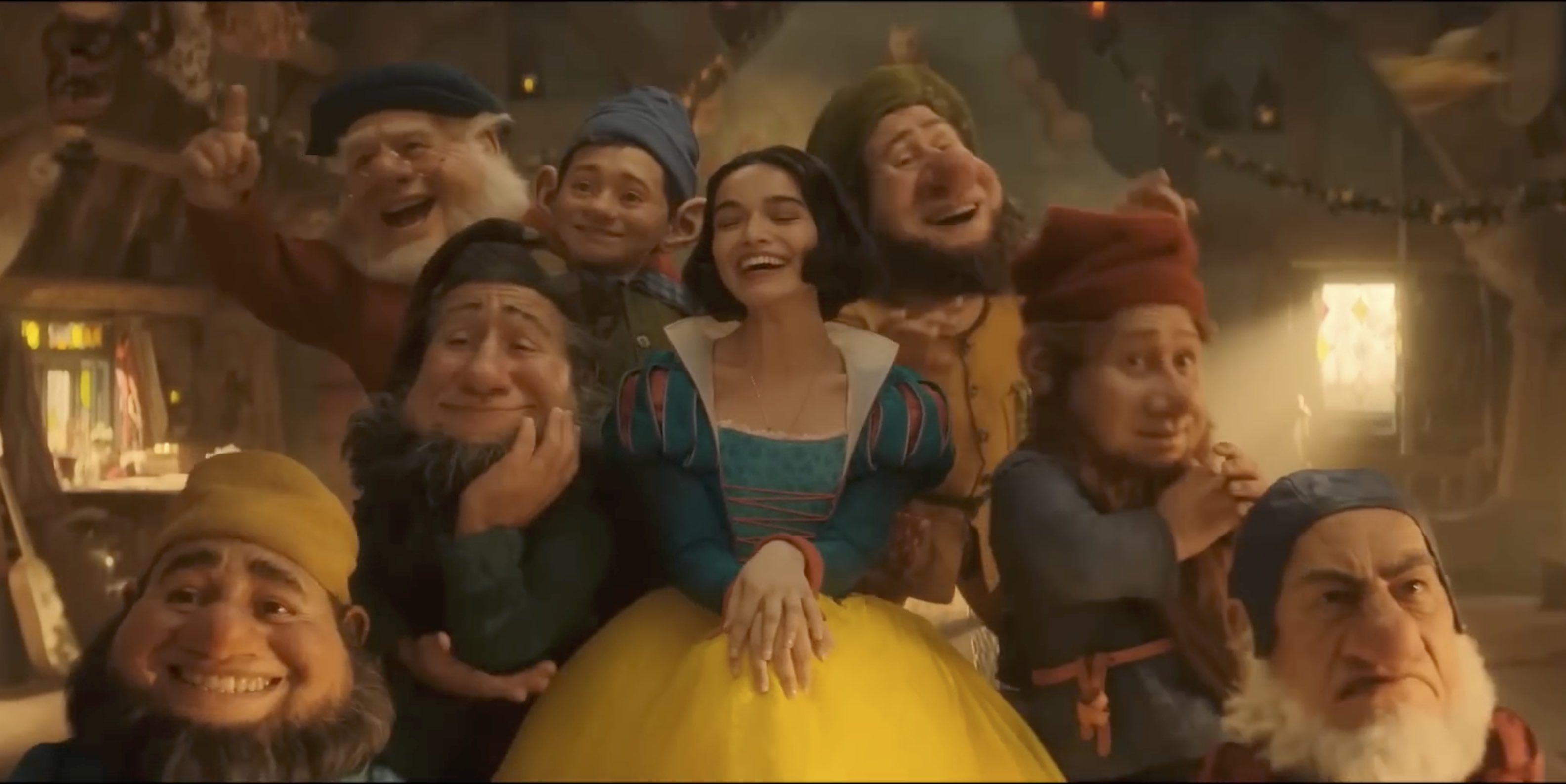
Looks like they haven't learnt anything from "DEI Snow White" loosing $170 million.The Odyssey is shaping up to be another "go woke,go broke". Why the silly looking noses on the Dwarfs ?
- Last week
-
Right. Recently I did some transfers from films for someone. Most were from the 1950s but some were 1960s and '70s. It's noticeable how the film stock improved. When they switched to Super 8 it was very much better having the larger area used for the image but it was more than that. Even the Regular 8 from the 1960s was better than earlier stocks. The collection came with the original boxes that were returned in the mail from the lab and it's the same stock and ASA, but manufactured 10 years later. Hope you're having fun figuring this out. I love this kind of thing.
-
My understanding was that Brandon literally helped make the genre with (what I like to call) "washing machine travel films" like Hong Kong Strong that are like you rolled and spun a camera through a city and then cut it with only match-cuts - they trigger my motion sickness pretty strongly and I literally can't watch them. However, people loved it and he got a bunch of TV appearances out of it: As previously said in the thread, he can make any camera from the last decade shine, and he has, and it's skill. All true. What no-one else has said though, is that videos like this are film shoots. They're not holidays, or someone filming while traveling (even slow travel).. These videos are researched, storyboarded, scheduled, and then shot on location with a cast (him and his GF, but often he recruits locals and will direct them like he's shooting a narrative) and crew (IIRC he's mentioned hiring people to fix, drive, translate, liaise, etc). This is no secret, and his free BTS content shows this openly. I think he sits in a fascinating space that I don't see a lot of professionals operating in. He shoots uncontrolled (and uncontrollable) situations, like markets and crowded public places, does so with talent and a shot list, but does so shooting relatively low-impact. People shooting a travel doc will be shooting with talent in markets and in the streets but will have huge shoulder-rigs and will build up a little crowd of people who are just staring at the shoot and have to be choralled to keep them out of frame. People shooting relatively incognito in a crowd are mostly doing it without talent or a plan or shot-list. Not a lot of people sit between those two scenarios, and even less will tell you how to go about doing it. I've paid a lot of attention to his BTS segments (which are excellent if you want to make videos like this) but as someone who travels for the enjoyment of it and shoots along the way, I can tell you that there is very little overlap between shooting while you travel and producing and shooting and editing a travel film. I put myself on the email list for when he launched his course, and when it was released it was pretty pricey. Probably good value as he obviously knows what he's doing, but too much for me considering the differences of our methods. Maybe it's an aesthetic thing, but his work looks dated to me now, including the Oppo piece. I understand why he still shoots these things like this, because he's appeared on quite a number of videos like this that are posted on the manufacturers channel, rather than his own channel, so it's obviously how he keeps the lights on.
-
I'm imagining that it will be lens-dependent too, as some lenses are built for sensors that are happy to detect light that hits the sensor at an angle, whereas others want the light to be coming from an angle more perpendicular to the sensor. My understanding was that this is why some lenses vignette heavily on some cameras but not others, whereas some other lenses work fine across a wide range of sensors.
-
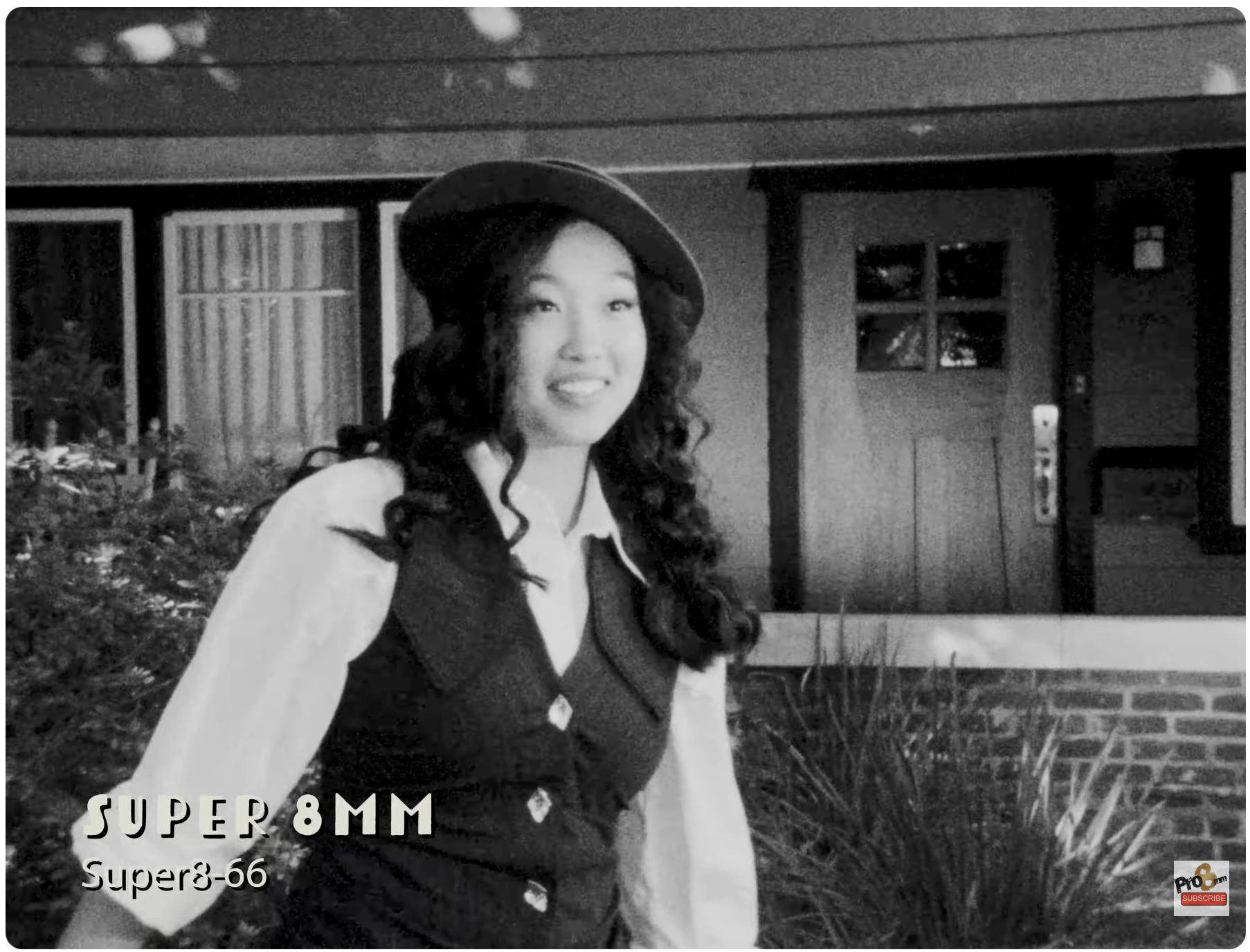
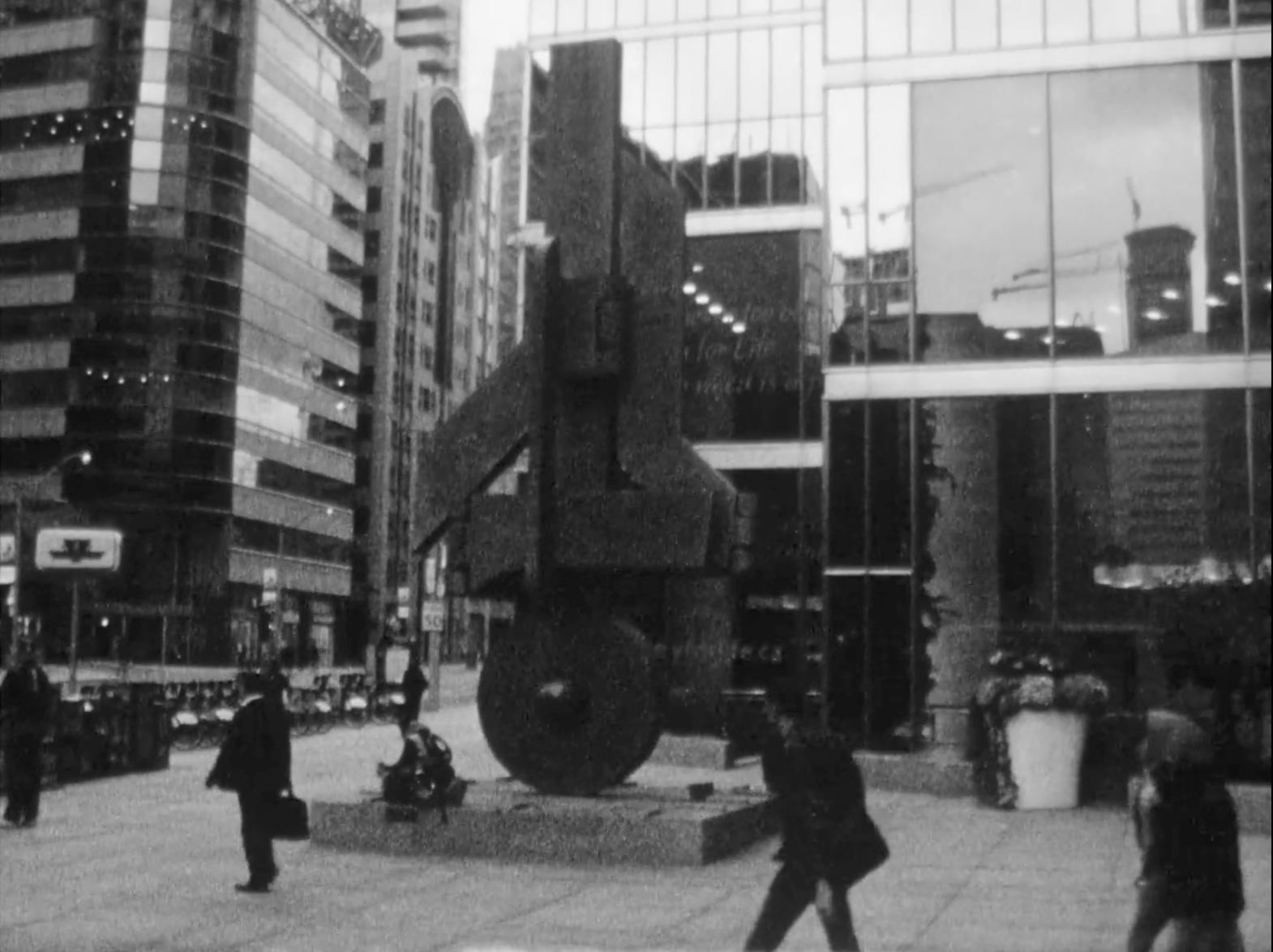
My film friend said that the edges were too sharp for S16, and gave me some examples of things printed on 2383 that look SUPER soft to me. It makes me think that the look of film is really two looks: 1) the look of a neg scan (which is digital from then on) 2) the look of a negative printed to a print stock I wonder how much "film emulation" is actually emulating the first one. I also wonder what look I'm going for. It occurs to me that back in the day what we'd see on analog TV would be low-resolution film scans (having maybe 480 lines) but would have had semi-infinite horizontal resolution (bandwidth limited and all that I know) and would have had zero digital compression, so the grain would have been fully in-tact (and therefore loud and proud). I suspect the aesthetics I absorbed (and are unconsciously referencing) would have been from music videos, sports videos, etc in the era of MTV (80s and 90s). In this early time anyone with a low budget would be shooting on 16mm (or 8mm!) and often not the highest quality lenses or cleanest stocks etc. I'm guessing I probably watched thousands of hours of pure-analog uncompressed 16mm or 8mm footage scanned and broadcast in SD, and those would have been quite DIY / experimental / creative etc, rather than the much more produced and formulaic outputs that came later on. Thanks! Like I said above, not targeting and specific pipeline, but I did calibrate the contrast on the first set of images from the GX85 to the DR of 2383, which was 5-6 stops in the linear range. The goal is to get something that looks like it could have been shot on some unknown stock. Realistically, this is a proxy for the images just not looking digital, and apart from trying to emulate VHS or Betamax, there aren't any other analog looks to draw from. Plus, film did a ton of things that research says that are aesthetically pleasing, and I'm sure I also have some baked-in nostalgia or just acclimation to this look. Interesting you think of T-max, and think this is fine grain. The grain on this is based on the 16mm preset in FLC, but modified to be softer. More on this later. I looked around and found a few 8mm examples with high contrast, but most were much more faded-looking, even stuff that seems like it was shot recently. There's this video which has shots like this: or this one with shots like this: Thanks! It's definitely more about training my eye to learn what I like rather than any sense of accuracy, however film has so many things that are desirable that there's so much overlap I couldn't do either one to any degree without also making huge progress in the other! The technique I'm using is to add the grain first, then soften the image. This ensures that they have the same amount of softness and we're not dealing with these horrific combinations of sharp footage + soft grain, or the other way around. The people I spoke with suggested that this tends to look a bit soft and so they either sharpen afterwards, or add a touch more grain on top. These shots had a touch more grain on top. What I didn't do is match the grain to the image. I added 16mm-sized grain to a sharp image, then softened that. Maybe I should just add 65mm-sized grain so it matches the resolution of the image, and then adjust the amount and softening to match the stock. I definitely have more to test. You're also right about moving grain vs frame grabs. I'm reluctant to post video samples until I've worked out how much grain to force-feed into YT to get the right amount of it out again. Definitely all considerations for a full-historic-emulation. I'm not really chasing historical accuracy in the sense that you're talking about, although I might be chasing some specific something I saw once and loved, which is possible (or quite likely) considering I watched a ton of very creative and edgy films growing up, including a lot of early music videos and skateboarding videos, which are much more likely to have been hand-held and with the camera being used to express attitude rather than the restrained professionalism of documentary or narrative cinematographers. I'm still figuring this out, but I suspect that what I have in mind is a feeling that I'm chasing, or perhaps an attitude, and I'm trying to get closer to that on every level at once. The colour and tone, the texture, the movement (motion cadence?), the compositions and camera movement, the choice of subjects, then in the edit the pacing and rhythm, the structure of shot combinations and overall arc, as well as the music which I plan to write as well. It's the whole vertical stack from tech specs to final feeling and emotional aftertaste of the edit. I have always liked street photography, and for this project (which is sort of a subset of my Night Cinema project) it's really shooting high-attitude moving street images. The gold standard for this is Illkoncept, who shoots travel videos on digital but has also shot some videos on his 16mm Bolex: From what I understand the Bolex doesn't have that many lenses and the ones available are often very soft, so this 16mm footage is a lot softer than other examples. This is in contrast to a setup like this, where they have used Vision3 50D and shot on the Laowa Nanomorphs and scanned at 6.5K, so this is sort-of an example of an image pipeline where the negative itself is the limiting factor: The other thing I've heard is that over the decades they improved the film itself, and what I was lead to believe was that it doubled (or more) in sharpness, so late 8mm film matched early 16mm, late 16mm matched early 35mm, and late 35mm matched 65/70mm. Great discussion.. it's forcing me to think about all kinds of things I hadn't really considered, which is the whole point, plus the result I'm getting are improving with each iteration.
-
The sensor isn't all one flat plane, there are filters in front of the photosensors and the dust is on top of the outermost filter surface. It definitely shows up more clearly at small apertures than wide open.
-
Sony a7r VI (Mark 6) - an a1 beater for $2000 less
Andrew - EOSHD replied to Andrew - EOSHD's topic in Cameras
Bayer 8K sensors don't even resolve 8K -
Very true, he sells but his delivery deserves it anyway : ) His work demands for. I truly praise his videos, used to follow them whether I buy or not (well TBH, actually not, the most part if not all the time! LOL But I see him a real talent, no doubts left :- )
-
The six figure paycheck (I would hope for his sake) they gave him to do it.
-
Nice stuff. I like this project. Discovering what the elements are that you like about film and training your eye to notice the tiny things that give it away that it's not film. These are all good but I like the second batch here the most. The grain is high in a still but might be okay when moving. The shot of the button on the pole is the one that to me shows that it's not film. I can see that there's more resolution there than the grain would be giving, making the grain look like an overlay. (Maybe add a tad blur to the image, or use a smaller grain effect?) I find using vintage zoom lenses meant for 16mm cameras to just naturally give that look. When you zoom in it's a lever that you move, which looks different than turning a lens ring or a motor turning a lens. How a camera's shape and weight affects your camera work is important for the look. Some Super16 cameras were shoulder mount so maybe get something that replicates that type of movement. I now have a shoulder rig for my D16 and it gives a different feel to the footage's movement than pistol grip type of shooting. I prefer it really. I don't use the pistol grip ever. (Too bad because the grip looks cool.) Another thing, which probably doesn't apply for your project, is what someone in the past would have shot and what they would have concentrated on and framed. That's another thing altogether. Are you thinking of also shooting so that it looks like it was shot in the past or is it replicating someone in the present day shooting film?
-
I cannot resist... ZR coupled to this one (Tamron 28-75mm f/2.8, the G2 for the sake of getting the best bang for the buck).: + Viltrox 24mm f/1.8 Nikkor 40mm f/2 and TTArtisan 75mm f/2 are two other no-brainers, so I can't help myself :- )
-
Very good one... priceless ; ) Yes indeed, this guy in particular has charisma as fine character too, no less :- )
-
I originally read the title as “This Guy Makes Any Camera Shite” and thought my cloud account had been hacked. I enjoy watching Brandon Li’s stuff, particularly the self shooting ones. Self shooting as in shooting on your own as though someone else is shooting rather than self shooting in the vlogging context. Tripods basically.
-
It's a good start! Are you targeting a specific film stock to emulate? It seems like you're aiming for negative film now since you're talking about wide DR. Positive film actually has a lot more limited DR, generally speaking. The color images, while nice, don't really "feel" like any film stocks that I know which seems a little more digital. The black and white images, for me, feel like something shot on a modern t-grain film (T-Max, in particular). I think that's a combination of the sharpness of the image, the contrast applied, and the very fine grain. I probably wouldn't think of it if not paying close attention, though!