Emanuel
-
Posts
7,012 -
Joined
-
Last visited
Content Type
Profiles
Forums
Articles
Everything posted by Emanuel
-
Slowmo this time ;- )
-
Quite impressive... : X
-
A new Super 16 Cinema Cam: the GoPro Mission 1 Pro ILS?
Emanuel replied to John Matthews's topic in Cameras
You're pretty accurate on this one : ) Some elegant shots and atmosphere right there on your other entry, kudos to you, they sell the cam... ; ) Loved the voice too BTW :- ) -
Love your insights, you should post more :- )
-
No idea about y'all but, the more I find the more I see it as a no-brainer purchase, no other way now with that detachable monitor à la Luna Ultra/Osmo 4P maybe too ; ) on top of everything the X300 Ultra already offered (well, except perhaps better cooling, if that's actually improved), including stabilization and 400mm reach, for one thing : X https://www.stufftaiwan.com/2026/10/08/vivo-x500-pro-max+400mm增距鏡周杰倫演唱會實測,解鎖4k動態照片/ And the guy or gal or whoever is behind the cam shoots bad as hell... However, with current and proper AI (am I Mr. Trump's enemy from now on? LOL) techniques, I'm pretty sure we can all get incredible results out of it, external SSD and all ;- )
-
How and where to find the respective builds/updates?
-
Here's another one to also offer 10-bit 4:2:2 APV and 4K120 (Log), including shots at 3200mm... : X source The only camera phone capable of shooting 4K at 240fps*! Yes, you read that right! : P External SSD recording on Android side then, as much as the most recent iPhone camera phones. And it even opens the door to a whole new level of accessories, the kind you'd normally only expect from dedicated cameras like the Luna Ultra or Osmo Pocket 4P, to say the least: And I won't even tell you what you could do with this bloody thing, or I might end up being accused of something else... LOL ;- ) * only available with the main sensor and 17-stops, though.

-
A new Super 16 Cinema Cam: the GoPro Mission 1 Pro ILS?
Emanuel replied to John Matthews's topic in Cameras
Great piece of tech, both ; ) Irresistible. Love the colours. -
A new Super 16 Cinema Cam: the GoPro Mission 1 Pro ILS?
Emanuel replied to John Matthews's topic in Cameras
Y’all have to ask for a paycheck, ’cause I’ll end up buying this one, it’s almost impossible not to... :- ) -
Apologies accepted : ) And yes, on the three cases you describe, I think intent and actual use are really the dividing line. Sneaking equipment into a venue against its rules in order to reproduce and commercially exploit a show is obviously a very different thing from taking photographs or footage for personal, documentary or artistic purposes. My objection was simply to collapsing all of that into “piracy”, or assuming that professional-looking equipment, or even a professional background, somehow tells you what someone's intent is. Yet, on accreditation, as you seem to concede... ; ) (hope this time my emoji happens to display properly at your end ; )) LOL : ) Once we accept that 100,000 smartphones, or a smaller number of proper cameras, may be inside an event and that within reason there may not be much anyone can or should do about it, accreditation itself clearly isn't the magic dividing line. Prior arrangement may certainly matter with particular equipment or particular uses, your 600mm example being a useful one to discuss, but that's rather different from assuming that someone who isn't accredited is therefore doing something improper. Again, context, the rules of the particular event, intent and actual use matter much more. There's another point where I think we may be looking at this from opposite ends. I wasn't really suggesting that these new devices replace professional cameras. If anything, part of my point was exactly the reverse. There are situations where a professional camera, however superior it may be technically, simply cannot replace one of these devices. A 600mm lens, the example you mention, may give me a much more powerful image for a certain purpose. It is a telephoto lens. Why should that automatically be considered "professional use" rather than normal or casual use?! How else are you supposed to get a close-up in those circumstances? Only for professionals?? Really? : ) But if I can't take it through the door, can't move freely with it, or its very presence changes the access I'm given, then for that particular job it isn't a substitute at all. Size, discretion, mobility and access are part of the imaging equation too. That's precisely why I find these new devices interesting. Not because they make professional cameras obsolete, but because there are circumstances in which even the most professional camera cannot do what they can. BTW, the (ab)use of close-upssss by professionals on soap operas is a piece of crap... but that's definitely another discussion ; ) not for here now : ) And since this thread has drifted into legal issues, rights and concert coverage, take a look at this. It was published yesterday, so this is very fresh: https://paginaum.pt/2026/10/04/neta-de-cavaco-silva-comete-crime-de-desobediencia-ao-recusar-cumprir-deliberacao-da-erc It's in Portuguese, but it should translate easily enough in a browser. Música no Coração is actually the very same company, then owned and run by its co-founders Luís Montez and Álvaro Covões, that brought The Stranglers over for a concert whose live video recording I produced 32 years ago. Today Música no Coração is led by Mariana Montez, granddaughter of former Portuguese President Cavaco Silva. She was born in 1996, so she wasn't even born when we made that recording in 1994. She has since taken over as Executive Director of the company. There is a slightly ironic accreditation footnote to all this too. Covões later founded Everything Is New, the promoter behind the four Coldplay shows in 2023, coincidentally in the very same town. They wouldn't give me access because I had missed the accreditation deadline, which is actually a pretty good example of how someone may end up unaccredited without there being anything remotely improper about it ; ) By contrast, I remember Ritmos & Blues, who promoted the Rolling Stones at Alvalade (Lisbon, Portugal) in 2007, sorting out my accreditation at the very last minute, with the concert effectively already under way. Different promoter, very different outcome, different circumstances. And you have to be ready with the right gear for any of them!! That's exactly what this is all about ; ) And, for some further context, before film school I was already in law school. I was still a law student at the time and graduated three years later, so legal issues have never exactly been secondary to me. What pisses me off is not disagreement. It's when assumptions start distorting who is who, what somebody has actually done, does, or is prone to do, and the background they're speaking from.
-
Apples to oranges, not exactly the same but I basically agree with you : ) Huawei Collector's Edition is going today for EUR 2250 / USD 2500, so too much for a camera phone... We buy a ZR for less : D A much fair price would be around the EUR 1500 mark... We buy the Honor/ARRI (not the Robot*, more expensive, especially comparing with other gimbal counterparts) and the 16/1TB version (against the Huawei's 16/512) for less these days... And you double the tele range with. So, a more interesting deal IMHO. Let's see what Black Friday brings us next month... - E. * For the same ticket you pay the other Honor/ARRI (without teleconverters, for a fraction of that Huawei's Ruiying Z10 module zoom lens) and you can even pick 1x Luna Ultra or Osmo 4P... ; ) two-in-one purchase, that is, Huawei is decidedly playing a pricey game for now : ) Makes me closer to be prone to end out there instead ; ) In any case, overheating has been my beef against these capture devices...
-
Piracy?! That is quite a leap from what I actually wrote. Yes, you later qualify it by talking about personal use, but you were the one who introduced “event video piracy” and making money from unaccredited shooting into a discussion where I had said nothing of the sort. For the record, I have never made a single cent from piracy in my life. And “not accredited” does not automatically mean “unauthorised” either. There are plenty of public concerts and events, including free ones, where there is no meaningful accreditation process in the first place. Sometimes they are organised or supported by public bodies and the whole situation is simply very different from a ticketed arena show with a tightly controlled press pit. And even at paid concerts, anyone who has actually spent years moving from one professional job to another with a camera in his hand will know exactly what I mean about the arrogance you can sometimes encounter from press offices. Being treated like livestock while being moved in and out, told where to stand, allowed three songs, then pushed out of the pit or backstage as though the people actually doing the camera work were an inconvenience. You really have to have worked with a camera in your hand to understand what I mean by that ; ) And that brings me to something the video world has a curious habit of forgetting: hey, still photography exists! : P Photographers, to be fair, can be equally guilty of forgetting motion : X A concert is not only something to be filmed. It is something to be photographed as well and photography, in motion or not, at its best, is art < 3 Then, of course, there is DSMC. Stands for Digital Still and Motion Camera. Perhaps you've heard of it : ) I don't know where you were when Jim Jannard and Jarred Land were already pushing that idea nearly twenty years ago, but I remember very well where I was and what I was already doing ; ) The distinction between “stills” and “video” has been breaking down for a very long time. Which is precisely why something like this Huawei or the other Honor (ARRI) : D posted in another thread, is still fairly interesting to me. Not because of piracy, for sure! (how easily people can pull the trigger on conclusions coming entirely from their own minds is beyond me! : ) but because it potentially gives you a serious imaging tool without immediately putting you inside the usual professional-access cage. And since you brought money into the discussion: if you ever feel like contributing to my income, you're more than welcome to put something from my actual work in the shopping basket ; ) With a bit of luck, it might even arrive signed not only by the alleged “pirate” himself LOL but also by the rock star the pirate photographed. And who knows, since he's a rock star, perhaps his autograph might even become collectible enough for you to sell it on eBay for a profit someday : D Now that would be such a commercial transaction! : P (E. :- ) The Waterboys / Mike Scott (posted on EOSHD), 2024 PS: I guess I don't need to post here every time I see him/them again as I did last June, the day before Robert Smith and his band aka The Cure, from whom I'm now ripping off one of their song titles for a book I'm prepping while dropping by here ;- )
-
No clue what it is for you but to me, and maybe in fact, definitely not for the usual naysayers ; ) it is OOAK : ) Price and convenience-wise? No less so :- ) - EAG
-
Take a better look at the video, Stephen, where the reviewer explains why this is actually an entirely new product concept... ; ) But let me answer you on this new one now: Have you ever been to a music concert with a camera in hands without being accredited as often happens but just not all the time? : ) Maybe not or perhaps you've already been asked to leave your telephoto zoom at the cloakroom, assuming there even was one... ;- ) Or then, going to the middle of the crowd with your gear after the first three songs... : X I bet you're able to pay for it in just a single gig! : P - EAG
-
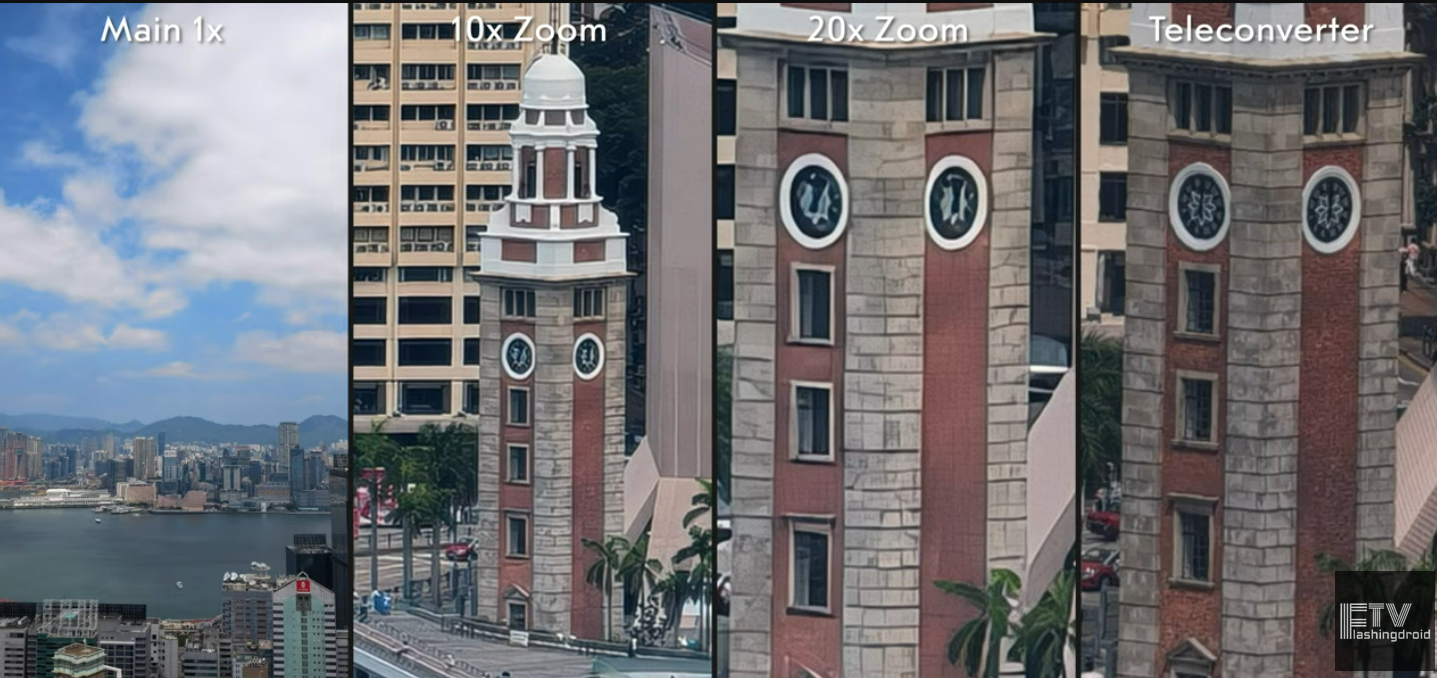
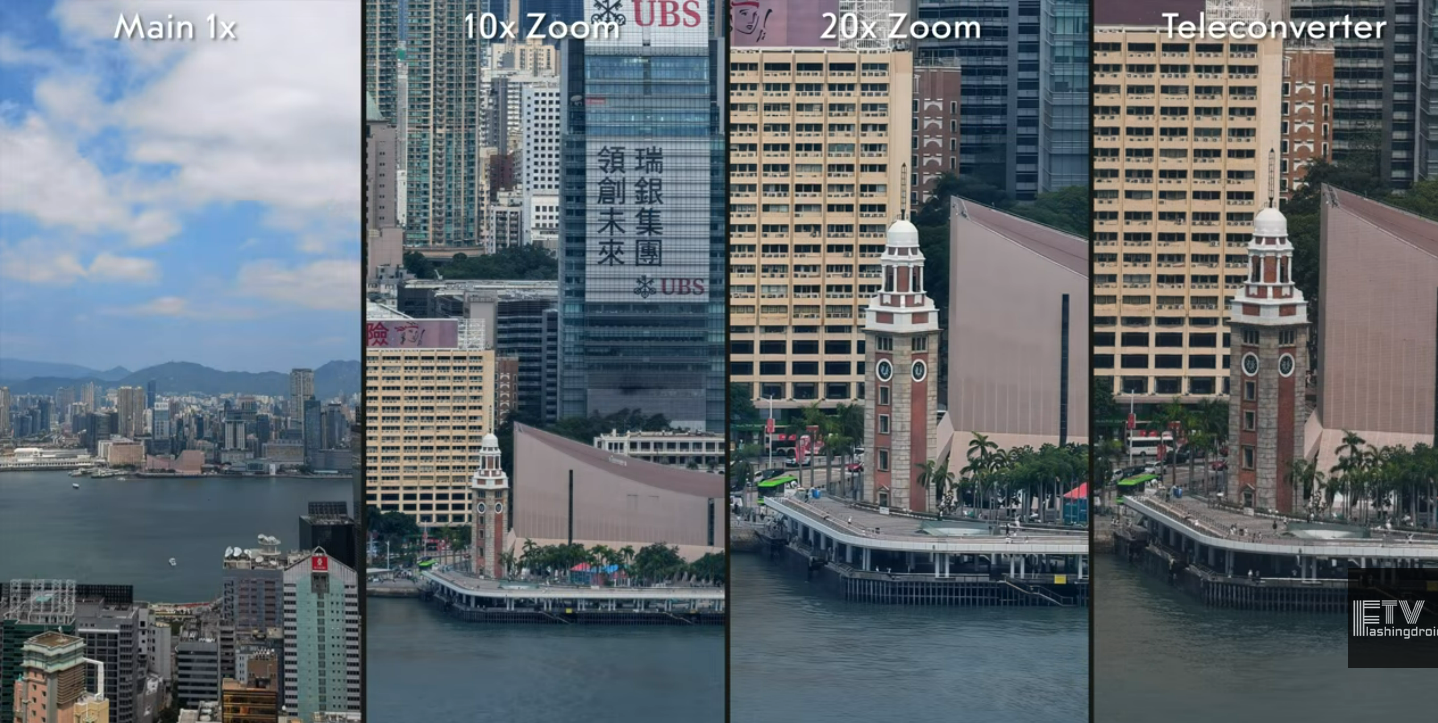
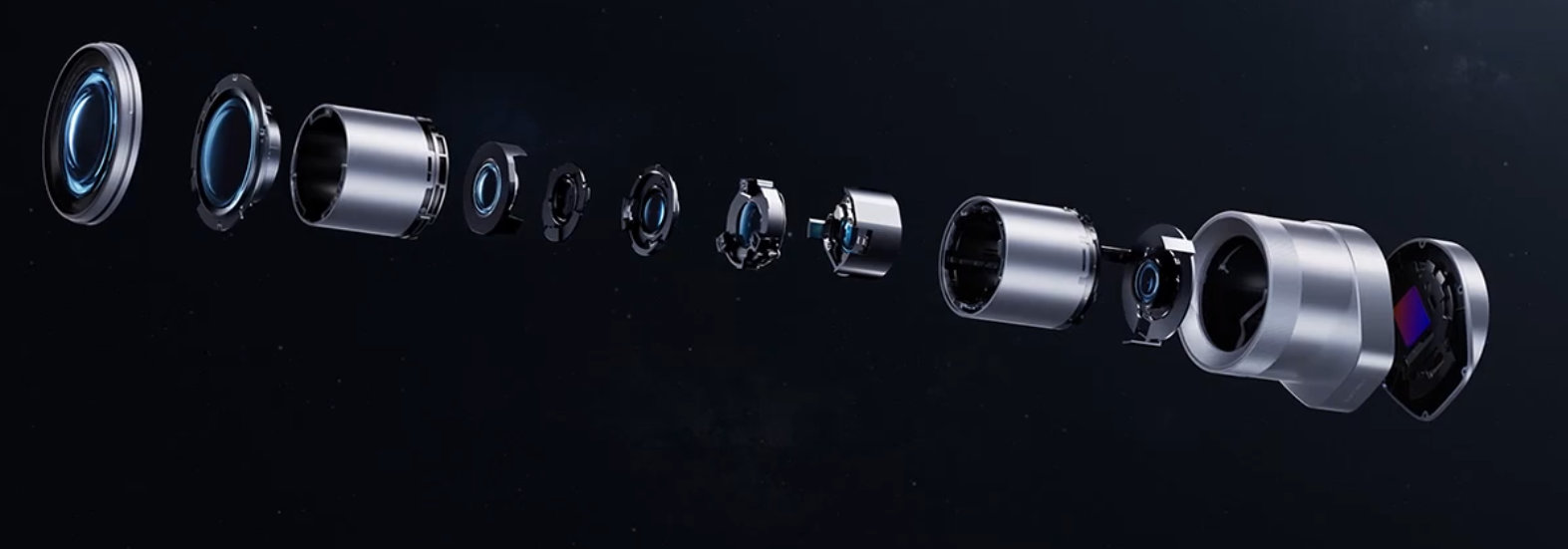
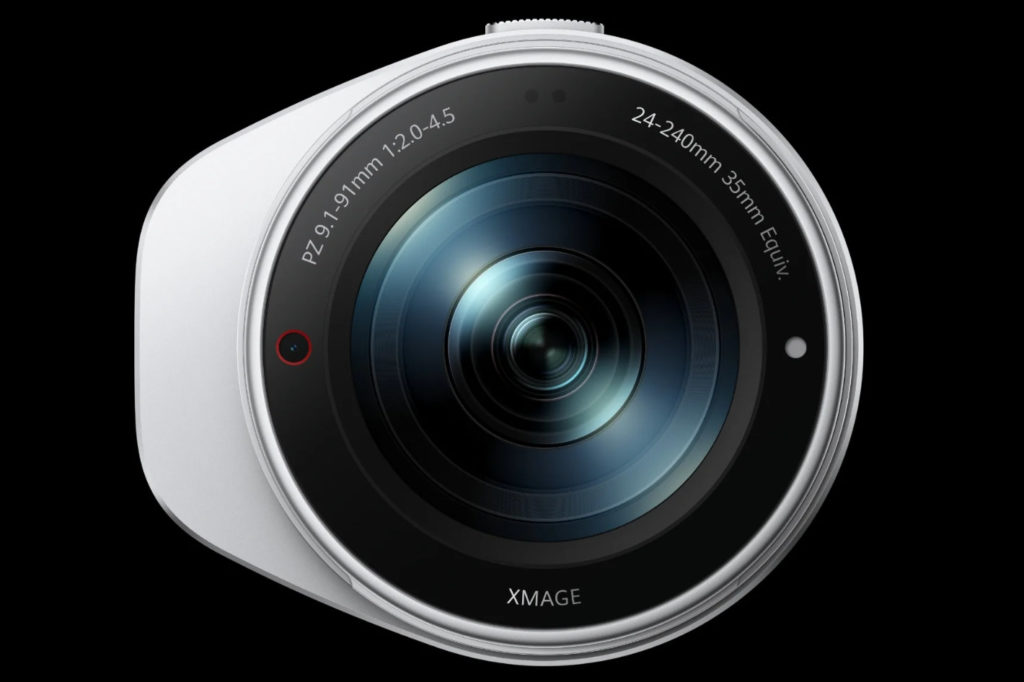
Huawei’s new Ruiying Z10 module for the Mate 90 Pro Max... Inspiring, to say the least : ) That is, an interesting development in the long-running convergence between smartphones and dedicated cameras. The module reportedly includes: its own sensor and optical system (detachable connection to the smartphone) 1-inch 50MP RYYB sensor 24–240mm equivalent range in 35mm terms (10x* continuous optical zoom) f/2.0–4.5 aperture So this is not simply an accessory lens placed in front of the phone’s built-in camera. It is effectively a separate camera module using the smartphone as its display, processor and interface. Strictly speaking, this is not yet an interchangeable-lens camera system in the conventional sense, since the entire camera module is replaced rather than just the lens. But it does raise an obvious question about where smartphone camera design may be heading. Smartphones already provide processing, computational photography, large displays, storage, editing and connectivity. If large sensors and modular or interchangeable optics become more common, part of the traditional role of the dedicated camera body could become less distinct. Mirrorless cameras still retain substantial advantages: larger sensors, mature lens systems, ergonomics, cooling, battery life, physical controls, professional I/O and more sophisticated video recording options. The question is how much of that distinction will remain relevant if smartphone camera systems continue moving in this direction. Are interchangeable lenses for camera phones going to kill the mirrorless camera industry or will they remain a separate category? - EAG :- ) *disclaimer: I can't help myself and invariably hate that 10x terminology, no matter what : D
-
Maybe a few of you may find this useless but, sounds to me as some unique piece of gear, designed by origin, powered for casual shooter, a real pocket tele in fact:
-
Do they have similar features other than the obvious difference with or without it? Well, they seem much distinct products when 200mm and 500mm come to the equation. As far as the price goes, the gimbal also looks like to introduce a 50% increase at least, if not doubles: CNY 9,999 ($1,487) with 12GB of RAM and 512GB of storage, and CNY 12,999 ($1,933) with 16GB of RAM and 1TB * I still wonder on the leftover though, anyway : ) And maybe they may not beat the Luna Ultra or 4P FWIW after all :- ) * source
-
More here, there and also over there to include the new 200mm & 500mm teleconverters. E. ;- )
-
Nice to see you and your family — I presume, enjoying it! : ) The score fits the ticket perfectly! *thumbs upª Other people’s good fortune I can live with ; ) it’s their misfortune I can’t : X
-
Yeah, you beat me on that one... Same link to post, thanks anyway, glad you did it : ) For existing and some others to come as soon as they'll address the complaints : X These are very promising news, I guess I'll have to buy one this time, thanks to this, so you see how much this matters to many of us ; ) Exciting announcement... BTW one of my fav cams today, mid to late 2026 (EAG :- )
-
; ) https://petapixel.com/2026/09/04/gopros-founder-promises-it-isnt-done-making-consumer-cameras/ Sure not... why should it be kinda different? LOL :- )
-
Last time you did it, I bought one! : D
-
https://www.prnewswire.com/news-releases/gopro-enters-into-definitive-agreement-to-merge-with-starman-optical-inc-302866291.html GoPro merges with Starman Optical (AI data centers, defence and aerospace enter the picture). GoPro has entered into a definitive merger agreement with this US optical-photonics company making optical transceivers. GoPro shareholders are to receive $285 million in cash ($1.14 per share) while retaining approximately 10% of the combined company. GoPro's roughly $92 million debt is also expected to be paid off at closing. The announcement specifically talks about expanding GoPro into AI data center infrastructure, government, defence and aerospace, using Starman's US-made optical transceiver business. So a company which we still instinctively think of as an action-camera manufacturer is suddenly describing a future spanning cameras, photonics, AI infrastructure and defence. GoPro says the camera business isn't going anywhere. Nick Woodman has already published a separate letter reassuring users about exactly that. He says they intend to make more cameras, smarter accessories and better software, and that the stronger balance sheet should actually allow them to invest more heavily in imaging. That may well be true. Particularly interesting is GoPro's IP position. They mention more than 2,500 US patents accumulated over 24 years, and explicitly say the deal is intended to maximise the value of that IP in consumer, commercial and defence markets. In other words, this doesn't read merely as somebody buying a struggling camera brand. It looks more like an attempt to take what remains a very recognisable imaging company, recapitalise it, remove the debt and use the GoPro brand/IP as one component of a much broader technology company. And, strangely enough, this might actually be better news for GoPro cameras than another few years of trying to survive almost exclusively by selling action cams. Provided the cameras really do remain important after the merger, of course ; ) The transaction is expected to close by the end of 2026, subject to shareholder and regulatory approval. - EAG
-
Well, here's another interesting one from Samyang for L-mount. Previously Sony FE only... ...now also available in L-mount ; ) The new LK Samyang AF 60-180mm F2.8 weighs only 728g, which is remarkably light for a constant f/2.8 full-frame telephoto zoom (and at about a grand it is also considerably cheaper than the usual 70-200mm f/2.8 options). It has no optical stabilization (OIS), in either L-mount or Sony FE, unfortunately : ( A deal breaker for Sigma FP owners/lovers, as for instance. 60mm at the wide end is actually quite useful for video, and losing 20mm at the long end seems a very reasonable trade-off for that size and weight.
-
https://www.eisa-awards.org/awards/nikon-zr/ Interesting to see the Nikon ZR taking EISA’s Photo/Video Camera 2026–2027 award. On paper, I can understand it. The overall package is unusually strong, particularly for the money, and Nikon has clearly managed to turn the RED acquisition into something rather more tangible than a logo on the box. Still, awards like this always make me wonder what is actually being judged. A camera can be outstanding as a specification sheet, and even as an overall product, while still having one or two behaviours that matter disproportionately once you start using it seriously (codec implementation, processing, noise reduction, workflow, etc.). That does not necessarily make the award wrong. It just shows how different “best camera” can look depending on whether you are judging features, image quality, value, or the less glamorous realities of actually shooting and finishing a project with it. The ZR may well deserve the trophy. I'm rather more interested in whether Nikon keeps refining the bits that do not fit quite so neatly on the award plaque ; ) That said, kudos to ZR! EAG :- )