All Activity
- Past hour
-
 kye reacted to a post in a topic:
Interesting Breakdown Of Arri Colour Science
kye reacted to a post in a topic:
Interesting Breakdown Of Arri Colour Science
-
You know, I don't think that what I said above is correct. If they defined their primaries then maybe the software vendors can adjust WB properly and the spectra doesn't need to be disclosed. It also strikes me that if you have the right equipment, measuring the spectral response is a simple exercise. Maybe better to just concentrate on what we point the damned things at... 😄
-
I was just wondering if it would make any difference, doing it before or after, but I think I don't know enough about how the debayering is actually done. I suppose that if manufacturers don't share the spectral responses of the channels then no-one can know what the primaries are, so although they'll know the gamma is Linear they won't know the colour space. Therefore if they want to make the image more warm along the neutral axis, they'll be boosting red and green but won't know the correct proportions to move along the right vector (unless they do some testing to determine this). I guess it's a situation where you have all the usual suspects feeding into it, like corporate secrecy and paranoia (in the guise of "competitive advantage") and poor understanding of transparency and the benefits of open standards, but also poor business management and inability to understand how the customer experiences their products. Industrial espionage is also something that happens and there's a balance between being transparent and making it easy for your competitors to undercut you in the market. I think for ARRI the marketplace might be somewhat different, but perhaps not. Then again, ARRI got sold and not all the Japanese manufacturers needed to be put on the market, so maybe their curmudgeonly ways paid off...
-
 bainbridge joined the community
 -
Interesting. Makes sense to shoot both so you can review coverage and make decisions on-set rather than waiting days/weeks to see the footage. Of course, their page doesn't get off to the best start..... umm... sure, if you say so!

-
kye reacted to a post in a topic:
The GX85 "Super-16" project
-
WB should be before any creative operation, but before debayering is another story. Some still camera makers did that to make an "agreeable base point" for raw development softwares so they don't mess up with the brand's "image look" when they're doing their own WB process. Some differences in rendering we got used to see between LR and C1 is caused by the fact that there is very little communication between Japan and these software vendors. Some things like sharing the data of spectral response of the sensor with them. So instead of being more open, they place some pre scaling in the raw as baked in process. This practice makes less sense for Arri as they have a very good communication with software industry. But what do I know.
- Today
-
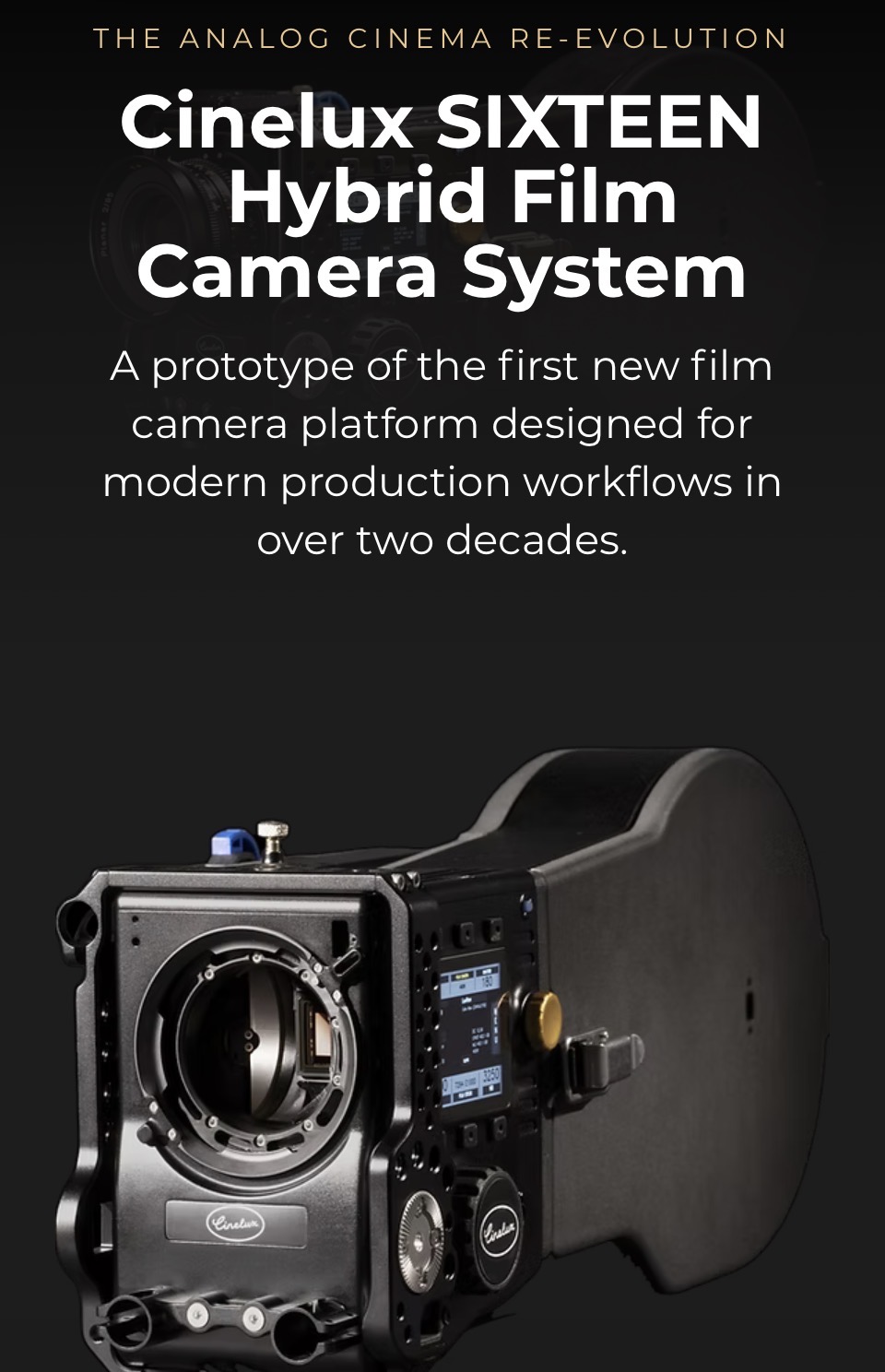
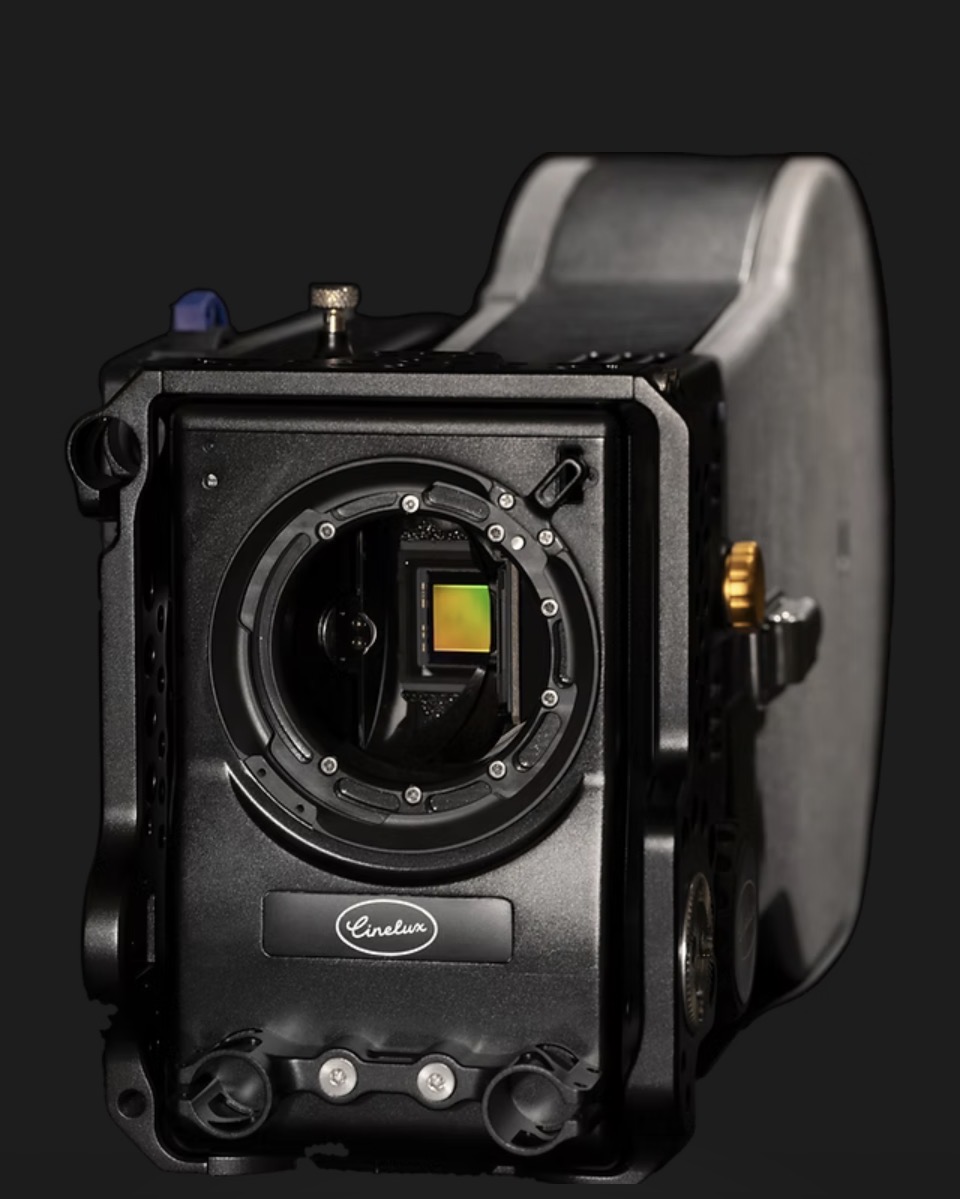
Looks like someone has made the ultimate A/B tool for your matching experiments. https://www.cineluxcinematools.com/sixteen
-
BTM_Pix reacted to a post in a topic:
The GX85 "Super-16" project
-
Hi Max are you happy with your new gear ? Perhaps your"adopt a cat" would make a fun 60 second clip for youtube.
-
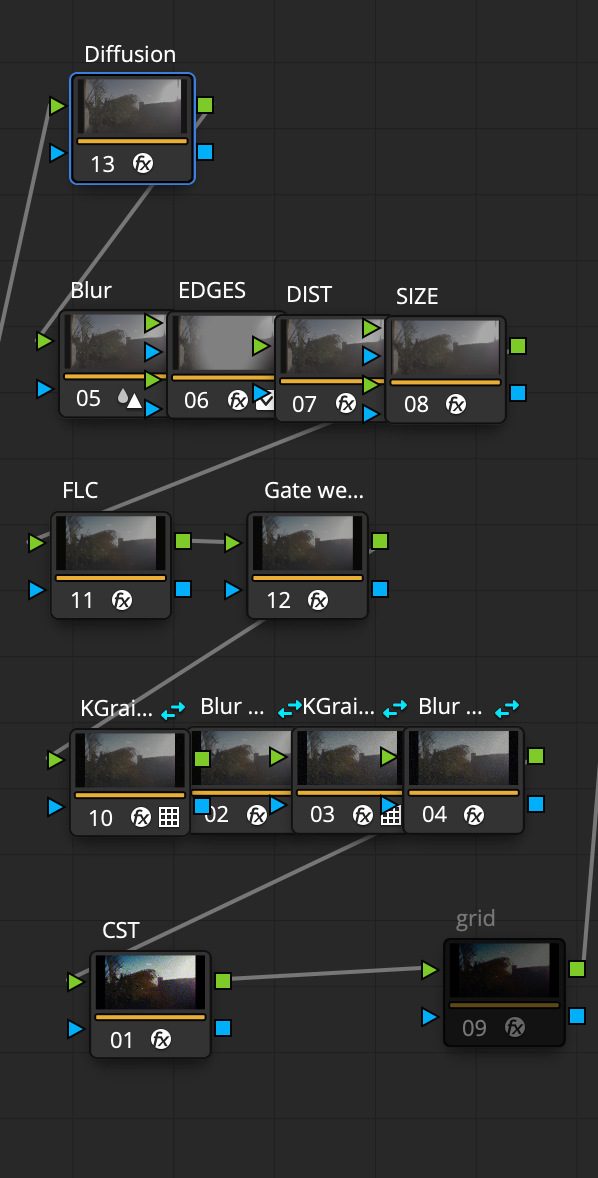
Thanks! My film nerd friend also said that this was basically there, and that after YT compression it would be indistinguishable. I'm actually really stunned as I figured that this project would end with me being happy I got a film look of some kind and everyone else giving up because I was so far away! I'm also sort-of stunned because the FLC and other plugins don't get this close and all I did was write a random noise generator and then a gaussian blur and we're there. My plan is to keep going and emulate as much as I can, including the full image pipeline, so filters / lenses / film / colour grading / etc. The way I've structured the grain is that it's at pixel-level on the timeline so to go from 16mm to 35mm all I have to do is lower the amount of grain and back off the softening, then back off the halation and bloom and gate weave etc, but if it looks good at 16mm it should be fine at 35mm where it's all much more subtle. 8mm is the same, but just turning everything up. Everything is tuneable, so adjusting things isn't that hard once you know which controls are the ones you want. Top row is diffusion, then 4 nodes for the lens emulation, then FLC and gate weave, then 4 nodes for the grain and softening, then CST to 709 output. I've started making a list for v8: Play with diffusion to simulate netting / diffusion filters Add CA to the lens emulation (already done) Lessen the amount of blur (I have some great S16 samples now to compare with) Add film dirt and damage, like scratches etc. There's an OFX plugin for this, so should be straight-forward and I plan to go subtle with it Really analyse my sources, including comparing the 1000Mbps scan my friend gave me to what I see in Resolve, and also comparing the YT samples I've downloaded to the YT version of my emulation (to compare apples-to-apples). I'll also start using better footage 🙂 As everything is tuneable, making a number of variants makes sense, potentially at 8mm / 16mm / 35mm, but also other variations too. Other things that are on my mind are things like bleach bypass, split toning (which Resolve doesn't seem to have a good answer for), and maybe some B&W options too. The FLC can do bleach bypass and potentially the B&W looks, but the split-toning might have to be another custom DCTL. Thanks! Great to get an additional perspective 😄
-
kye reacted to a post in a topic:
The GX85 "Super-16" project
-
kye reacted to a post in a topic:
The GX85 "Super-16" project
- Yesterday
-
TrueIndigo reacted to a post in a topic:
The GX85 "Super-16" project
-
Just watched Spike Lee's "meh" Highest 2 Lowest last night. Well, about half of it. Anyway, there was a collection of 16mm in one of the sequences. This looks footage definitely looks like that footage, so I'd say you're on target.
-
John Matthews reacted to a post in a topic:
The GX85 "Super-16" project
-
Bravo! I like this version the most. The grain seems more convincing somehow. (It's hard to describe why.) I think the grain could be dialled back a touch in a few of the shots but it'll depend on what you're doing with it I suppose. I'm watching it 4K which shows the grain nicely and when I switch it to 480p, there's no grain at all but the colours and levels of brightness still look like it might've been shot on film. I think you're there (or perhaps very close.) You might want to create a handful of variations on this so you can choose different ones for different content to see which one works best for any given clip.
-
eatstoomuchjam reacted to a post in a topic:
Kinefinity Vista First Look
-
kye reacted to a post in a topic:
New cinema camera...?
-
There's some truth to that, but I think GoPro are a different breed. Still, it's not a popularity contest. Seems sensible! What sort of shooting would you do with it? My impression is that something like this is best placed to do things that larger cameras can't do, otherwise it'd be better to use those as they'll have nicer DR, codecs, etc etc. It seems like the advantages this might have would be the size, the crop factor (if that's what you're going for), and maybe the slow-motion which some people have said isn't really available elsewhere. I have shot a lot on small cameras and enjoyed trying to push things to their limits, including shooting stills on my GoPro 3, which despite not even having a screen still worked really well for street photography (the secret was burst mode). When you see the camera YouTubers they all have a similar mindset that comes from constantly standing around in public talking to large cameras on tripods (or being filmed by someone else) so size doesn't really matter in that sense and they'll just rig everything up. If, on the other hand, you're going out with a camera for more than a week or two before the NDA lifts, you've got time to learn it and learn how to use it and how it influences you to shoot etc, so you can rig it (or not) in the best way possible for its logical use.
-
no 12 bit codec (whether it's PR444 or raw) makes it kind of DOA for me. that tended to be kinefinity's main selling point imo. conceptually its cool, but I just got a BMCC6K FF for 1500 euros second hand as a B-CAM. same sensor, same open gate capability, gives me an option to use an EVF as well, and it lets me do more in the grade.
-
Dammit, v7 had a mistake in it, so re-exported and uploaded it.
-
How is that any different to any other camera manufacturer ? Canon gave us the cripple hammer and cameras that overheated because of a timer. If you have a list of 7 attributes for your forever camera, no camera manufacturer will give you all 7, perhaps 4 at best... Your correct, its because i tend to stick my head in the sand. It's a basic defense mechanism designed to help avoid additional financial trauma to my wallet.. That new laowa zoom seems interesting, i'll have to keep an eye out for that. I hope gopro don't go broke before they release the ils, as i would still buy it counting on the fact that my gopro 9 still works after i don't know how many years of ownership. I did rewatch the potato jet vid and i thought that the warping was better controlled / less obvious then previous models, anyone else notice that ? My oly 12mm probably wont work with mission1 ils but every other vintage lens i own should, whether they actually resolve to 4k or higher might be an issue. I'm trying not to over think it considering that with a 2.7 crop there's a chunk gone off the top, bottom and sides leaving the center portion which is usually the best bit, i'm prepared to call it character and live with it unless its a really obnoxious look. From what i have seen with those that have a ils to play with, it seems like they all had phones or monitors hooked up. So my first though was that it would have to be rigged to be useful. Which is about a 180 degree turnaround to how a normal gopro is used. That seems obvious to me and doesn't strike me as an impediment at all. I mean look at all the smallrig accessories potato jet had at his disposal.
-
 jeff1990 joined the community
 -
Version 7: Brand new custom grain DCTL Removed mid-tone softening Grain is now after the FLC I abandoned the grain OFX plugins and wrote my own grain generator DCTL based on a random number generator with some sliders to modify the channel gains and saturation etc, and I tuned it to match some Vision3 samples from a friend. It's mostly blue and a little green with no red. Putting it before the FLC screwed up the colours and I couldn't work out what to put in to get the right result out, so I just moved the grain to after the FLC. This might mean it isn't right across the luma range, so happy to hear feedback on that. I also added a resolution chart at the back as I was using it to test some things and decided to keep it in there. It's an 8K source file, so was nice and sharp going into the grade... Fun!
-
John Matthews reacted to a post in a topic:
The GX85 "Super-16" project
-
This is correct. Depending on the emulsion, grain is also not sized uniformly. And since you posted the Take 2 Films' tour of Kodak, it's also worth pointing out their latest film is comparing a couple of different film stocks and methods of processing them. This aligns with something that I frequently say - "film look" is meaningless as a phrase, given that different films have different characteristics - and depending on processing, can take on even more other characteristics.
-
Did the grain in previous versions also look like this, or have I done something that pushes it in the wrong direction perhaps? Version 4: Version 6: I got feedback that Vision3 tends to only have grain that is in the yellow/blue direction, unlike mine that contains a lot of grain on the red channel (despite there being a slider for this and me turning it down), so I'm going to rebuild the grain engine again to give me some better control over this. I've heard that grain "crawls" and even seen controls for this in the OFX, but I have no idea what this means. Do you know? I might have to read about this. I would assume (perhaps naively) that there would be no relationship between the grain on each frame, with each essentially being a random distribution of crystals. My thoughts turn to the digital pipeline perhaps, but I exported using Prores and then it's compressed by YT, so if we compare that to someone that scanned film and then uploaded that to YT then my pipeline doesn't have anything in it that there's didn't, so if mine differs then it must be in how I'm generating things. This video contains lots of high-quality film examples from 8mm / 16mm / 35mm film shot in various scenes - I assume these look fine to you? (linked to a good timestamp) Interestingly, I just became aware there's an open source plugin under development that does all this stuff for free. It's still in beta phase, and apparently runs very slowly, but I'll be keeping an eye on it. https://spektrafilm.114c.de
-
Interesting about diffusion in the mids only (I think that's what you mean). It could be that film has different levels of detail in different tonal ranges. (I don't know.) These seem to have something not quite right about it to my eyes. The grain seems too fast, as in 30 FPS, not 24. Also the grain looks electronic and not chemical. Just something about it and the way it changes each frame.
- Last week
-
Big surprise on the price .I understand that they have made it entry level to their other cameras but to step up to the 6K Kinefinity Mavo mk 2 full frame which can do 12bit ProRes4444XQ and uncompressed Raw is US $6,000.
-
Still no info on whether it's IMX410 (it probably is), but Kinefinity have wisely dropped the price. It's now $2,499 and that's with a built-in 220GB SSD. They also are offering a break on preorders so it's only $1,999 in the short term. IMO, $1,999 is the correct price. That puts it really close to the Nikon ZR which has a lot of fairly similar specs, but also can shoot raw internally, just at the cost of a really dumb placement for the battery/memory card. Time will tell, but overall, not a bad value at all. I hope they get some good sales. https://www.cined.com/kinefinity-vista-confirmed-at-2499-full-frame-6k-open-gate-220gb-built-in-ssd-610g-body/
-
I was chatting with ChatGPT about the look of cinema and it gave me some things to think about, one of which was experimenting more with diffusion, which I don't think I've really found a good way to emulate in post. This is v6 of the test shots. Changes made are: Slightly less softening Less gate weave, just because I don't really like it Lowered Midtone Detail as a sort-of diffusion method Definitely a work in progress, but if anyone has any strong opinions on this then happy to hear them.
-
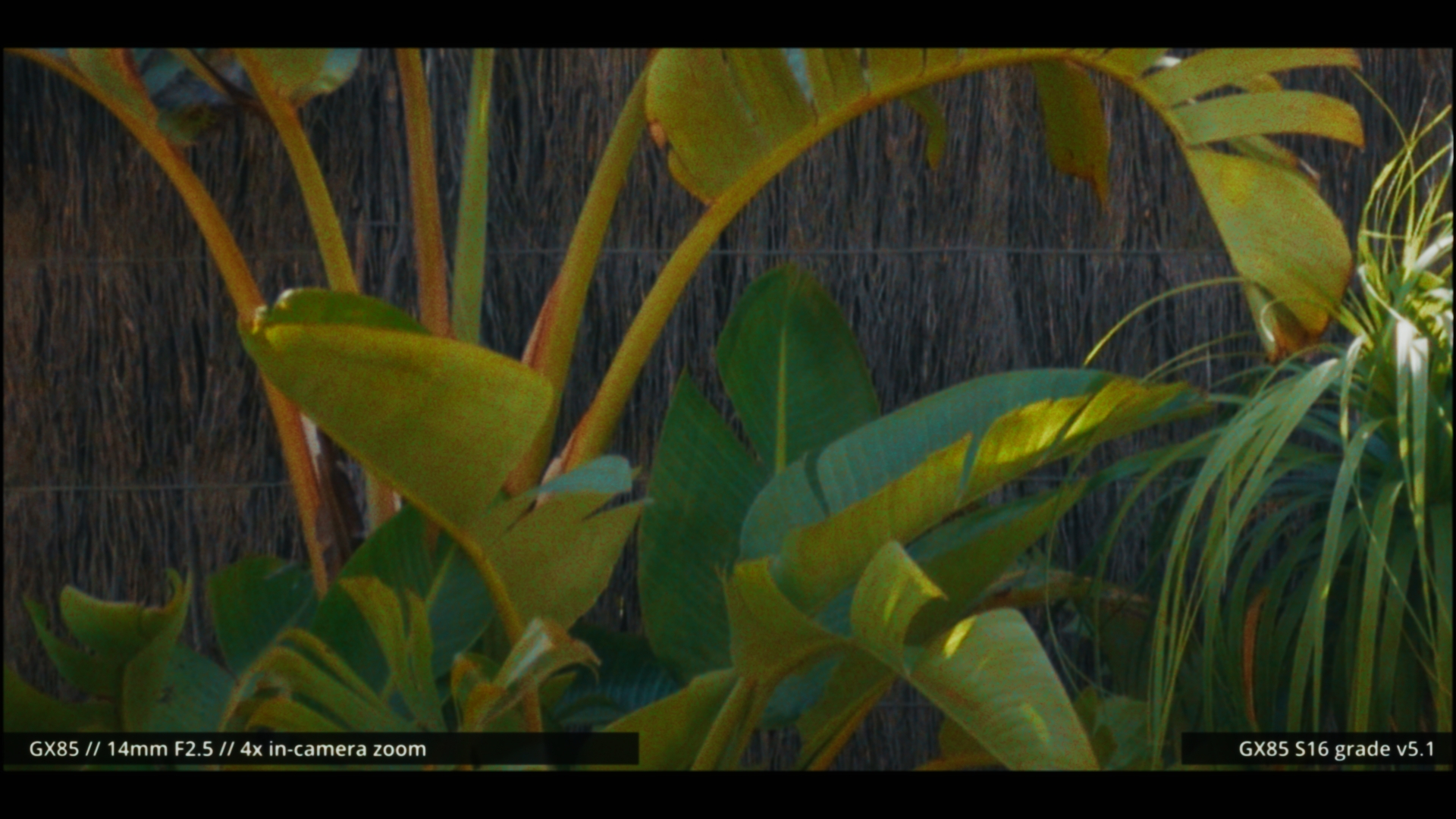
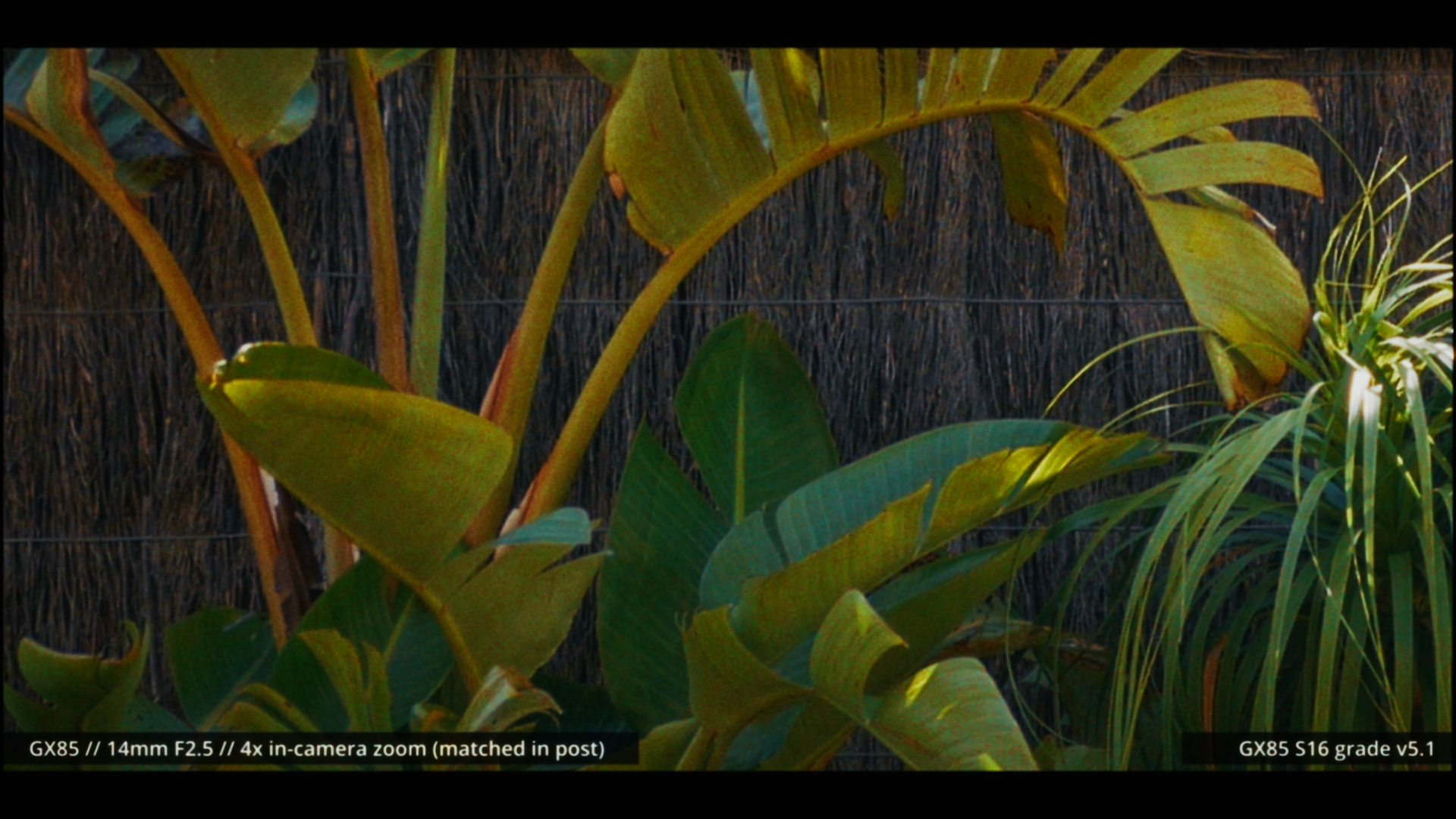
Here's a shot where I graded the 4x digital zoom to match the optically zoomed reference. I sharpened, added midtone detail and played with curves to counter the diffusion from the 14mm F2.5 lens. 14mm with 4x (look only) 14mm with 4x (graded to match) Optically zoomed to 56mm (reference image) So there we go, if I wanted to get a 4x shot to match, even between lenses, then it's completely possible.
-
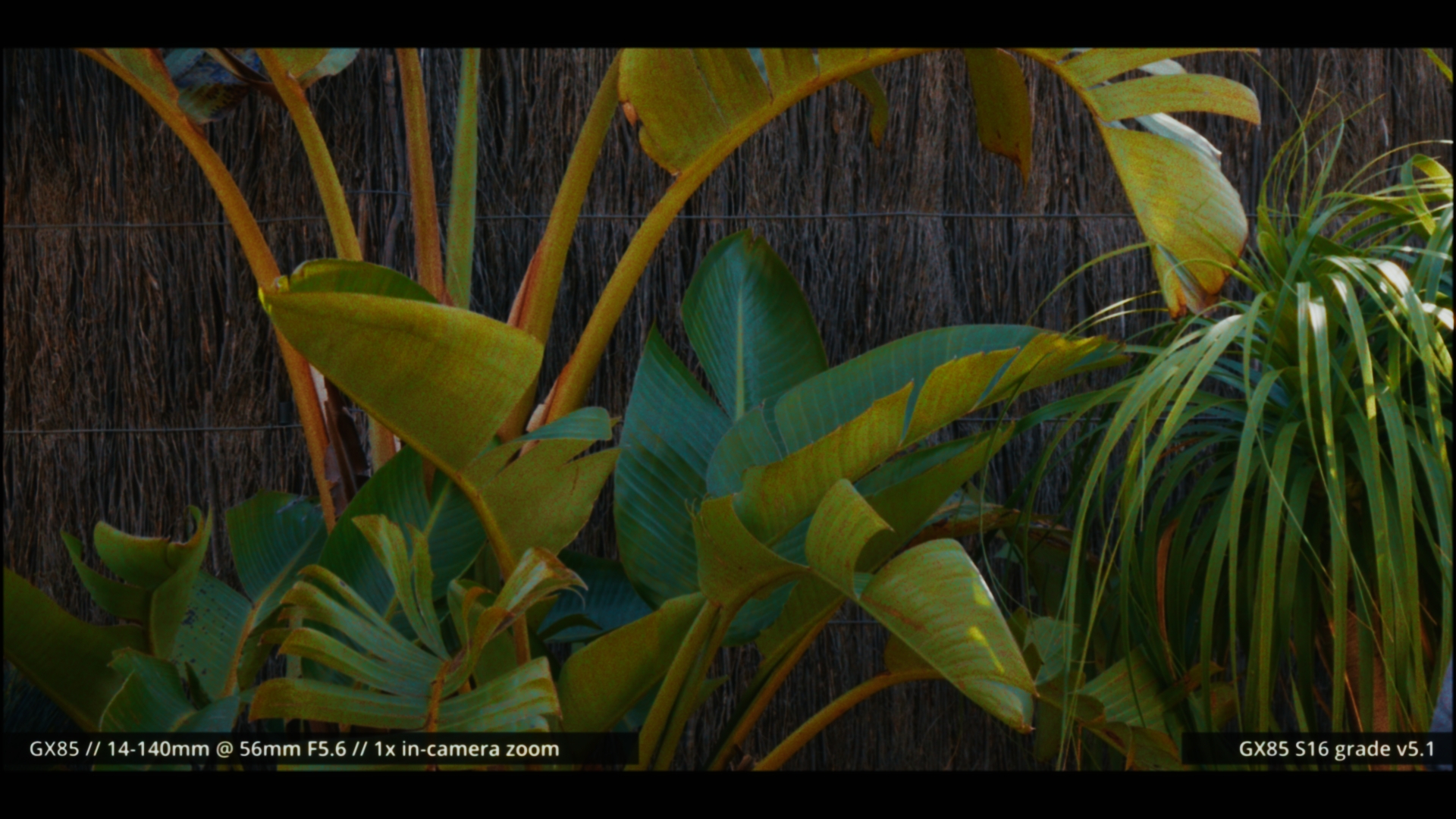
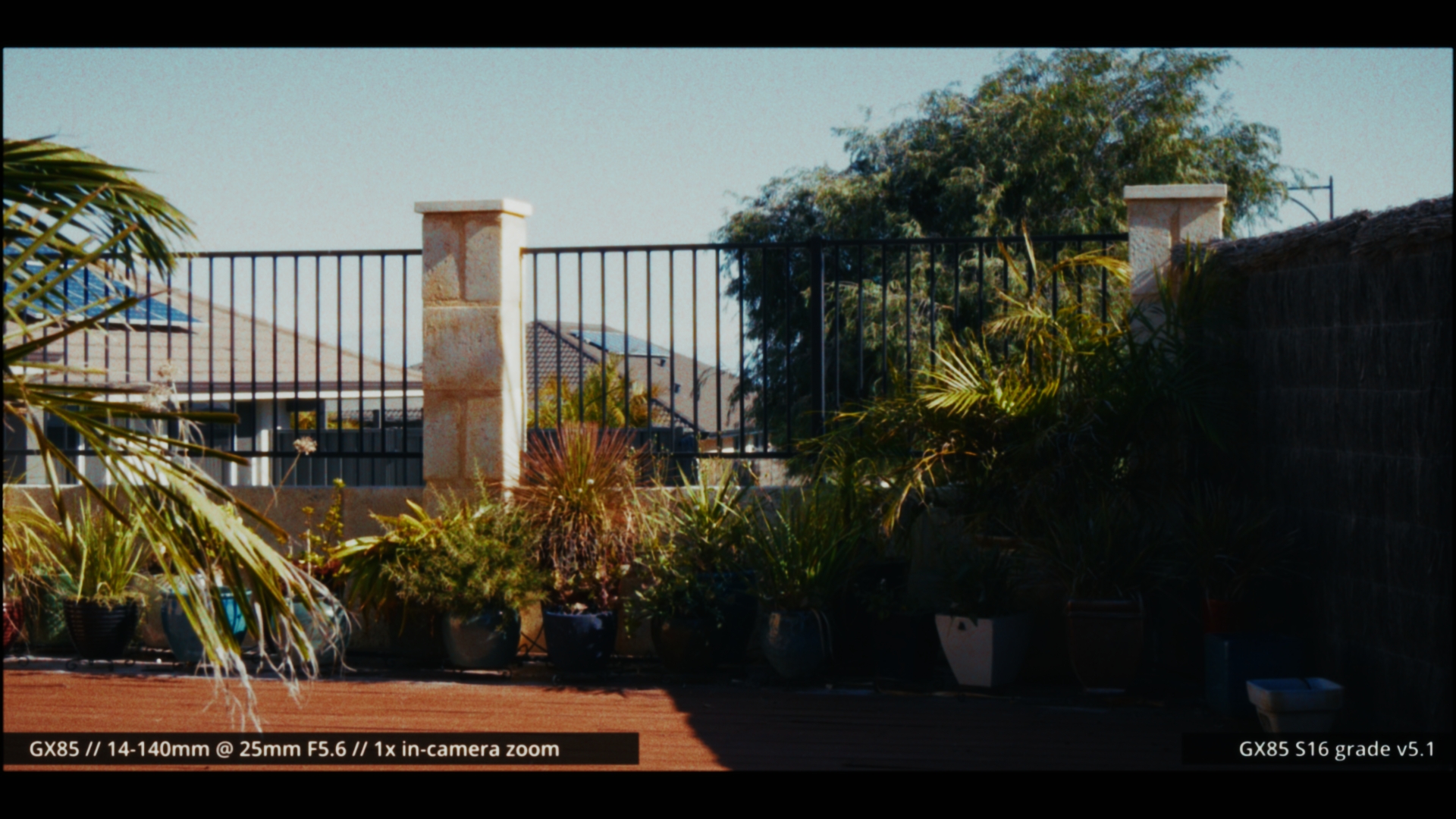
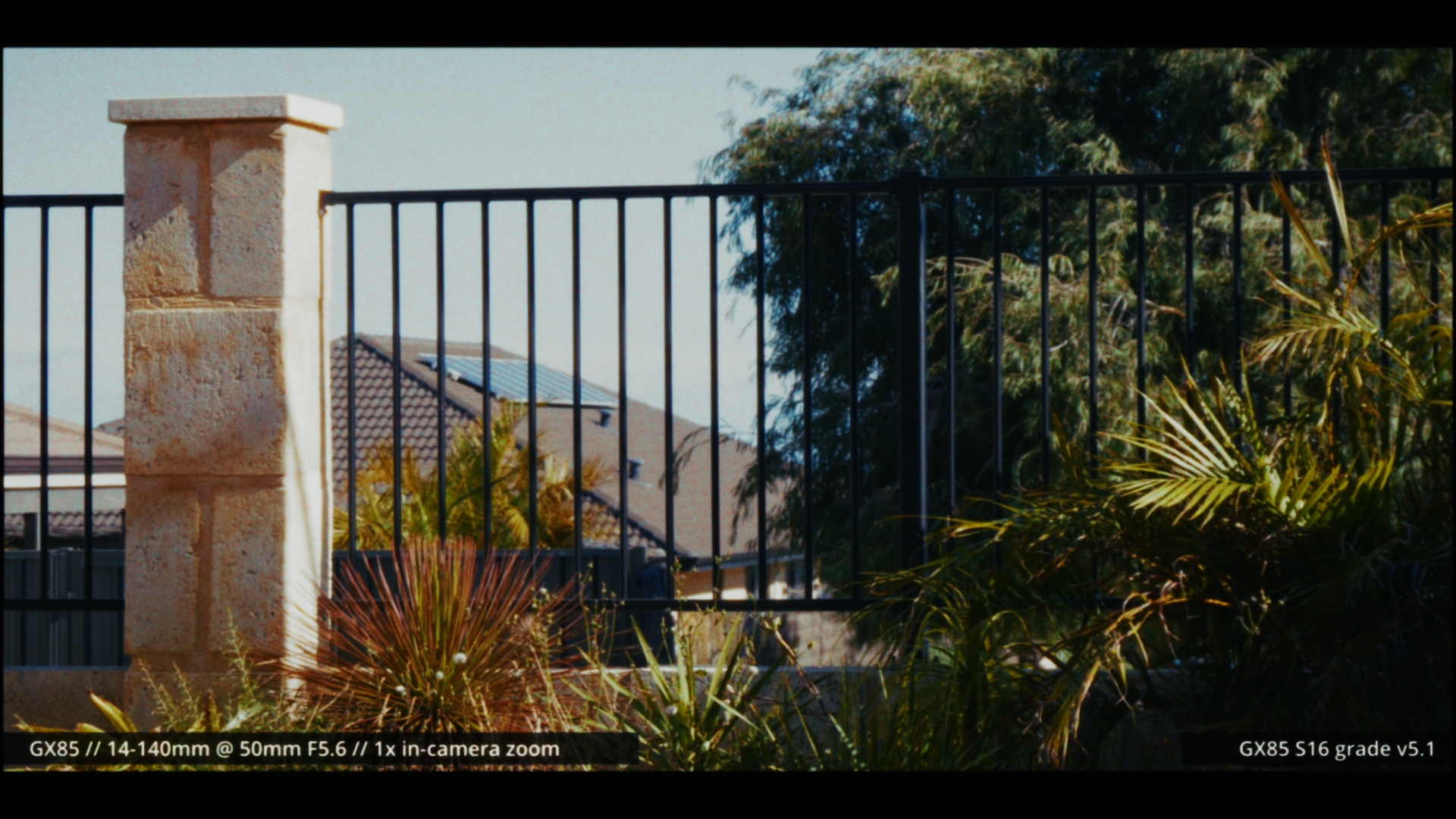
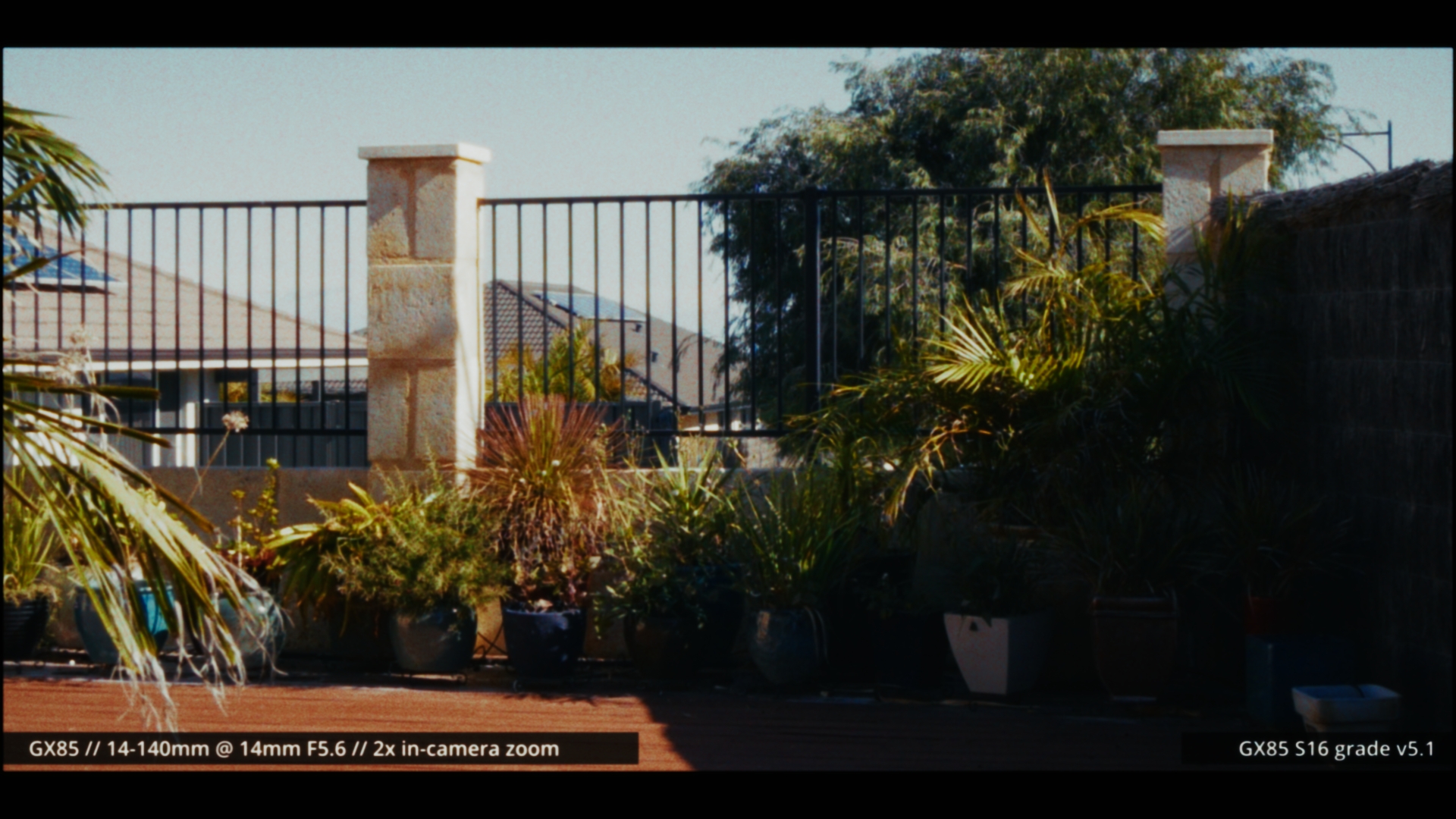
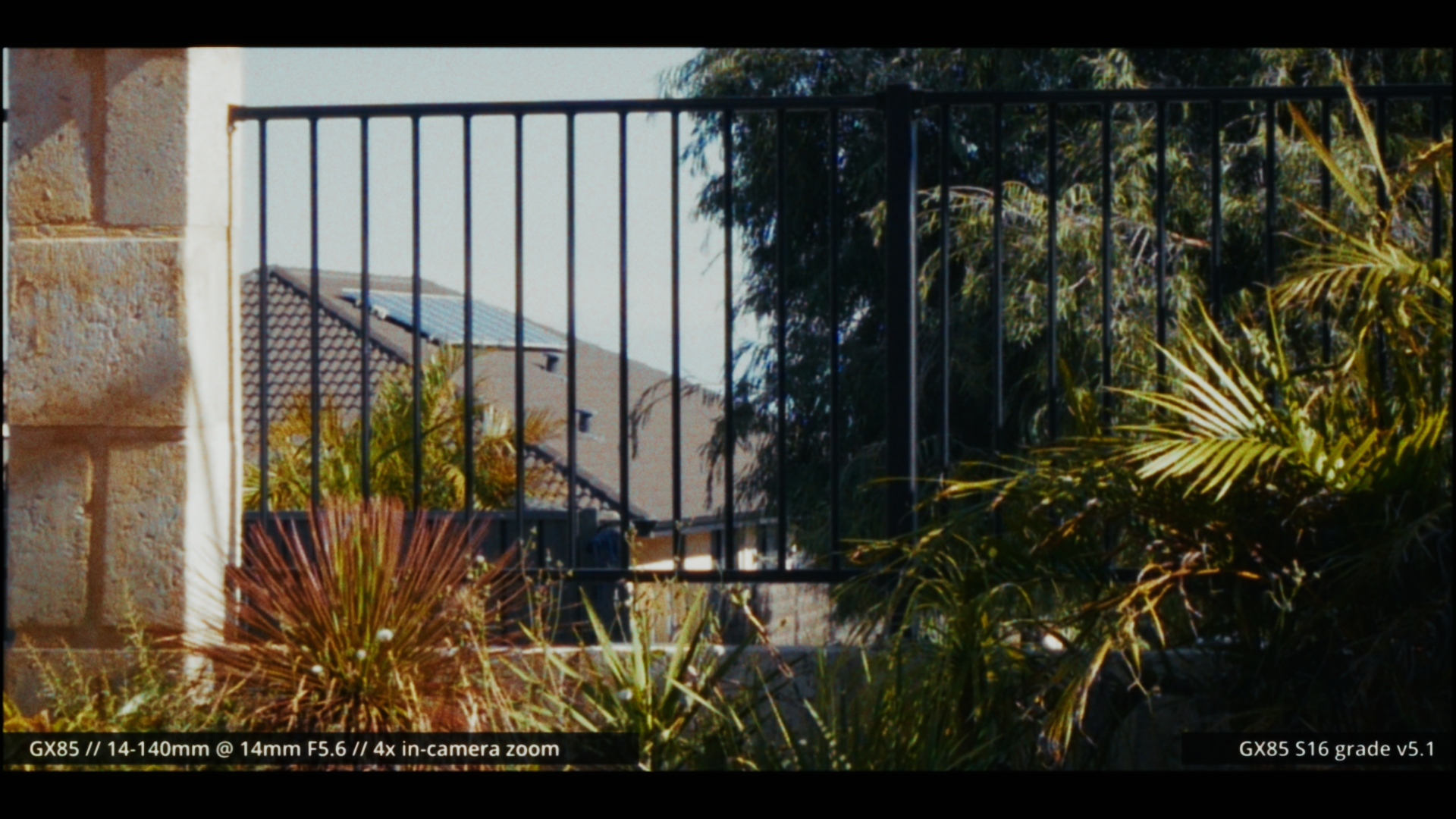
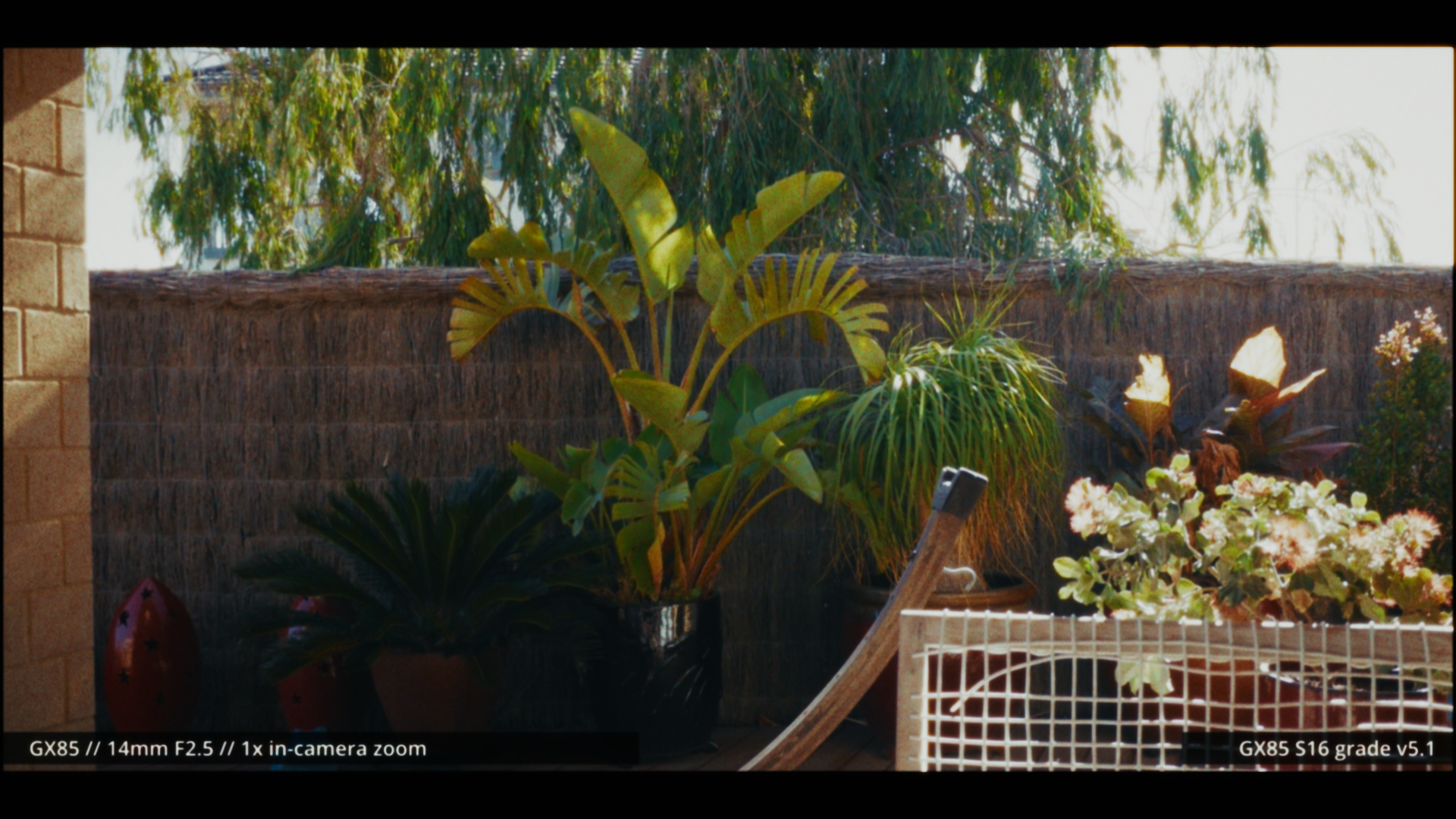
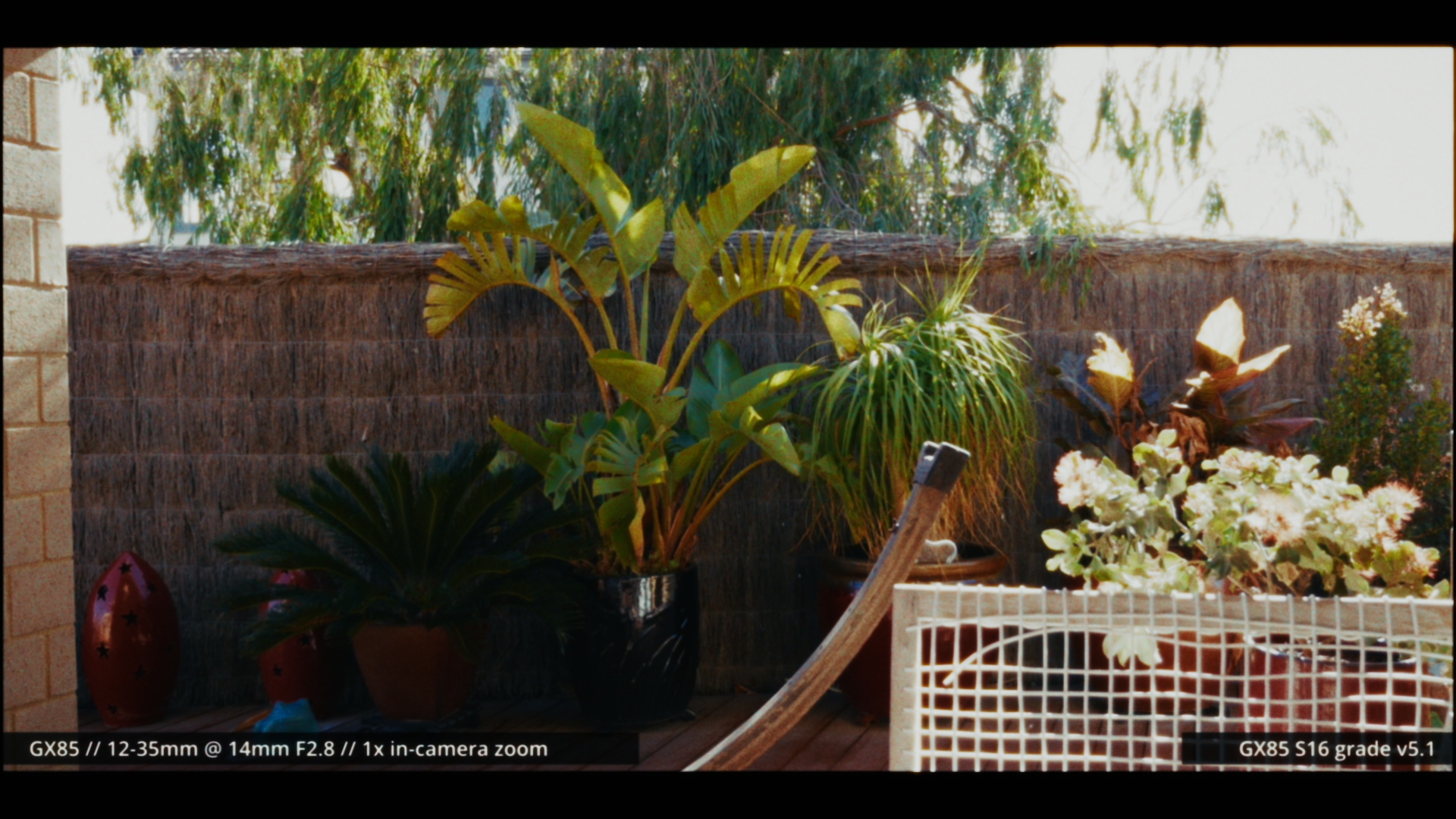
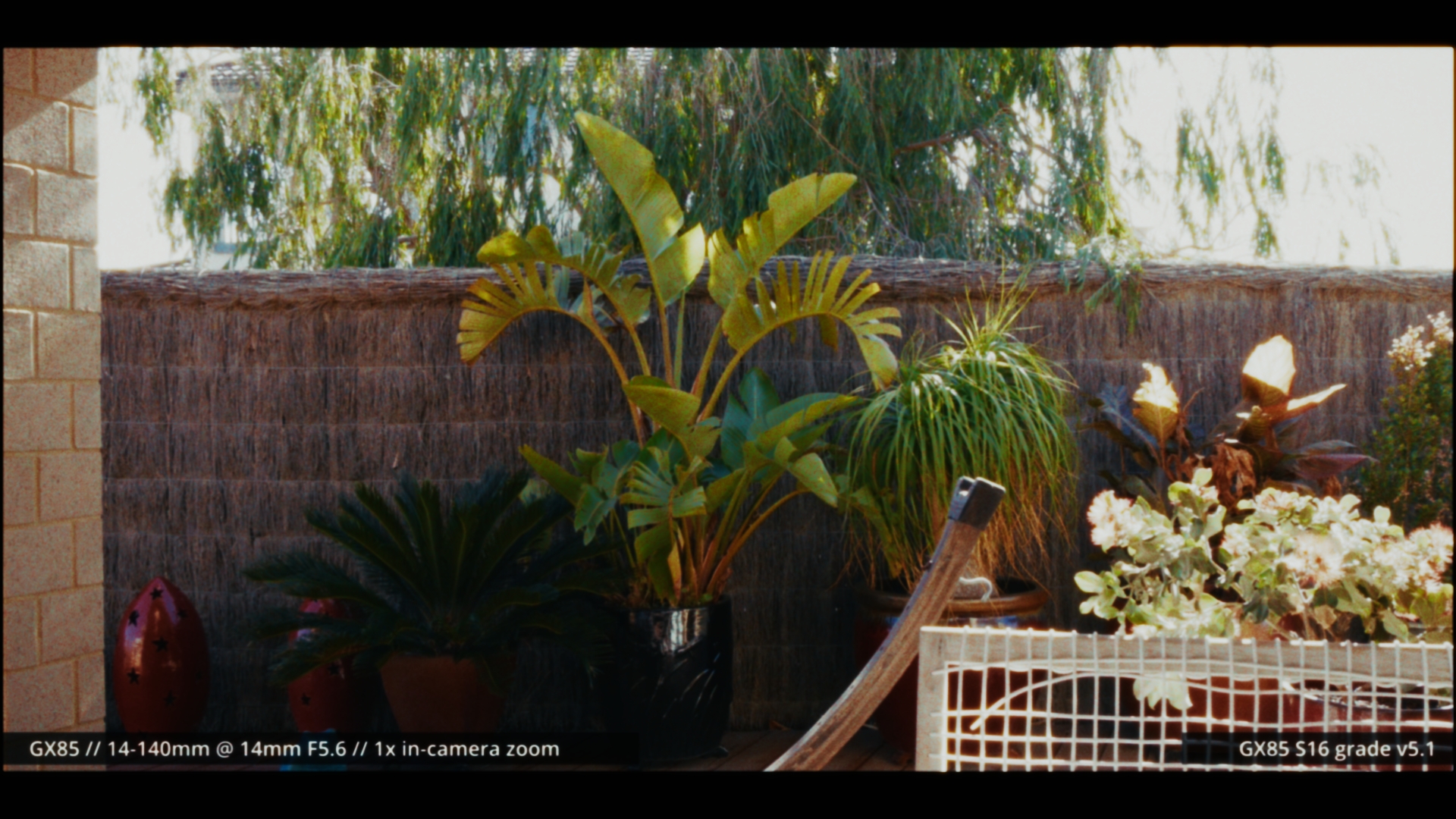
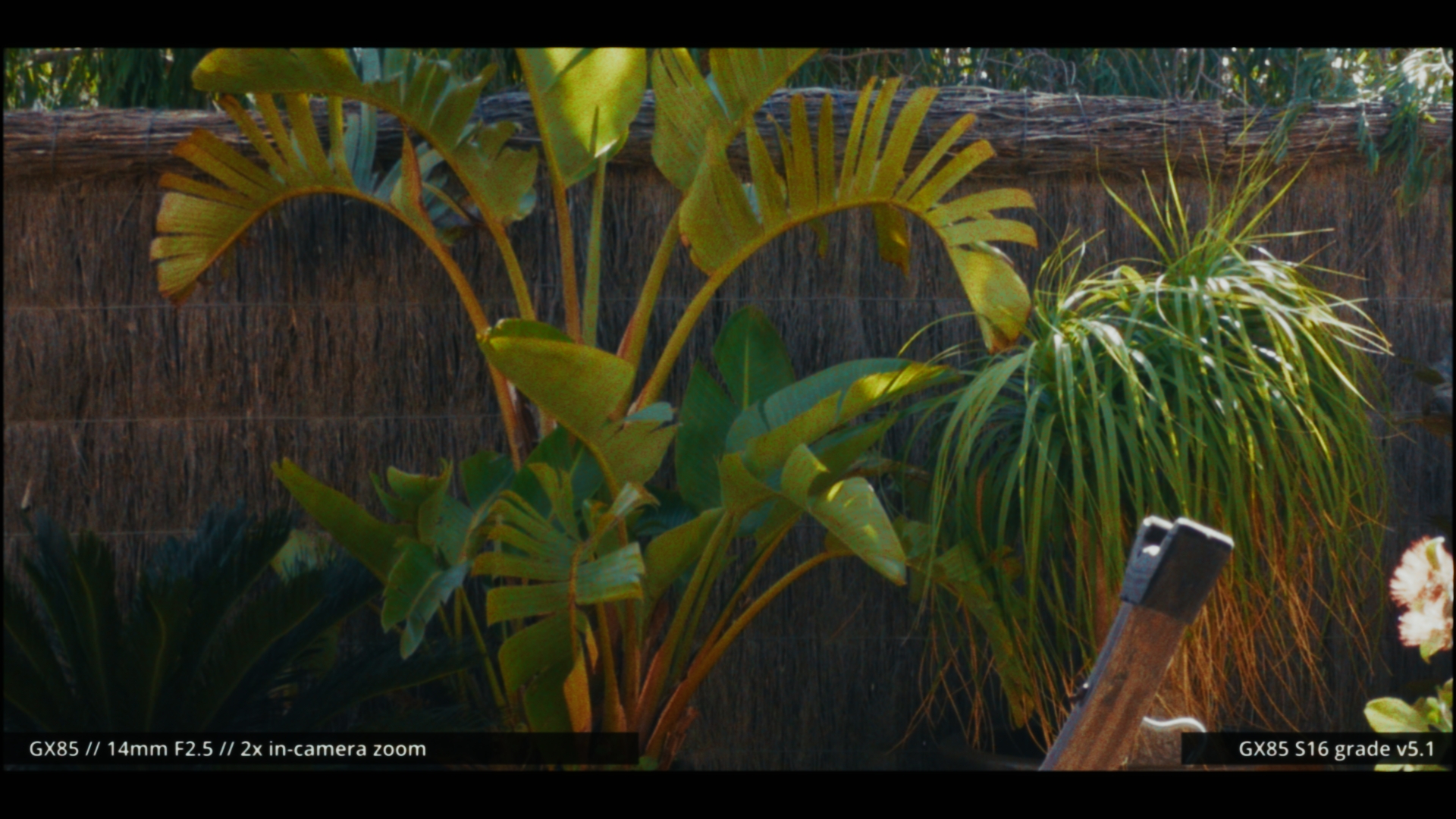
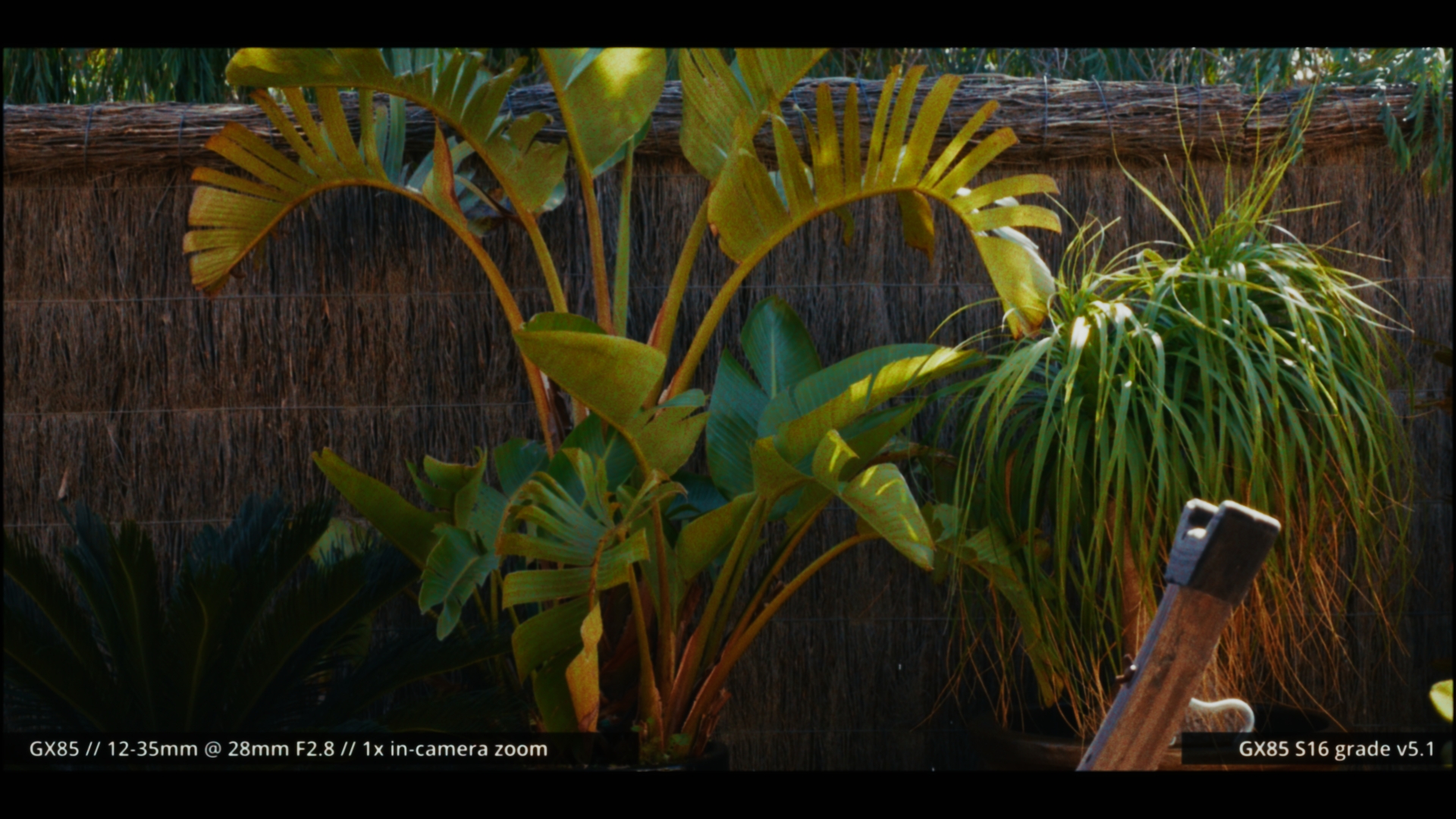
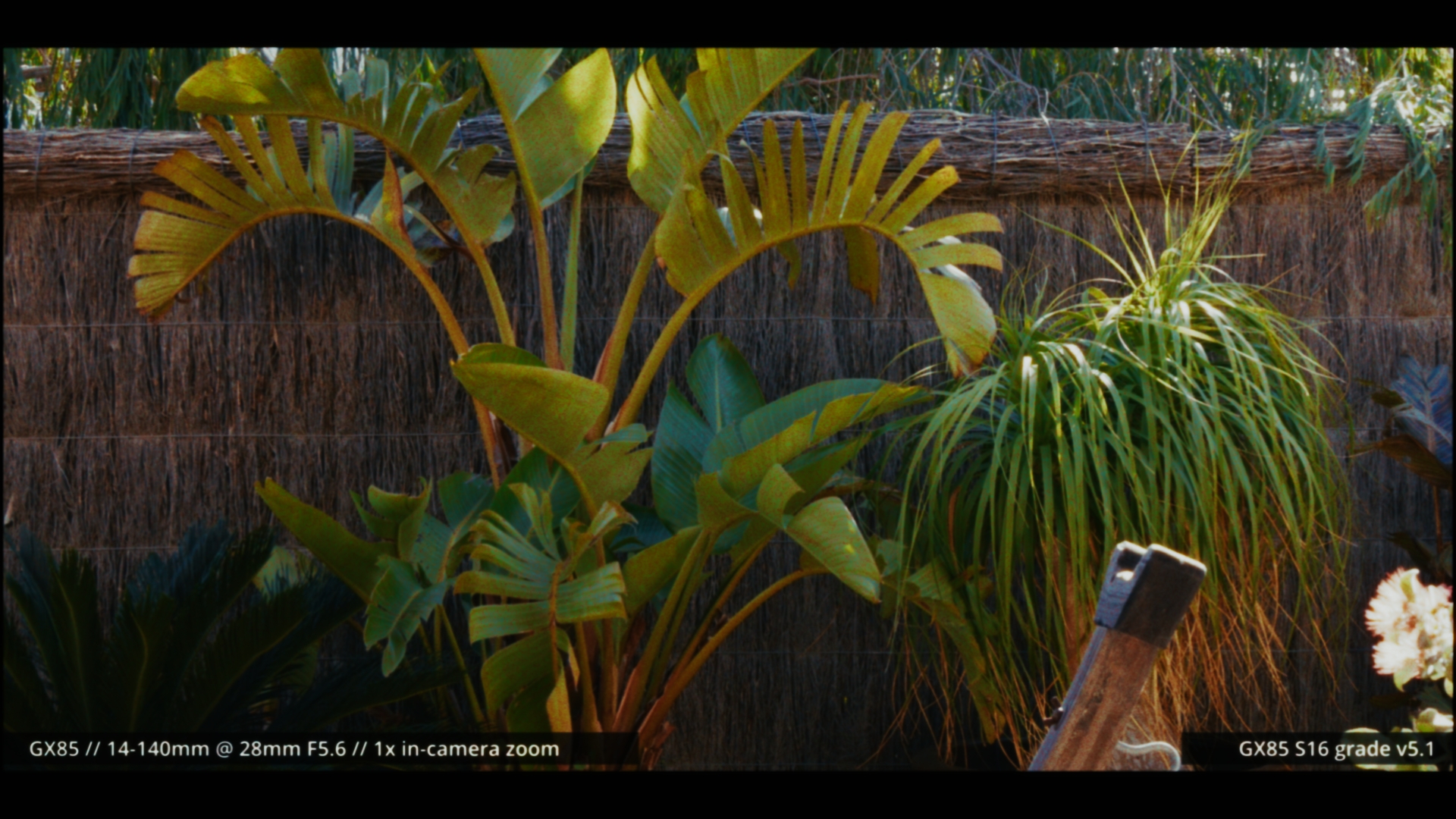
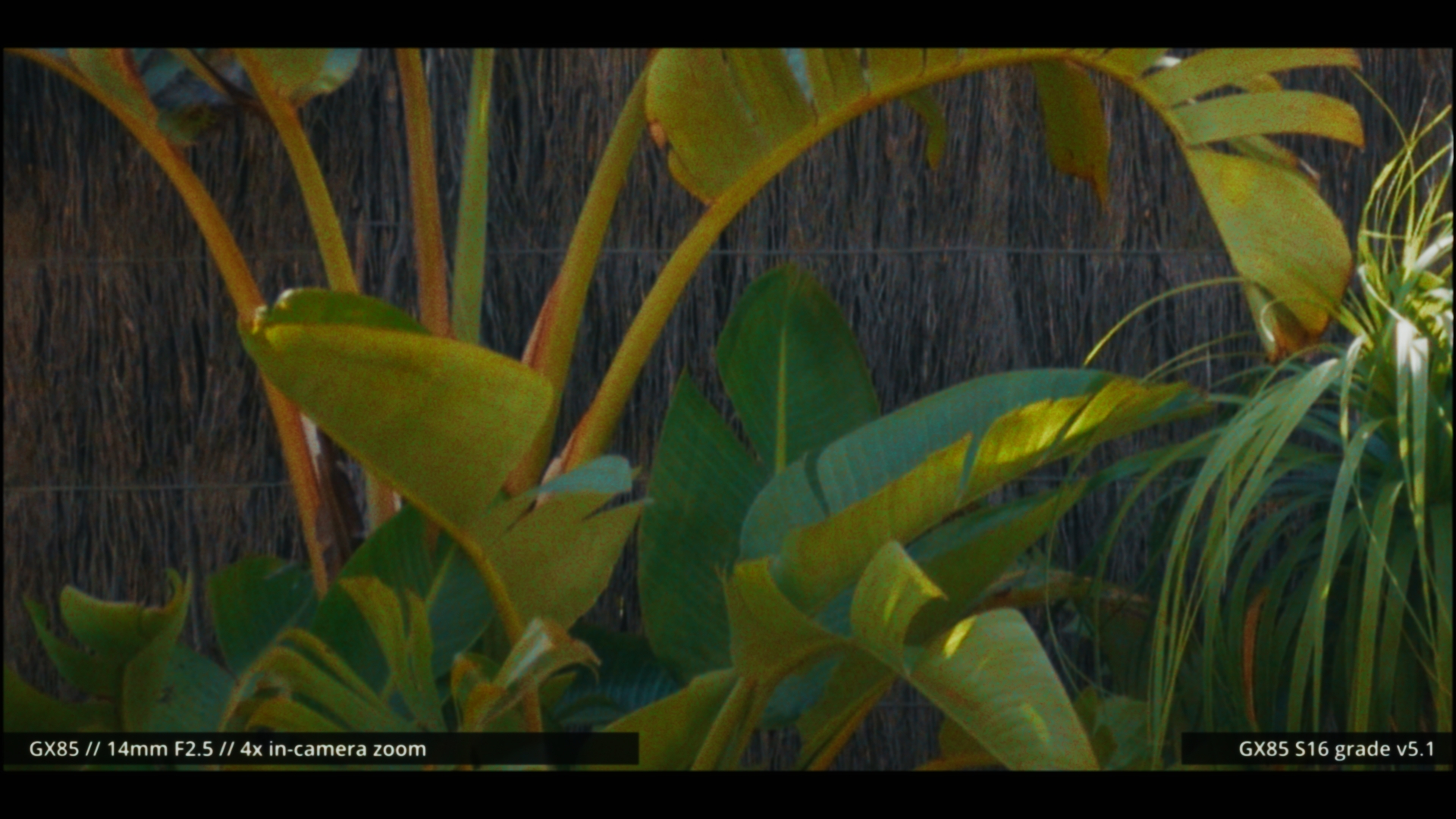
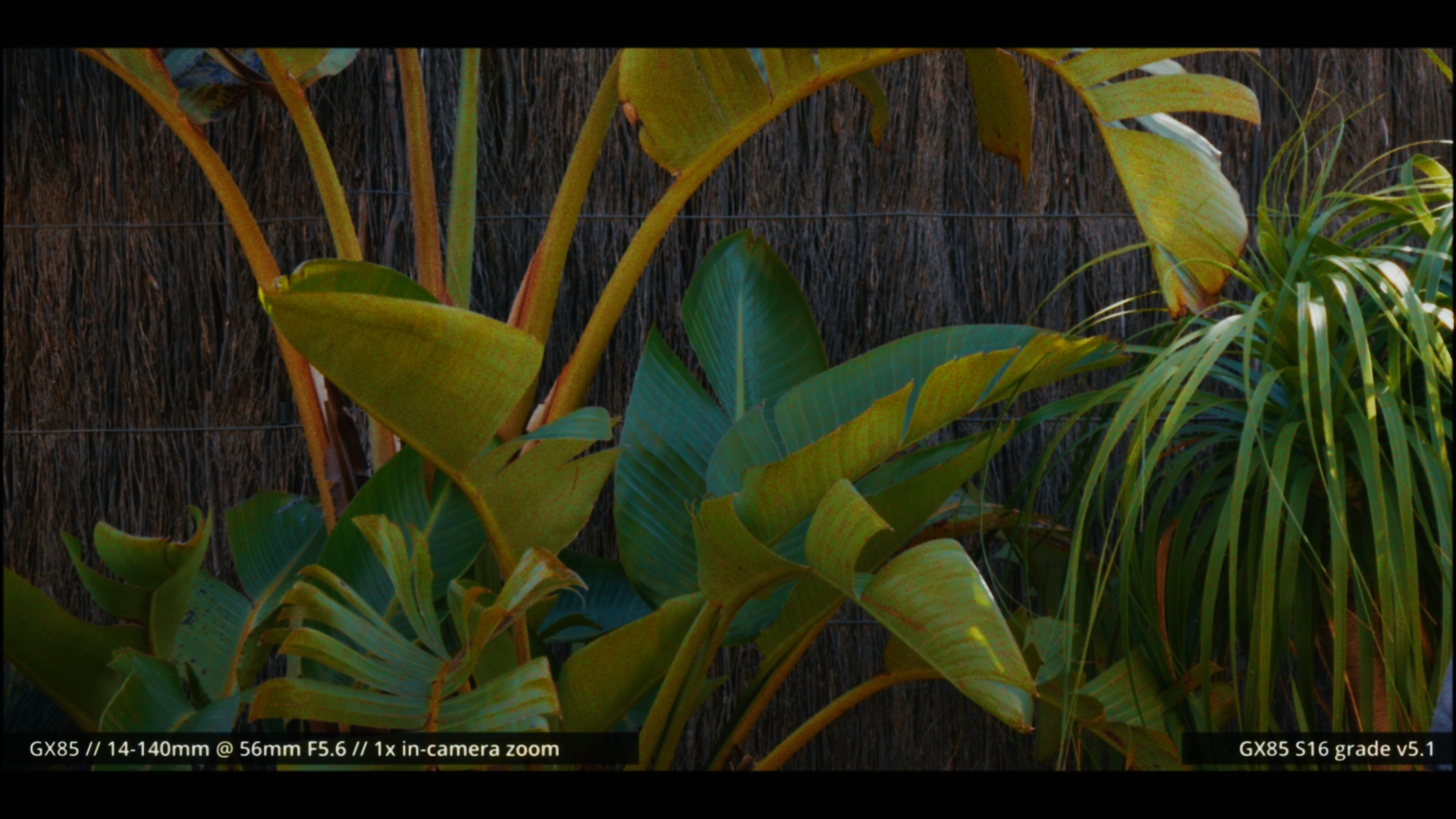
Stepping away from film emulation for a moment, the thought occurred to me to that we have softened the image enough for the 2x and 4x in-camera digital zooms to be tested. The GX85 sensor is 4592px wide, which with its 1.1x 4K crop factor, means that the horizontal resolution for its 1x is about 4174px, with the 2x crop it's about 2087px, and the 4x is about 1043px. Normally the 2x is usable on a 1080p timeline and the 4x is not, but with the film emulation on it, the only way to find out is to test it in the real world. Here is the GX85 with 14-140mm lens on it at F5.6. Optically zoomed to about 25mm: At 14mm and zoomed 2x in-camera: To me this looks completely fine. So far so good.. Optically zoomed to about 50mm: At 14mm and zoomed 4x in-camera: This is the big one. I see some differences here, but not enough that if I saw this in an edit it would pull me out of it, which is really what I'd want - to know if it's usable. For some context, I shot this test with three lenses, the 14mm F2.5 pancake lens (which is the lens I'll be using), the 12-35mm F2.8 and the 14-140mm shown above. While the light was changing during the test, what is interesting is that the 14mm F2.5 has much less contrast. The reason I point this out is that when comparing the 14mm F2.5 with in-camera zoom to the other lenses I think the lens rendering itself is the most significant difference. 2x comparison: and now for the main prize, 4x: This is an excellent result as far as I am concerned! Caveats: This is with the v5 film emulation grade, which as @eatstoomuchjam pointed out might be on the softer side of the range for what 16mm film rendered However, this grade DID NOT include the lens emulation stack, so the lens barrel distortion, vignetting, and corner softening hasn't been applied, so that could go some way to evening out the look I haven't done any sharpening to compensate for any softness. In the past I've discovered that a digital zoom of about 1.6x can be equalised by some careful sharpening in post, so sharpening isn't to be underestimated, especially in the context of an edit where (hopefully) the viewer is looking at the content and not the image Super-16mm film was often shot on several primes, where some would have been sharper than others, or on zooms, where the zoom would have been sharper in certain parts of its range than others, so natural variation in this stuff is potentially making it a more accurate emulation rather than detracting from it I suspect that the 4x is on the edge of being too soft, which makes sense as it's a 1K sensor readout going through a lot of processing and rescaling, but this is a great result. So.... the GX85 and 14mm F2.5 lens is a Super-16mm setup with a "turret" of T2.5 lenses that are equivalent to 31mm, 62mm and 124mm, and it's (just) pocketable and fits in the palm of your hand! Happy to share the power grade if anyone wants to play with it.
-
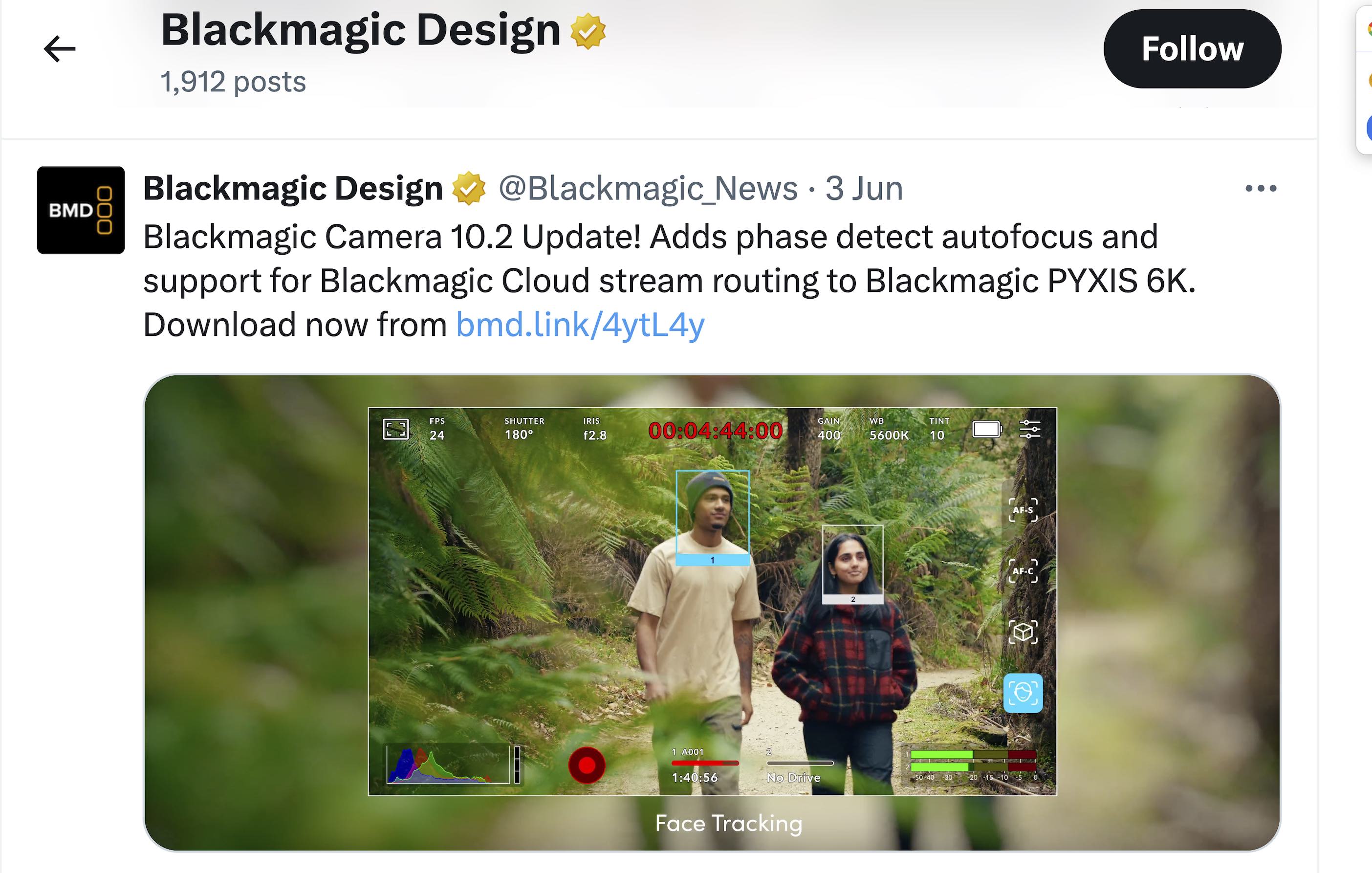
the download is on their homepage -demos at Cine Gear Expo tomorrow
-
You may or may not have see this, Adapter with Native AF Speed!? Only works with a g7 or gh9 ii no others it seems. Available for about 100 lenses but works with some others just as not quick it seems. on futher reading Olympus E-M1 series and OM System OM-1 series] Metabones transmits the same PDAF/IBIS data to the camera in the same way as the latest Panasonics, and gets a significant boost in AF speed
-
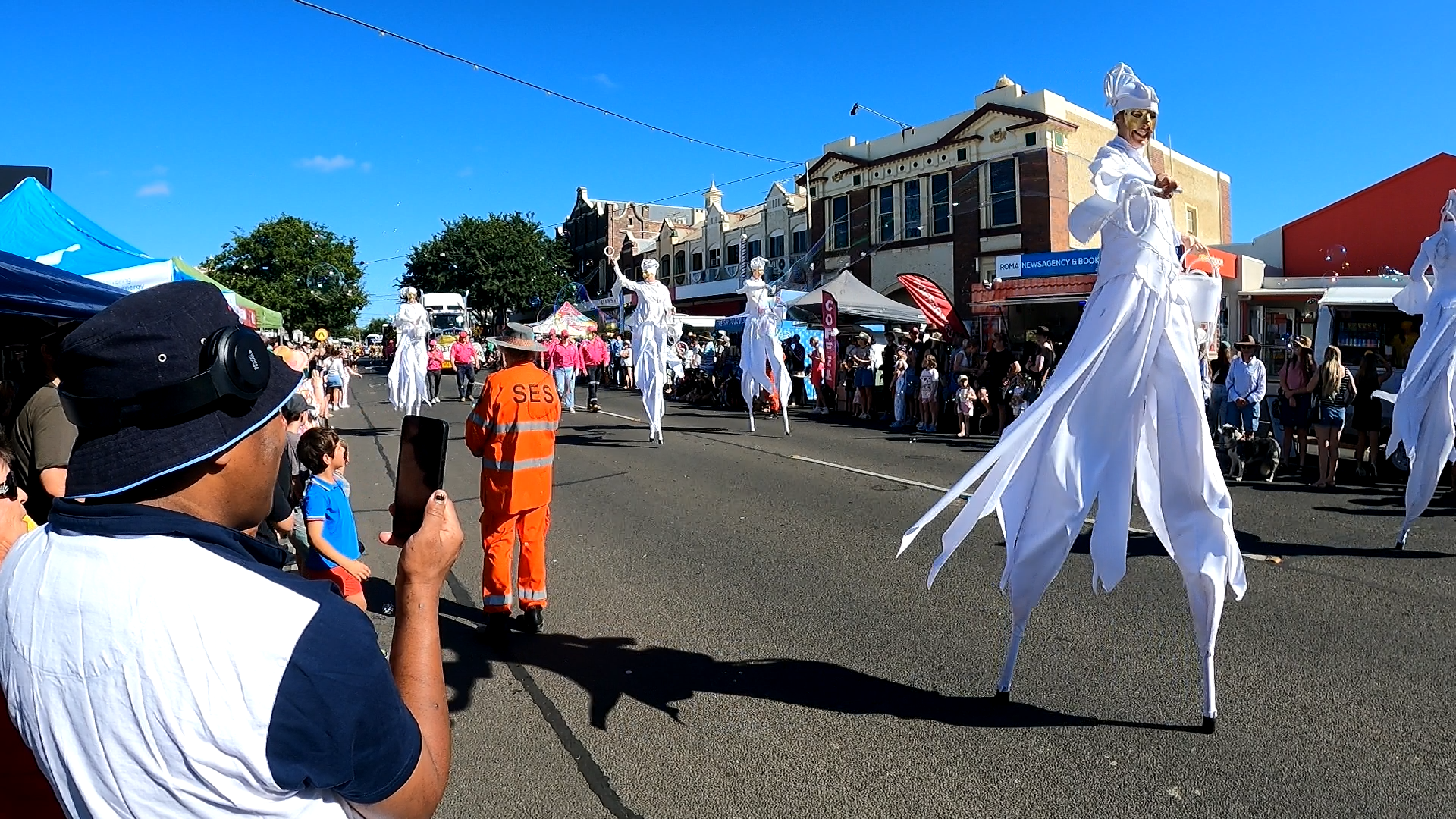
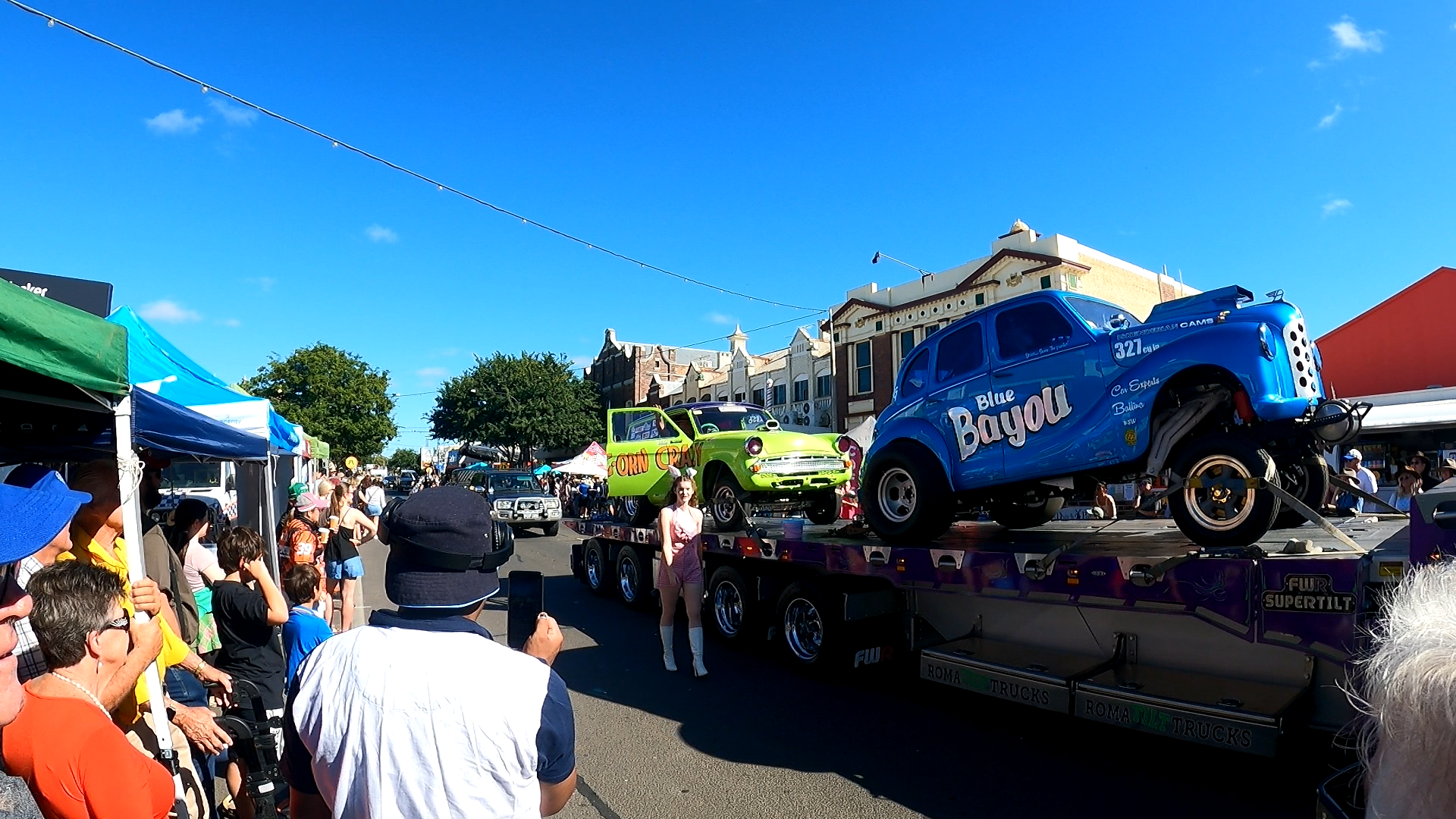
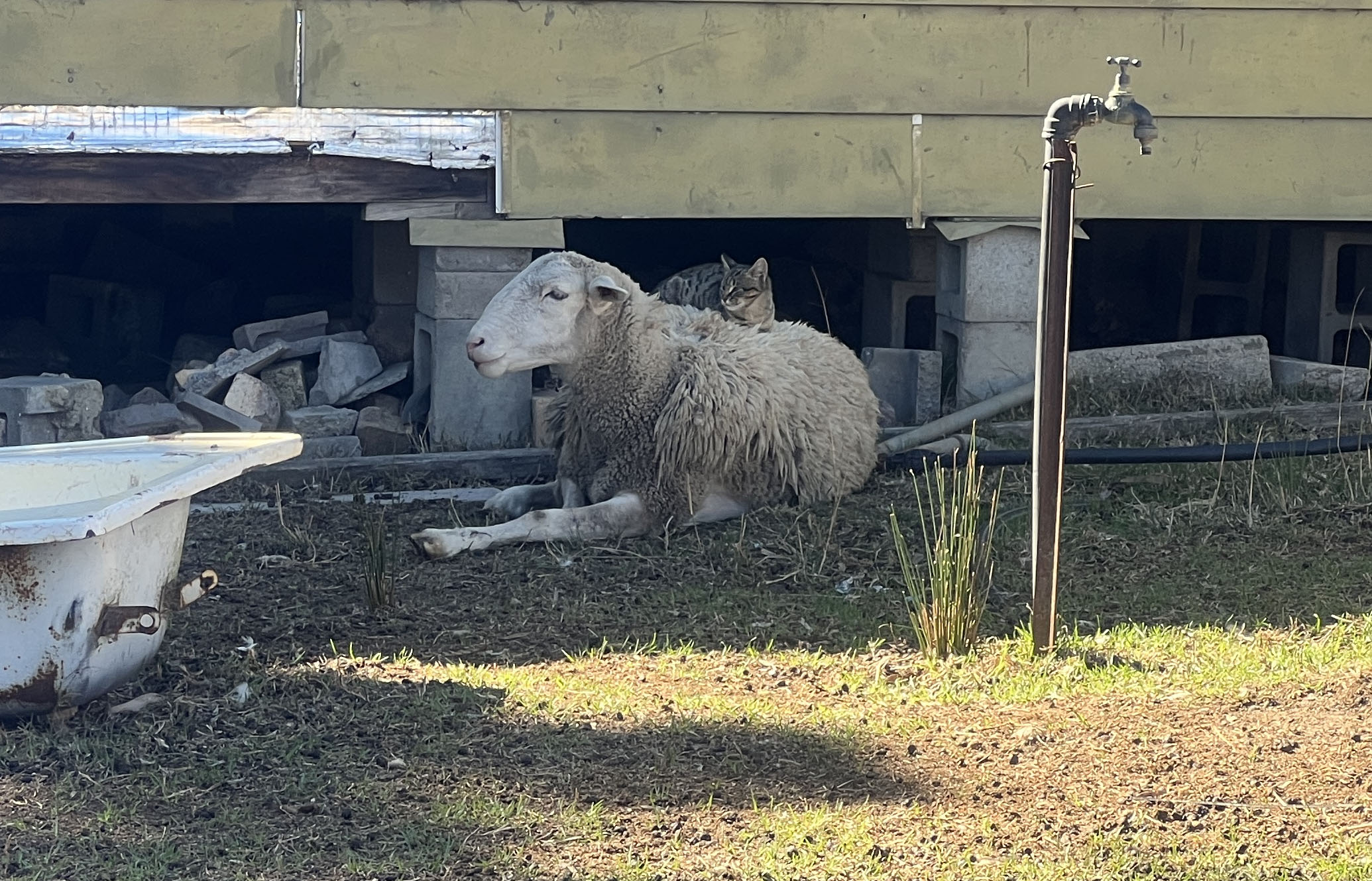
I've been a bit lax of late, i did get away for easter to a little country town called roma. They had a lot of car themed things happening for the weekend but here's a couple of grabs from resolve from the main parade. We also seemed to have collected a feral kitten, no idea where she came from. No mother and no other kittens, but i think she has grown twice her size since mum started feeding her. The sheep have adopted her... i suspect i'm going too have to discourage her from stalking the chickens.