All Activity
- Past hour
-
@MrSMW Thank you for the update!
-
 ArashM reacted to a post in a topic:
LUMIX L10 - announced
ArashM reacted to a post in a topic:
LUMIX L10 - announced
-
I've shot a no budget feature film (partially) as a DP under similar circumstances last year. we had some permissions here and there to shoot in metros and train stations for a few hours, but mostly it was outside in the busy capital city. i'll share a still of it here, if somebody wants to see more stills I can DM a link, but at the moment I think it's best it mainly stays private considering the film is not finished yet. i do kind of think best to push back against the idea of total minimalism, or austerity especially in regards to crew. Other than the director and I, we had a 1AD, a PA, a makeup artist, sound guy, a focus puller, and on some days a grip or a gaffer (on the few moments we weren't just relying on available light). our director was someone who was frankly underexperienced and would generally completely abandon our preproduction plans, change the script all the time and was unwilling to listen to anyone else's suggestions other than the actors, which caused some tension from time to time. having these other people on your side to keep you in line can make this experience a lot more pleasant since it's hard to make films, no matter how small the scope is. this was shot on a largely rigged up BMCC6K with some SLR Magic primes, and mostly on a cine saddle. I guess we we're pretty lucky with not being bothered by strangers while shooting, other than having some random people staring at the camera in a wide shot. also the thing with walking around in a medium 2-shot is that it is insanely boring, especially for a visual language. there's a reason that doesn't really happen in WKW's stuff.
- Today
-
eatstoomuchjam reacted to a post in a topic:
Sigma Fp review and interview / Cinema DNG RAW
-
Well just edited my first full set of stills and as expected, my S1RII utterly obliterates it in that regard. Even without pixel peeping, it’s instantly obvious on my MacBook. Probably on a phone or social media, would not notice, but actually editing the files, enormous gap including; detail, micro-contrast, WB handling, colour fidelity, higher ISO, you name it, it’s not any kind of contest. But I never expected it to be and it’s where and what I expected it to be and that is good enough for the specific purposes I have for the L10. Not tried the video yet and would expect that to be a closer contest. Battery life is great!
-
 John Wickk joined the community
 - Yesterday
-

Sigma Fp review and interview / Cinema DNG RAW
Ty Harper replied to Andrew - EOSHD's topic in Cameras
@eatstoomuchjam I've always been a fan of the EF 24-70mm f/4 (IS) so def looking at that lens as an option. As for the pdmovie option, I'm ok with its limitations - but overall, I agree with alot of what you're saying. And the thing about the ZR is that bcuz my main cams are two R5Cs and a R50V, when I start hitting that $3K CAD territory (which is how much a used ZR + EF to L adapter w/ VND goes for in my neck of the woods) suddenly I'm like $600 CAD shy of a new Canon R6V, and I already own all the accessories that cam would need. Meanwhile the FP or S9 (with all necessary accessories) will run me under $2K. First world problems tho! -
Ty Harper reacted to a post in a topic:
Sigma Fp review and interview / Cinema DNG RAW
-
 Sanaa joined the community
 -

Sigma Fp review and interview / Cinema DNG RAW
eatstoomuchjam replied to Andrew - EOSHD's topic in Cameras
It's been a while, but I think it was either that or a slightly bigger cage that wrapped the whole camera. I had the option for the bottom-mounted SSD or a side-mounted smaller one. I primarily used the side-mounted one since it was overall smaller. I didn't - I don't have a lot of interest in shooting 1080p these days. If I did, I'd be more inclined to re-buy the original BMPCC (sometimes I consider this and always turn back when I see the current prices). The EF 35/2 IS is great. I don't think I have (or have used) the EF 24/2.8 IS, but it's decent. You might also consider the 24-70/4L IS. It's definitely a little bigger than the other two lenses, but not bigger than both of them together. Not as fast, but the fp is alright in low light. I personally didn't like the PDMovie at all. The one that I had used some weird little batteries and there was no way to tell it to focus on anything but the closest thing. YMMV. If it were me nowadays, I'd give a hard look at the ZR. A used ZR costs more than a used FP, but the difference gets to be less when you end up buying a DPL cage and PDMovie to make up for the FP's shortcomings - and closer yet with the flip screen mod. With the ZR, you'll get a much nicer screen, decent autofocus, and built-in raw. -
Sigma Fp review and interview / Cinema DNG RAW
Ty Harper replied to Andrew - EOSHD's topic in Cameras
Are you referring to the original DPL base mount with the SSD bottom rack + USB side plate in this video? Also had you tried the RAW 12bit 1080p option via SD cards? I've heard it's pretty good so was thinking it could be a compromise in situations where I want to be as light as possible. I'd be shooting exclusively with the EF 35mm f2 (IS) and maybe pickup a 24mm f/2.8 (IS) + the PDmovie Live Air 3 and look into DPL's screen mod later down the line. But I figured that lens/PDmovie setup (w/o the DPL stuff) would cover the main limitations of the FP, while still being a fairly small footprint - but curious what you think from your own experience? -
I mostly use zooms out of necessity but use them like primes, ie, as fixed focal lengths. For stills on one of my S1RII’s with the Sigma 28-70 (chosen for it’s lightweight, minimal zoom extension, compact build), I shoot it 28 or 70 or 105 using the crop function. For stills with my L10, there is a 3 step function button and that I have set as 28, 50 and 70 for my candids. For video, currently S1RII to be replaced ASAP with an S1II (for less overheating purposes, an entirely different story), Sigma 17-40mm in crop mode with full eStab engaged making it either a 36 or an 84. The latter gives me a slightly tighter perspective when shooting side by side with stills but can’t get around that without some compromises. The summary is I’m pretty much always shooting 28mm as my wide and then either 70 or 105 as my long for stills and 85 for video. I’m pretty tuned in to those focal lengths as 28/85 would be my primes only set up. I would rather use primes but same as for manual focus only lenses, not a chance for the work I do. My work dictates the lens choices.
-
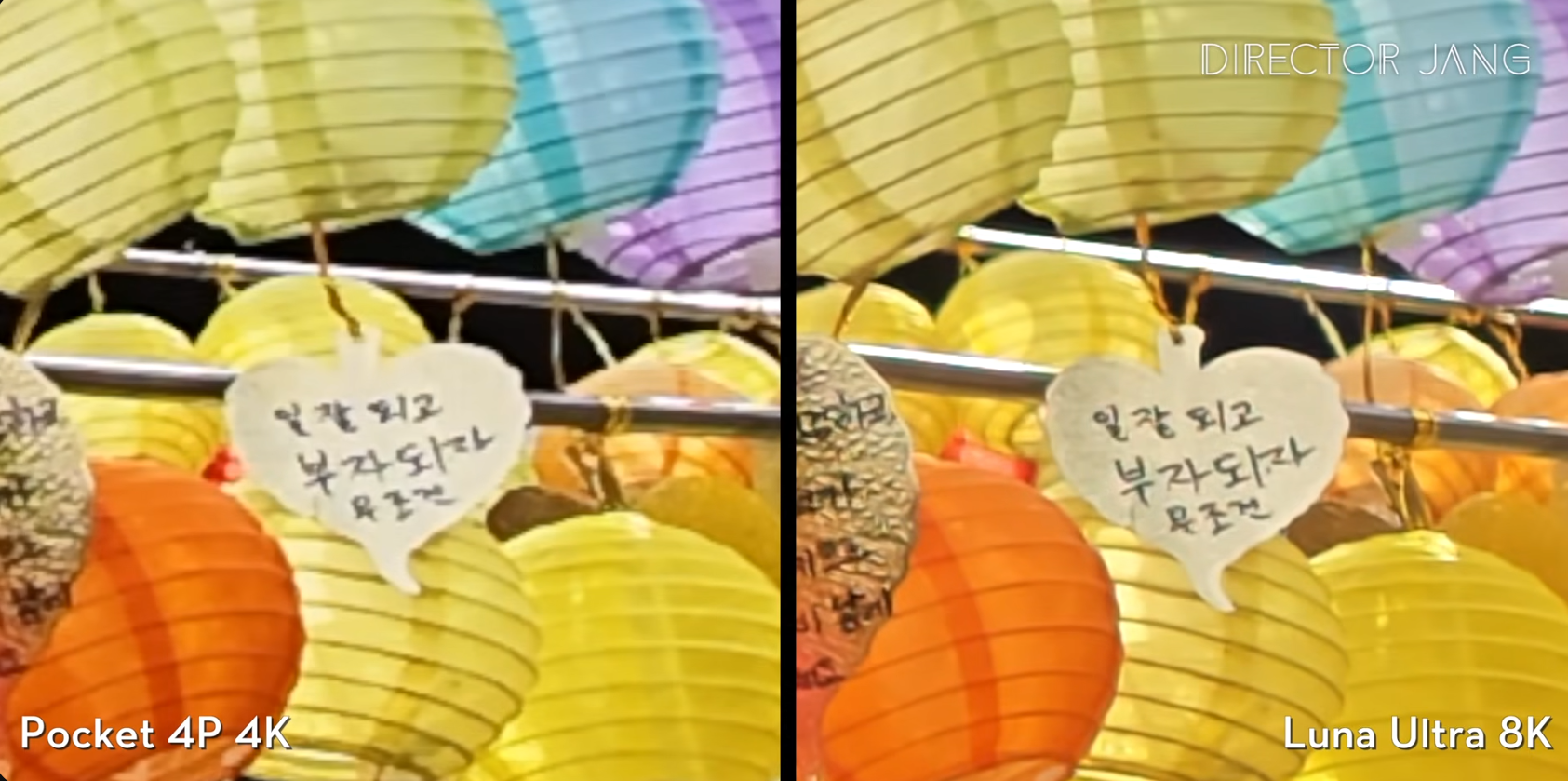
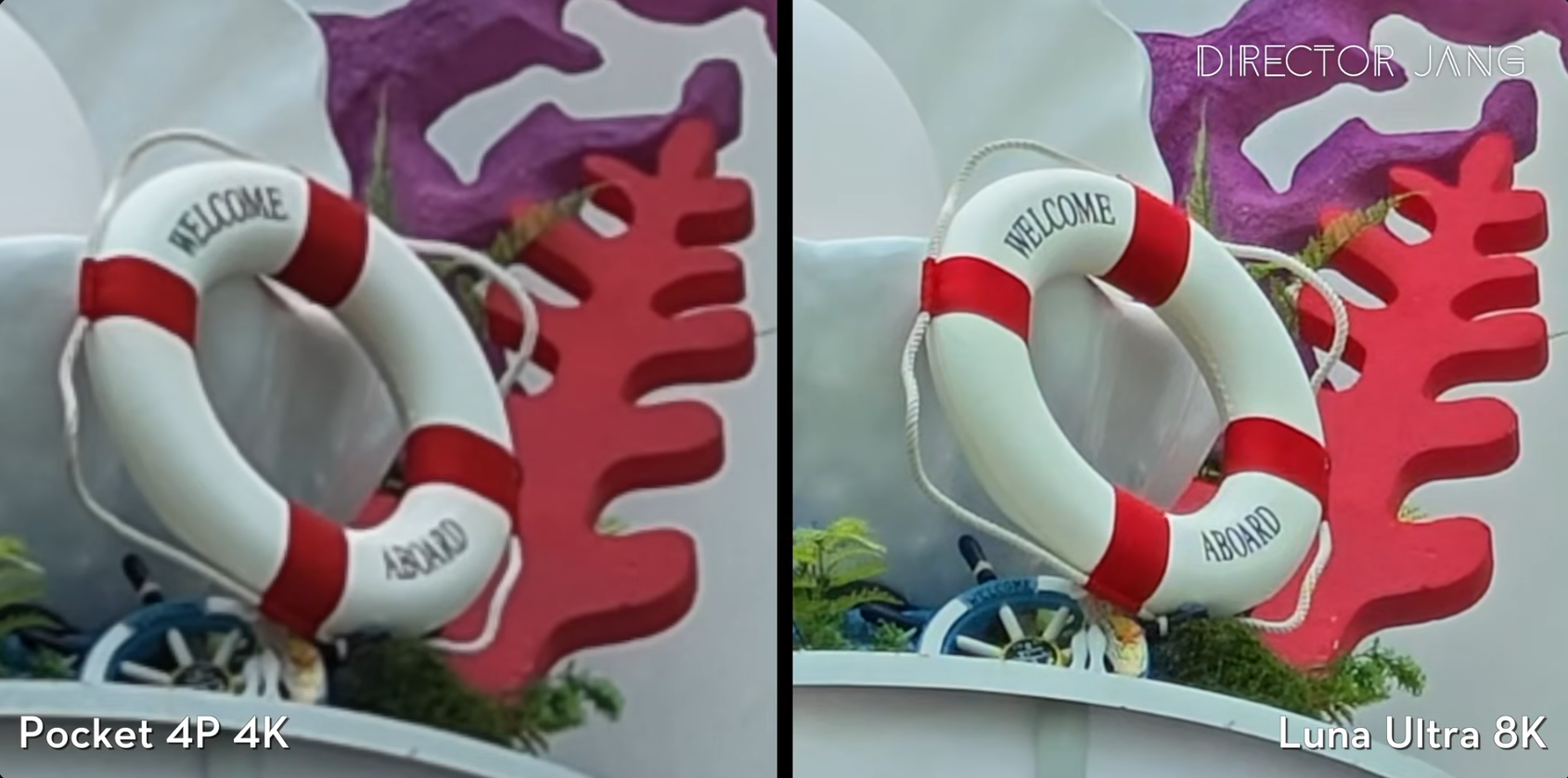
 These two [1*] [2] Korean hands-on videos are probably among the most useful references I have seen so far on the Luna Ultra / Pocket 4P discussion. EDIT — plus this one from another reviewer elsewhere: [3] Not because they end the debate, on the contrary : ) but since they also help show the real operational trade-offs better than most spec-sheet comparisons, while still offering some fairly clear findings on the usual comparison points, such as outcome, colour or dynamic range, whenever those aspects are covered. source *In this 1st video, right from the start, you can see exactly that approach: using this kind of camera as a serious B-cam tool (Osmo Pocket 3) in commercial work, very close to the way I have also been using small capture devices in a similar role, as mentioned before.
-
Ty Harper reacted to a post in a topic:
Sigma Fp review and interview / Cinema DNG RAW
-
Ty Harper reacted to a post in a topic:
Sigma Fp review and interview / Cinema DNG RAW
-
kye reacted to a post in a topic:
People don't seem to understand lenses (moving beyond 'zooms vs primes' thinking)
-
 mercer reacted to a post in a topic:
People don't seem to understand lenses (moving beyond 'zooms vs primes' thinking)
mercer reacted to a post in a topic:
People don't seem to understand lenses (moving beyond 'zooms vs primes' thinking)
- Last week
-
 Here is the confrontation young upstart Kubrick had with an established cinematographer re different focal lengths ,that Mercer is referring to.Kubrick is known as a "single camera director" but used multiple cameras sometimes like in the war room sequences of "Dr Strangelove.".He often shot a scene more than 30 times to reduce the artificial acting and get the performers displaying raw emotion.Not much use have fabulous cinematography if the acting is not up to it,the audio is poor or the story dull and boring.
 -
Feature films have the "luxury" of being able to shoot one scene with multiple cameras,focal lengths and perspectives-if it is beneficial to do so.Master & Commander has an extra on this ,five cameras A to E with a range of focal lengths used,including 17.5,27mm,35mm,40mm,50mm,75mm and 100mm including at least one zoom lens.Shot on Super 35 format.Whatever focal length and perspective to tell the story can be chosen in the edit.
-
Aussie Ash reacted to a post in a topic:
People don't seem to understand lenses (moving beyond 'zooms vs primes' thinking)
-
Aussie Ash reacted to a post in a topic:
People don't seem to understand lenses (moving beyond 'zooms vs primes' thinking)
-
Aussie Ash reacted to a post in a topic:
People don't seem to understand lenses (moving beyond 'zooms vs primes' thinking)
-
Yes, exactly. That was the part I was agreeing with and developing, not trying to claim as a new point. If two people are saying the same thing, there is usually a reason for it. Always better than one person going one way and the other going the other way, just to create confusion, isn’t it? ; ) What interests me is that once convenience starts affecting the rhythm of the set, it is no longer just convenience in a minor sense. It becomes part of how the scene can actually be made. Time, pressure, continuity, the actors’ energy, the crew’s patience... all of that can feed back into the creative result. And I take your point on the 2x/3x terminology when it comes to lens design, range, price and compromise. In that context, of course it tells you something useful. My issue is more with the way it is used as shooting language, especially with phones and small cameras, where “2x” or “3x” often replaces any real sense of focal length, distance or perspective. Your parlor trick is actually a perfect example of what I mean. If you can look at the lens and camera position and already have a good idea of what is probably in the frame, then focal length is not trivia. It is practical spatial knowledge. And yes, Kubrick was right there. The frame may look similar, but once the camera distance changes, the shot has changed.
-
 linktoursglobe joined the community
 -
For me, it's not even an argument. Or if it is an argument, it's a silly one and I want to stay as far away from it as possible. There was a time when zooms were noticeably worse optically than primes - potentially made worse with the release of lenses like the Nikkor 43-86 (that said, I have and kind of love the 43-86, though I have yet to convince anybody to let me use it on set). But since sometime in the 80's, high quality zooms have existed. The 24-70/2.8's and 70-200/2.8's from Canon/Nikon have been fixtures in the bags of nearly every professional photographer since then. They're sharp, fast enough, and extremely convenient. I've used them on set dozens of times. When shooting by available light or when going for more extreme subject isolation, I might move to a faster prime... but when I do, I'm rarely like "wow, this is so much better." I'd even go so far as to challenge most of those people to tell the difference between the 24-70/2.8L II at 50mm stopped down to f/4 or f/5.6 and the EF or even RF 50/1.2L stopped down to f/4 or f/5.6. There might be a different character in the bokeh from the RF, but that's more of an ultra-modern design vs still-pretty-modern design concern vs a zooms vs primes one. I'm pretty sure that's what I just said. 😉 This goes with another of my parlor tricks when on someone else's set - pointing out things to them that will be a problem in their scene simply by looking at the lens on the camera and where it's pointed - I usually have a good idea of what their frame is without having to look at the screen. "You sure you don't have the sound engineer's pack in the frame on the right edge? With that 35mm lens, I'd think you'd see it." (pause) "Oh, yeah. Could you take a step back?" It can be useful for making a guess at the price/quality ratio of the lens (also based on the widest aperture). Finding a good quality f/2.8-f/4 lens that's a 2x or 3x is usually relatively affordable. 4x less so. At 5x, you're either going to be forking over a lot of money, getting a slower lens, or mounting a coke bottle to the camera. That said, I still check prices on the EF 35-350 sometimes in a fever dream since I'd like to see if it can be "good enough" in many cases - and the same with the more useful EF 28-300, but its used price is staying stubbornly high. Once it hits $700, I might buy one in a late-night drunken rampage or something (I barely drink these days so there are fewer opportunities than there once were). Kubrick was fully correct! As he often was!
-
That Kubrick story is a fine example because it puts the whole thing in very practical terms. It is not about fetishising focal lengths, or saying one lens is more “cinematic” than another. It is about the fact that the moment you decide whether to move the camera or change the lens, you are already making a directing choice, not just a technical one. Much as with the recent example I gave from Leonel Vieira’s A NOITE, which was based around specific focal lengths, the 75mm and 100mm lenses I mentioned. That is not just a preference for a certain look. It is about camera distance, pressure, and the way actors are observed inside the frame. Different names, different contexts, but the same practical truth: once the choice is made consciously, focal length stops being just a number on the lens and becomes part of the mise-en-scène.
-
iPhone Lidar apps & cables as focus helpers or AF
eatstoomuchjam replied to radneuerfinder's topic in Cameras
I really wanted to like the PDMovie. I had the previous version (Air 3 Smart? Something like that) for a bit and ended up selling it after trying to use it just a few times. The weird batteries were a little annoying, but I could have lived with them if not for the complete lack of ability to choose what it focuses on. As far as I could tell, the focus would always be on "whatever is closest" With DJI focus, the hand grip has a little screen where you can at least tell it where you want the focus to be - and it'll successfully focus on that thing about... well, 85% of the time. For me, the systems that fake out PDAF are more exciting. I hope that someone comes out with one for RF mount sometime - or even better, for EF mount. Otherwise, the ones with a little motor are kind of neat - though moving the lens back and forth is not quite the same as adjusting the focus (though usually it's a relatively petty distinction). -
Sigma Fp review and interview / Cinema DNG RAW
eatstoomuchjam replied to Andrew - EOSHD's topic in Cameras
This is exactly why I ended up selling my fp and fp-l. I tried just about everything to keep the kit small for raw recording. And kept coming back to how big they got, even with the smallest possible external SSD (one of the DPL SSD cases in their mount). By the time I added that, I had a camera the same size as my Canon R5, but also less capable than the R5. If Sigma would release the exact same camera, but able to record compressed 12-bit raw to SD card (Canon did it on the C70 and they do it in raw lt on the C80!) - or with a CFE slot that can record the existing uncompressed raw, I'd be strongly considering it again. The default size for the fp is just so good. Similarly, once the price of the bf gets to "not silly" level, I'd be apt to get one. Anyway, the ZR seems to be almost everything that I wanted the fp to be - it's another one that I'm likely to get someday after prices drop more (or there's a crazy good sale). -
iPhone Lidar apps & cables as focus helpers or AF
Emanuel replied to radneuerfinder's topic in Cameras
Interesting to see this thread again in 2026. Back then the idea sounded a bit futuristic, but now it feels like we are finally getting there from a few different directions. The iPhone LiDAR side is still interesting, especially with things like LidarAC, but what really caught my attention more recently is that we now have dedicated systems actually trying to turn manual lenses into something much closer to AF behavior. DJI Focus Pro is probably the most serious example so far. PDMOVIE is trying something similar too, though it seems a bit more compromised in how it decides what to lock onto. So in a way the original idea in this thread was right, just early. It was never only about using the iPhone as a clever measuring tape. The bigger idea was using LiDAR / distance mapping / external motors to bring some level of autofocus logic to manual lenses and cine setups, and that definitely seems real now. We are still not quite at “perfect native AF for any manual lens”, but compared to where this discussion started, it is no longer science fiction either. Has anyone here actually used one of these newer systems on a real shoot rather than just testing it at home? -
I assume some of you have heard this story... when Stanley Kubrick got his first Hollywood job directing a movie, he asked the cinematographer to switch to a different lens for the next shot. Instead, he moved the camera to get the shot. Kubrick asked him to put the camera back and switch the lens like he asked. The cinematographer told him it was the same shot if you moved the camera or changed the lens. Being a photographer in his previous life, Kubrick disagreed and said the perspective changed. Unless I'm remembering this story incorrectly, the man vehemently disagreed and refused to do what Kubrick asked, so Kubrick was forced to fire him and throw him off his set. Of course there's a lot to lensing than just FOV, the question becomes how important does the perspective, in this case, matter? Kubrick was right, the shot changed and it mattered to him because it was his film. Would the audience have felt the difference in what he was trying to communicate with that specific lens, from that specific distance? Possibly. The question becomes how much does it affect yours. I remember when I first got my 5Diii and the 24-70mm f/4. I was checking the light on the talent and lining up my shot and the image looked a little flat, so I zoomed in and stepped back and the talent popped. In that instance, I used a little bit of 1,2 and 3 I suppose. I can't lie and say I did this to emphasize any theme or symbolism, I was merely looking for a shot with a bit more dimension so I zoomed with the zoom and zoomed with my feet... it was that moment I knew I was a pro in my own mind.
-
I think @kye’s point still stands, and maybe it becomes even clearer once you move away from the usual zooms vs primes argument. It always comes down to how much convenience a zoom actually buys you, especially when time becomes critical. On a controlled set, changing lenses can break rhythm, slow down the crew, cost minutes, and sometimes cost the shot. In uncontrolled environments, it can be even more decisive, because you may simply not have the time, the space, or the chance to change lenses before the moment is gone. So yes, a zoom can solve a very practical problem: time, reaction and continuity. That should not be underestimated. If the situation is changing in front of you, the practical convenience of a zoom can become creatively important too. But I don’t think this cancels the OP’s deeper point. There is also another kind of convenience in truly understanding a given focal length. It teaches you where to stand, how close to be, how to move, how much space to leave, and how the scene changes once your own position changes. A zoom may save the moment, but understanding focal lengths changes how you read the moment in the first place. And this is also why I have never had any patience for the 2x, 3x, 5x terminology. I always prefer the actual focal length value, because that tells me something real about the relationship between camera, subject and space. “2x” may be convenient marketing language, but “35mm”, “50mm” or “85mm” immediately tells you much more about how the image is likely to feel and how you may need to position yourself. Leonel Vieira is a good recent example of this. This June, while shooting the making-of on A NOITE, I was able to observe that very particular relationship he has with focal lengths, especially his liking for 75mm and 100mm lenses, focal lengths he has often favoured and used there. That is not just a technical preference. It affects distance, performance, compression, the way actors are observed, and the emotional space between camera and subject. With those lenses, the focal length becomes part of the staging itself, not just a number attached to the lens.
-
Exactly. What you call availablism is central here. But with Wong Kar-wai it never feels merely opportunistic. The available does not remain simply available. It becomes emotional architecture. Pre-handover Hong Kong gave him the lights, the colours, the cramped spaces, the corridors, the streets, the reflections and the limitations. But the art is in turning those given elements into mood, memory and desire. That is the difference between just using a location and allowing the location to become part of the film’s inner life. In that sense, the uncontrolled city is not only a background. It becomes a collaborator. Wong Kar-wai does not simply take what is there. He finds what is hidden inside what is there.
-
The gyro control itself is not new, correct. But I don’t think the interesting part here is simply that “gyro control exists”. Of course it does. Larger gimbals, phone apps, remote monitors and systems such as the Ronin 4D have already explored that territory. The question for me is not whether the underlying idea existed before, but whether it becomes useful in a different way once the whole system becomes small enough, fast enough, integrated enough and unobtrusive enough. Many ideas in cinema technology existed before they became truly useful. Stabilised camera movement existed before Steadicam became the right combination of body, balance, operation and image. Small cameras existed before 16mm, and later DV, changed the way filmmakers could move through reality. Remote operation existed before it became practical in the hands of a one or two-person crew. So yes, if we reduce this to “a gyro controlling a gimbal”, then it may sound like nothing new. But if we look at it as a pocket-sized 1-inch 10-bit Log gimbal camera, with several focal lengths, proper monitoring, autonomous operation and a dedicated head-tracking accessory, then the proposition changes. It is not only the control method. It is the form factor plus the image pipeline plus the operating mode. And this is also where the remote / detachable screen side becomes important. If this is not a meaningful step forward, then how do we explain that DJI, despite all its experience in this category, still seems one step behind on this specific point? Not necessarily behind in image quality or engineering as a whole, but behind in this particular operational concept. The comparison makes that fairly easy to see. DJI can offer remote control through its ecosystem, apps and accessories, but Luna Ultra brings the detachable screen, remote monitoring and camera control directly into the body concept itself. To be fair, DJI still has a major advantage in ecosystem continuity. If, apart from the optical accessories, the Osmo Pocket 3 accessories remain compatible with the Osmo Pocket 4P/Pro, that is obviously a strong point. It means users are not forced to abandon an existing accessory ecosystem. But that is a different kind of strength. It is backward compatibility and ecosystem maturity, not necessarily a new operating concept. That matters because the remote is not just a convenience feature. It changes the way the camera can be used. There are also small operational trade-offs on the DJI side that are worth noticing. For instance, the dedicated low-light video mode tops out at 4K30p, while Luna Ultra records up to 4K120p in regular video mode and offers PureVideo low-light capture up to 4K60p. Not the whole story, of course, but another sign that Insta360 seems to be moving ahead of DJI* in a few practical areas here. And yes, we have already seen Insta360 explore part of this same logic with the GO line, namely the GO Ultra. With the GO Ultra, for instance, you already have that very useful modular idea of separating the camera unit from the monitoring/control/battery side of the system. In the Luna Ultra, this logic is taken into a different class of camera: the detachable touchscreen remote allows independent monitoring of battery information for both the main unit and the remote, and the system manages charging between both parts. Even if the remote does not appear to support fully independent USB-C charging while detached, the operational concept is still important. The monitoring/control side and the image-capturing side start to behave as distinct elements of the same camera system. That is precisely the point. The more the monitoring, battery handling and control are separated from the visible camera body, the easier it becomes for the device to disappear into the situation. And for documentary, BTS, production diaries or observational work, that can be a much bigger deal than it first appears. A phone strapped to your head controlling a larger gimbal is one thing. A compact dedicated device that can sit inside a BTS, documentary or walk-around setup, become boring after a while, and follow intention without the operator constantly raising, aiming and correcting the camera is another thing. That is where I think the usefulness may appear. Not necessarily for everyone. Not necessarily for controlled narrative setups. And probably not as a replacement for a skilled operator with a proper camera package. But for small crews, making-of work, observational documentary, rehearsals, production diaries, street work and situations where the act of operating the camera visibly changes the behaviour of the people being filmed, I can absolutely see the value. In that sense, I don’t see it as revolutionary because gyro control is new. I see it as potentially revolutionary because a previously awkward idea may finally be arriving in a form factor where it can become natural, invisible and operationally useful. *And not only when compared with DJI or another compact device... ; ) take a look at this higher-end comparison too : X
-
"Cinema" over the last 130 years would strongly beg to differ in terms of the size of the imaging sensor used. 😉 This one is a best seller, presumably, because it was just recently announced and it's still in preorder state (with a free PL adapter!). I'm tracking it, though, as it's in the "less squeeze, but with oval aperture" that I find somewhat interesting, as shooting true 2x anamorphic feels generally unwieldy. I'll point out that even in a distortion-free 28mm lens, shooting a close-up tends to be unflattering due to perspective. The reason longer focal lengths tend to be seen as more flattering is because the relative distance from the nearest part of the face (probably the nose) and the rest of the face (especially the eyes) is much larger. If I am standing 12" from a subject with a nose 1" long, the nose will seem much larger in comparison than if I am standing 48-72" from the same subject. This can be observed simply by holding the hand about 11" from the face and moving it back 1". The difference in size is noticeable - and it is for the nose in a portrait as well. There's an additional part of this which will get you chased out of a number of forums for heresy - if you are shooting at sufficiently high resolution, you can take a couple of steps back with your 28mm lens and then just digitally reframe/zoom in on the subject and get functionally the same result as putting on a slightly longer lens at the same aperture value (give or take variances in lens character, etc). If you're shooting at 8K to deliver in 4K, it can be a pretty big couple of steps. This is basically turning a prime lens into a zoom lens. This sort of thing is specifically why I love having a 180mm macro lens - it lets me do extrame c-u of an actor's eye or eyes without getting the entire camera package right up in their grill. No matte box, though. I ain't professional enough to use a matte box. Controlled sets can also be places where using a Zoom lens becomes more attractive, as swapping lenses can take 3-5 minutes. - Detach FF gears - Remove support - Unmount first lens - Mount second lens - Attach support - Attach FF gears - If using electronic FF, run calibration - Potentially, if on a fancier set than I'm usually on, inform whoever is doing script notes of the change If shooting under any sort of time constraints, everybody will start to hate you after a little while if doing this frequently. This sort of thing is why I've begun using a Canon C80 with autofocus stills lenses for timed film competitions. I did one with the RF 24-105/2.8 on loan from CPS (worked great, beautiful lens, maybe someday when the price is more reasonable, I'll buy one) and another with my own 24-70/2.8L II and 24-70/4L IS and swapped in the 85/1.4L IS for some close-ups and the 180/3.5L for some extreme close-ups. It's been working really, really well. On the last set, when someone got annoyed that I was swapping lenses again for some reason, they timed me - total time for a lens swap was about 1 minute 15 seconds (no lens supports, no FF gears).
-
For me, I'm still not seeing that as especially useful or revolutionary. It's been possible for a long time, probably 10+ years, to do gyro control of larger gimbals (usually through the phone app, but I think I had or saw at least one with an external gyroscope controller in the past). It never took off much and I never saw anybody strap a phone to their head to remotely control their gimbal. I'm not sure if gyro controls are in DJI MIMO, but if they are, it's already basically possible with the Pocket 3. I've found gyro control to be somewhat useful with the Ronin 4D (including with the flex unit). On one shoot, I was getting too tired to carry the camera anymore so the grips started carrying it around while I controlled the frame from the gyro on the high bright remote monitor. It worked... OK. It'd be better if we'd practiced it beforehand, probably. For me, it's more "parlor trick" than "genuinely useful tool" in most cases.
-

Narrative films shot in uncontrolled cities
Clark Nikolai replied to QuickHitRecord's topic in Cameras
When I was younger I got some idea that all movies were made this way. I don't know where I got that idea but maybe heard something about the methods on TV. I was surprised that, after a long time in the indie film and video art world to then enter the world of the commercial conventional film industry and see the scripts and crew people all the work to make sure things go exactly as planned. (It kind of takes the fun out of it.) Wan Kar Wai's "look" really comes out of availablism. He was living there and went out and shot it. This was pre-handover Hong Kong where space was limited. The lights, colours and "sets" were already there. The art is in taking what's around you and framing it for a story. -
What are your feelings about Panasonic S1R II being in the S5 body design?
MrSMW replied to Andrew - EOSHD's topic in Cameras
They only bummed out twice today, but as I was anticipating it, could manage the situation. But it is a super heatwave for France and not normal for anything more than a day or so max, but this is heading towards a week and the biggest issue is the cameras are hot even before you switch them on due to the air temp in the shade. I think storing them in a cool box is the way forward and not something I have tried before but maybe should! Just have to empty all my water bottles… -
Yeah there's definitely an "I don't care what you're doing" thought process in NYC but I think it's more of a survival instinct than anything else. It's actually quite odd. You can walk by someone, make eye contact and nod or smile and they will completely ignore you. I'd imagine if you lived there you'd get used to it, but it seems like you're alone in a sea of people. But for filmmaking on the sly, that's great. Without knowing the exact concept (I'm picturing a Before Sunrise kinda thing) I stand by the idea of keeping a small footprint and understanding the POV of the camera in the story. As @Bioskop.Inc said, if you can keep the dialogue minimal, by utilizing the mood and tone of your locations, then all the better. Also make sure to get clean dialogue takes so you can cut to a different take and use the dialogue over it... eventually people will look at you as they pass by. Otherwise stay small and nimble and flexible with your locations. If you can make a scene work on a park bench instead of walking... even better.