
sanveer
-
Posts
2,542 -
Joined
-
Last visited
Content Type
Profiles
Forums
Articles
Everything posted by sanveer
-
Panasonic announcing a full frame camera on Sept. 25???
sanveer replied to Trek of Joy's topic in Cameras
Actually I think the rumour may be correct. Only that it will be a Cinema Camera like the Varicam with a Full Frame sized sensor (larger than the sensor on the Varicam). It won't be a consumer camera. Right now Panasonic has too many issued with getting a FF Consumer/ Prosumer Camera: 1. Lack of PDAF. It can't use its DFD for Full Frame. 2. No FF lenses yet. If it uses the Leica Mount, it will have to create affordable lenses and a lot more than those currently on offer. There are Many other things it needs to do too. -
In Dual Native ISO cameras, the higher native ISO always has More noise. Check the video embedded below. https://www.newsshooter.com/2018/08/28/kinefinity-mavo-lf-dual-native-iso-birtv-2018/
-
"What is the difference between Full FOV mode and HQ mode under Mavic 2 Pro’s 4K resolution? Full FOV down samples from the 5.5K sensor to 4K resolution while HQ crops in the center for finer image quality but less FOV. Full FOV view is 75° and HQ view is 55°. You can select between them according to your actual shooting demands.." From the FAQ sector on DJI's site. https://m.dji.com/product/mavic-2 Sounds very unusual. Not because it wouldn't seem possible, but because DJI is then releasing a half finished product. But apparently the Mavic 2 is getting a new controller woth a build in LCD Screen, so there is a small likelihood that this may be possible.
-
The Mavic 2 Pro photos and Video have a strange colour cast. Apart from the 10-bit video, if the Mavic 2 Pro doesn't have sharpness, details and dynamic range advantages over the Mavic Pro and Phantom 4 Pro, it would mean the Hasselblad association hasn't really yielded any positive results. Obviously the Hasselblad collaboration is most likely only in name, with most likely only the colour science and some aspects of the image (such as the the highlight rolloff) proof of Hasselblad's involvement. But either ways, if what you're a suggesting is true, then it doesn't hold good for Hasselblad.
-
Wow. That's amazing news. Would that also involve the video side of things (apart from optics and lenses)? I have always felt that Olympus could do way better in their video department, especially since they have no higher end cinema line to protect (even without using ProRes or RAW). Also, M43 could do with more competition in the video department I guess.
-
I wonder whether the video from the Mavic 2 Pro has Very little sharpening in video, which may require some sharpening in post. It does downscale 8.3MP from 14.2856 MP (instead of from 20MP), but I suspect that may not be the problem. I guess the issues needs to be thoroughly investigated. I saw this, and apparently 4k on the Phantom 4 Pro isn't reading the entire sensor either. A crop factor may not be telling the entire story. https://forum.dji.com/thread-112902-2-1.html#post_984777
-
Yes and no. Yes, because the imagine circle (the circumference of M43 lenses is way lesser than full frame for Most lenses, Despite similar mount circumference). Everyone can do with a bigger sensor or way better processing or both. Actually, right now there are quite a few issues with the sensor size, optics (lenses and glass mostly), photo formats and computational photography which make it impossible (atleast for the moment) for smaller sensors to replace larger sensors. There are larger sensors that do faster frame rates, and yes atleast theoretically, smaller sensors should have faster readout speeds. 1) Most Flagships have better dynamic range through HDR, and yes, the Pixel 2 is probably the leader of the wolf pack. 2) Just as dynamic range can be improved by stacking, so can low light. 3) If you mean lower or higher exposure by stacking, perhaps. That's is possible even without it. Though I wonder how accurate things like exposure or white balance consistency would be. 4) Some guys seem to be doing it, but nobody seems to be doing it extremely well (except ILCs, which do it with cameras set on tripods to enable perfect sticking with no shame of any kind hampering stiching). This has multi-frame and not multi-exposure doing the magic work. Actually the Pixel and the P20 Pro have shown that there is hope for computational photography, but at the moment there are a few limitations that need to be addressed first. The most important ones are processing power, the sensor's maximum readout speed, photo format and optics. The l16 is proof of the fact that many of these are easier with a single sensor than with multiple ones. And corner softness is a huge issue, as are other issues with stitching of multiple smaller photos to create one large photo. The Pixels secret sauce is actually a copy of Panasonic's Pre Burst IN 4K Mode. It starts shooting pics way before you actually press the shutter, thereby saving time and having the ability to atck more photos. Most of these smaller sensors can do full Res 10-bit or 12-bit at 25-40 frames per second. If they were able to do between 60 and 120 f4ames at full res, and if had the processing power to shoot (and stack) these pics in RAW, it would be way better than what we get now. I guess there is no really consumer processing of RAW photos, especially on smartphones (which I believe is not due to processing power limitations or writing speeds or pipeline issues). So stable photos are usually just 8-bit JPEGs. There is HEIF/ HEIV photos in 10-bit, but their quality iand implementation is still very early stage and there is hardly anyone adopting the format, right now (except for Apple in the iPhone X, which has some serious glitches, which need to be ironed out). Unfortunately 8-bit JPEGs whether they have 12 stops or 14 stops (like in the Mavic 2 Pro), will bot be replacing professional camera photos shot on 12 and 14-bit RAW, anytime soon. There are some major issues with optics, cross talk and colour information and other issues with small sensors and cameras, which experts (like those on the l16 light camera) are genuinely ignorant of, and that smartphone companies (like Google for the Pixel cameras) conviently doesn't discuss. I have high hopes from the new Sony 48MP IMX586 Sensor. But, I also realise that processing such large photos and having phoyo stacking on such an enormous resolution sensor is probably too challenging for any present processor (regardless of the number of additional ISPs onboard). Plus the optics would always be a compromise, especially all the plastic ones. I don't see Computational Photography assisted photos from small/ tiny sensor competing with photos from M43 and larger cameras anytime soon. I would actually believe that it may take ATLEAST 5 years more, on a very conservative estimate. It's not that the tech isn't there, it's just that nobody really wants to Genuinely Disrupt the ILC and Professional Photography and Videography market anytime soon. Especially at this side of the $1000 price range.
-
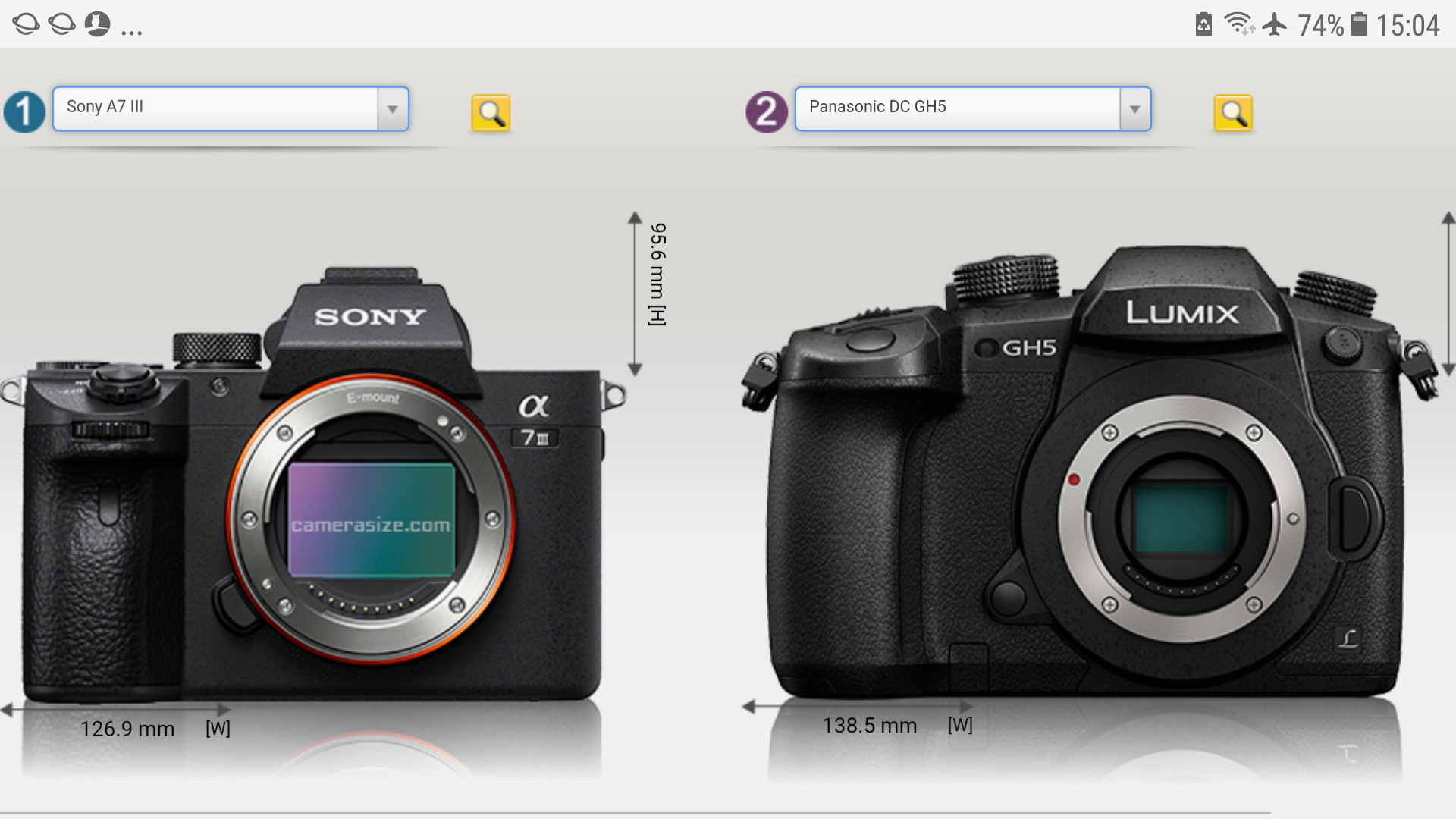
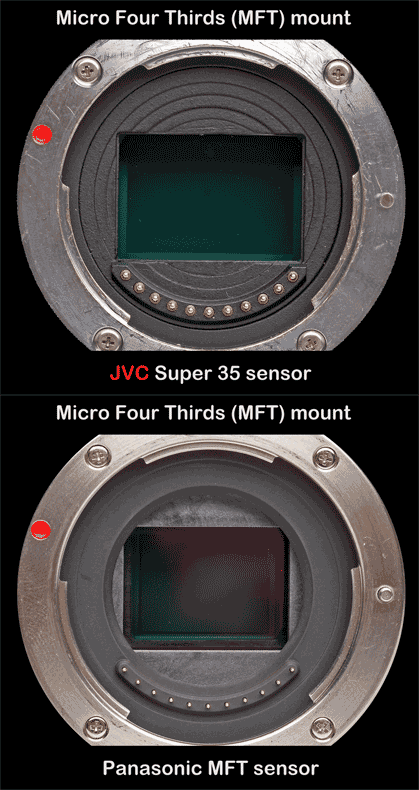
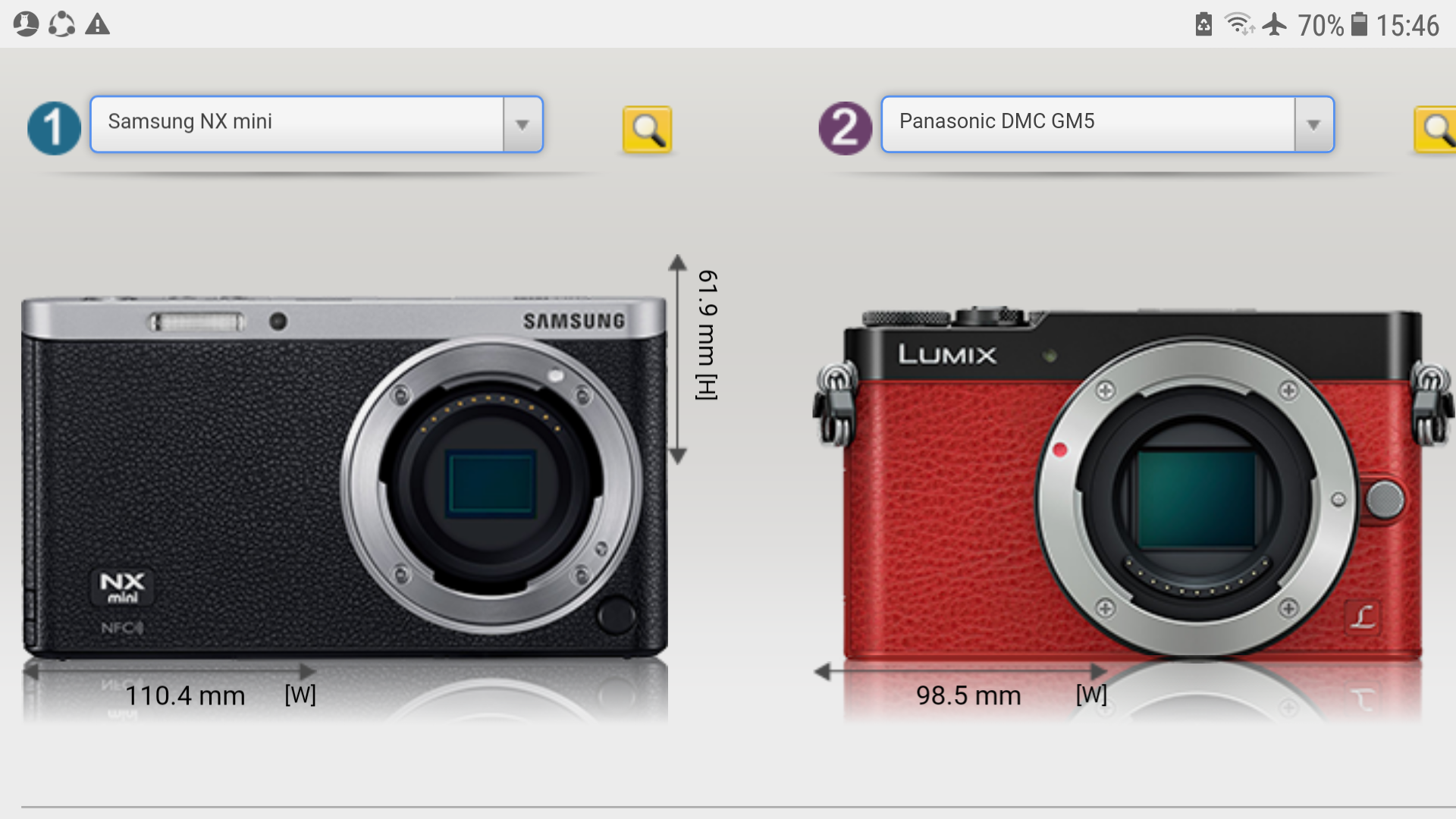
The mount size difference between full frame and M43 is actually pretty small (it seems to be a phenomenon endemic to all ILCs, since even the tiny 1inch sensor sensor, the Samsung NX1 has a much larger mount to the size of the sensor). I also noticed that M43 contact points for lenses are further away from the rim of the mount, closer towards the sensor (and apparently 11, instead of the 10 appears on the Sony FF sensors). Panasonic could push the contact point at the very corner, a few more millimetres closer to the rim of the mount, for accommodating a larger sensor (and maybe introduce a new lens lineup). I am guessing, therefore, that not only can an APS-C size sensor fit on M43 size mount camera (like the JVC LS300), but something much closer to a Full Frame sensor, could, as well. Though, how the lenses handle such a large sensor, would need to be tested. I therefore think Panasonic should explore the possibility of putting a sensor larger than APS-C in a camera that does not have IBIS (like the GM Series and the GH5s), with higher usable ISO. It could have two versions, one with much higher pixel count (24-28MP), and the other with much larger pixels (12-18MP with pixels larger than the ones on the GH5s). It seems quite doable. If they could adapt the present M43 lenses, it would be amazing. What it definitely needs to have is PDAF (especially for high speed photography and continuous autofocus in video), 14-bit colour and a little more innovation (15-20 fps for sports photography, a new Log Profile since the old VLog is taking away dynamic range from the sensor's full capacity. They should price it at $2000, targeting both the A7iii and the A7s series. http://j.mp/2MXuZ03

-
I have had issues with a few Panasonic products (the GX85, 25mm f1.7 lens, etc), and with products form other manufacturers. It happens all the time. Quality control doesn't mean all products are perfect. Ken Booth can just send the product back for repair or replacement. Was the Parrot Anafi or the Autel Evo that has a camera that leaned towards one side. And there are hundreds, if not thousands of products with that curious glitch. It's not something that can be ignored. But the number of people affected by the issue will determine whether it's a one off, or a glitch epidemic. Except that his numbers are more conservative than DXO Mark labs, that rates the same sensor for about 12.5 stops.
-
ONLY in HDR mode. Otherwise it has the same dynamic range that the Phantom 4 Pro probably has. But less noisy shadow and better highlight rolloff. So better image. According to Ming Thein it had between 11.5-12 stops: "...At base ISO, we have a solid 11.5-12 stops of usable DR; a bit more if you are careful with exposure and post processing. This is a noticeable improvement over the original Mavic, and given the way highlight rolloff has been tuned, quite close to what M4/3 delivers in practice. ..." https://blog.mingthein.com/2018/08/24/2018-dji-mavic-2-pro-review/#more-17580
-
So the Mavic 2 Zoom has NO crop in 4k mode? About the actual crop (on the Mavic 2 Zoom in 4k mode), this is the literature on the Sony IMX377, which may be (not absolutely sure) the sensor on the Mavic Pro (and Mavic 2 Zoom). In 4k mode, while the reduction in width may be unnoticeable, the reduction in height is pretty substantial, from 12MP to 8+MP or so that it does for 4k. The sensor area being used, effectively reduces from 1/2.3 inches to 1/2.5 inches, which us enormous. The ratio of the sensors (4/3, 3/2 etc) also determines the Crop (apart from the total pixels required to perform a certain job). Source: https://www.sony-semicon.co.jp/products_en/IS/sensor2/products/imx377.html Also, that image above, is from DJI's official release/ record? I could be wrong, but I believe you may have exaggerated the applicable Crop Factor in the image. The difference is between 77° and 55°, like I posted earlier, from DJI's literature, which is more like 30% (actually less). That is, unfortunately not correctlt represented by the image you shared. In 55° crop mode it cropa into approx. 14.28 megapixels from the original 20MP. Also the pixel sizes are Different in the Inch and 1/2.3" sensor. The pixels are 2.4 micron on the 1 inch sensor and 1.55 micron on the 1/2.3 inch sensor. You would have to take this into consideration, while making the image too. "... What is the difference between Full FOV mode and HQ mode under Mavic 2 Pro’s 4K resolution? Full FOV down samples from the 5.5K sensor to 4K resolution while HQ crops in the center for finer image quality but less FOV. Full FOV view is 75° and HQ view is 55°. You can select between them according to your actual shooting demands.." Source: https://m.dji.com/product/mavic-2 Except, that I was unable to find a difference between an 8-bit and 10-bit 4k mode, w.r.t. to Crop Factor, in the sensor material.
-
IMHO your argument make so sense.
-
I guess for the longest companies promised 10-bit video in a tiny form factor (from LG V30, to the Sony RX0, to a plethora of other companies). They all had issues they couldn't resolve and all oversold an idea. It was clearly possible, and Sony had sensors from the IMX477 size onwards (1/2.3") that could do 10-bit video. Companies didn't implement it, I am guessing, mostly due to terrible heat management (smartphone would probably explode and the Sony small cameras would probably melt). Anything apart from the GH5 and GH5s, even for ILCs, has been unable to handle it internally, despite their enormous size (in comparison to the M2P). Now that DJi had implemented it, I am wondering whether heat is at all an issue with it, and how it handles that and other issues so well. Also, somehow the whole form factor fascinates me. Would love to see something like this on a handheld gimbal, with interchangeable lenses (with the battery in the grip). Plus I also expect to see a bit of a rat race with cameras in small form factors implementing it (Hint: a 2019 flagship with a new kind of heatsink, which is being tested right now).
-
Source?
-
The link you posted has many of the drone footage one could look for. Thanks for sharing.
-
The scanner scan, sometimes is of no real consequence of the algorithms are not proportionally correct. Since you have bought the Mavic 2 Pro, and the Phantom 4 Pro, you would be the right guy to actually compare the 2 side by side and check which is better and sharper. Don't bother about the Crop that much. See if the transitions are good and if there is banding, and which seems better to the eyes and for grading and post work. Also you could compare the photo quality between the two, and check which seems to have more detail, more accurate colours and less digital sharpening. I could be wrong, but I am betting my money on the Mavic 2 Pro.
-
ProRes RAW is proprietary monopoly. And shamelessly so. If anything, it should probably be boycotted.
-
These are pics from the M2P. Flickr seems to ruined the quality of the pics. The Hasselblad site (https://www.hasselblad.com/collaborations/dji-mavic-2-pro/) seems to represent the quality way more precisely, without too much downsizing in terms of quality due to file size. Read the blog post too. He makes some interesting points, especially with regard to the Hasselblad collaboration. https://blog.mingthein.com/2018/08/24/2018-dji-mavic-2-pro-review/#more-17580
-
I am not sure your formula makes any sense. There is no official reason for this. It's quite likely that there is a reason for this beyond having a market for the next Phantom. If DJI wanted to solely keep a market for the Phantom, the need for a Hasselblad collaboration would be low. Whatever few videos I saw, I found the image pretty amazing too. There is no artificial sharpening. That is something I noticed on the high res pics on the Hasselblad site too.
-
It was a 1.3x crop I believe (I will check again). The MPP has a wider field of view than the P4P to begin with, so it may not be that wide. I hope someone compared that too. Or I will do a lil maths. Addition: the Crop is from a 77° Field of View to a 55° Field of View, meaning a 28.579 times crop. Now Before the Crop it was 28mm equivalent, so, after the Crop it be a 35.98 or 35-36mm equivalent. I checked on B&H and these are the details of the Phantom 4 Pro: "FOV (Field of View): 84° Focal Length: 8.8 mm / 24 mm (35 mm format equivalent)" So I guess the difference between the Mavic 2 Pro and Phantom 4 Pro may be a difference of 24mm to 35mm. That seems like a lot, as between the 2 Drones with 1inch sensors. Either DJI did it to protect the Phantom line or it did it because downsampling may have had issues in the HQ mode, or more likely, because the sensors may Not be the same, and the one in the Mavic may have 10-bit video, in a 1.3 times crop mode.
-
I thought about it. I guess the Majority of Panasonic users believe the LX100 ii is DoA. I was attempting to have a Poll on it, but the Poll thing has some glitch, which happened for the 2nd time. But the LX100 ii being a damp squib seems yo be the Majority opinion around, I guess.
-
Actually if Nikon claims the cameras have 12 stops in video, I would guess it's a little less than 12 stops.
-
Panasonic needs to Seriously sort out its video, regardless of profile. Add atleast another 1 stop of dynamic range, across the board and little better log profiles.
-
All cards thay handle 100mbps on the Phantom 4 Pro in 15th opinion should be able to handle the 100mbps H.265 codec too. This is one of the early reviews (people are claiming theirs have shipped, so I am guessing Mavic 2s may also be available at various retailers). The video is too short to warrant a clear winner (between the Phantom 4 Pro and the Mavic 2 Pro) and the lighting situations and other things aren't much to chose from. I would put my money on the Mavic 2 Pro though.
-
I am guessing you're right, because most of their other photos on the site (Hasselblad's) too seem to be worked on, RAW photos, even though they mentioned somewhere that their collaboration with DJI was about colour accuracy in OOC photos, ready without (too much) post work. The Sony 1inch sensors seem have a lot of scope for performing HDR in both photo and video. That is really encouraging.