All Activity
- Past hour
-
 kye reacted to a post in a topic:
Ibis or no ibis
kye reacted to a post in a topic:
Ibis or no ibis
-
Equipment with stabilisation like cameras with IBIS or lenses with OIS can have very different reactions to motion. For example the normal IBIS mode on GH5 vs the IBIS 'tripod mode' where it tries to eliminate all motion. I've been aware of this for a long time as one of the OIS lenses on my Canon 700D refused to let me pan the camera, and would hold the composition steady and when it ran out of travel it would jerk suddenly. It felt like the frame was 'stuck' and I had to 'pull hard' on it to get it to unstick and then it would jerk into a new position (that it would then wrestle with me to try and hold that new position). The jitters you're seeing from IBIS mechanisms may very well be some kind of undesired response to the motion of the camera perhaps? I have IBIS and non-IBIS cameras and I previously frankensteined a rig with four of them and then walked around the backyard with it. I can probably dig up the details / footage if that would be of interest, although the cameras are quite different (IIRC the non-IBIS camera was the OG BMPCC). I've sometimes wondered what an IBIS mechanism does when it's switched off. Does the sensor get held in place by the motors, or does it get disconnected and flap around? If I turn my GX85 upside down to get the battery / card out of the bottom I can feel something moving around inside it, and I just always assumed it was the sensor. I just grabbed it and did a quick test: - camera off = rattling inside when I turn it upside down - camera on / IBIS on = no rattling - camera on / IBIS off = no rattling I guess it's held in place somehow? In terms of seeing subtle jitters in the footage, does a touch of stabilisation in post fix it? If so, that might be the quickest / cheapest option. If you're doing hand-held work then you might really miss the IBIS. When I was using the OG BM cams for street shooting (BMPCC / BMMCC) the OIS lens did a great job of pan and tilt but OIS doesn't stabilise roll at all, so the image had very unnatural motion and I had to stabilise the roll in post.
-
I'm not sure about how to answer parts of your question, but I would suggest that if you want IBIS, but to be able to fully lock down the sensor when IBIS is off, some of the Nikon cameras do that.
- Today
-
Updated post
-
Hi, I am thinking if I need Ibis or not in my camera's. I think it introduces some kind of jitter when panning the camera or when on a gimbal doing slider movements.(even when ibis is turned off, the sensor might correct/wiggle). Anyhow it is driving me crazy. I see it on a lot of online videos as well, and they all say it is perfectly stable while it def is not. Or might be stable but there is some kind of jerking going around. I don't have an non ibis camera around that I can mount to a gimbal to compare directly (c500ii is too big). Can someone confirm this is the case? And this is the reason why there is no ibis on most cinema cameras, as the sensor will always be floaty? Thanks!
-
Round 3. Changes include: More softening I'm currently aiming for a neg + print look, so that will be far softer than just a neg scan only. This is obviously adjustable to taste depending on what look I want. Grain is more saturated and with more blue and less red Grain engine completely rebuilt from scratch based on a grain-blur-grain-blur architecture More halation and bloom I think my previous versions were based on a 35mm preset where I adjusted the grain to 16mm but the halation and bloom were still at 35mm amounts - oops! I've applied it to some old images and some new ones. I have built a little set of S16 reference images from YT and also from PNGs people have sent me of S16 film scans, and in comparing these new grades I feel like these are closer but are in that strange space where they are too sharp and also too soft, where there's too much grain but not enough, etc. I suspect that either means these things are still missing the mark, or that there is so much variation in my references that I'm somewhere in the middle and therefore not close to the examples at the extremes. Feedback welcome...

- Yesterday
-
Andrew - EOSHD reacted to a post in a topic:
The return of the Digital Bolex
-
Andrew - EOSHD reacted to a post in a topic:
The return of the Digital Bolex
-
... Half of a grand looks like something to me: https://wondamobile.com/search?q=vivo+x300+ultra&_pos=1&_psq=viv&_ss=e&_v=1.0&type=product
-
Good article. Interesting discussion of both the technical aspects as well as how they support the story. Thank you. At the bottom, the article shows the camera set ups in this image. https://www.afcinema.com/IMG/jpg/les_outils_du_tournage.jpg
-

All music at soundimage.org is now free for commercial use
Eric Matyas replied to Eric Matyas's topic in Cameras
This week's looping music track might sound really nice in an open-world game, a puzzle game (or something I haven't thought of.) "OVER ANCIENT WATERS" (Looping) You can listen to it here: https://soundimage.org/wp-content/uploads/2026/05/Over-Ancient-Waters_Looping.ogg I originally intended it for drone videos, but I think it could work really well in games, too. You can freely download it here: https://soundimage.org/aerial-drone/ NEED SOME ORIGINAL MUSIC FOR YOUR GAME OR PROJECT? Feel free to contact me...I'd love to help out! OTHER (HOPEFULLY) HELPFUL LINKS: My Game Music Mega Pack (1400 tracks and growing) https://soundimage.org/ogg-game-music-mega-pack/ My Genre Music Packs https://soundimage.org/ogg-music-packs-2/ Support https://soundimage.org/donate/ Enjoy! 🙂 -
https://www.afcinema.com/Emmanuel-Marre-director-and-Olivier-Boonjing-SBC-director-of-photography-discuss-the-technical-and-aesthetic-choices-made-for-Notre-salut.html?lang=en
-
According to this reviewer VIVO x300 Ultra is the GOAT of smartphones for video: https://www.youtube.com/watch?v=Zbh6Kplm8pc RAW video with DCG on all 3 lenses with the MotionCam Pro 5 Beta and 35mm on the main camera. Now question is should I buy the Chinese version from tradingshenzhen.com or wait 10-12 month for global version to appear on second hand market at decent prices.
-
kye reacted to a post in a topic:
The return of the Digital Bolex
-
kye reacted to a post in a topic:
The GX85 "Super-16" project
-

Tilta's new auto focus adapter uses follow focus gears to manual lenses
Aussie Ash replied to Aussie Ash's topic in Cameras
Tilta compared to Viltrox -his summary of the differences is at 9.5 - Last week
-
eatstoomuchjam reacted to a post in a topic:
The GX85 "Super-16" project
-
 ForloveDum joined the community
 -
Thank you. I'm glad people are liking it. It was a lot of work and took two years to make. Most of the time by myself, out in the city with a tripod and camera. I met a lot of people doing it since the camera looks unusual. (It's common in Vancouver to see someone filming as it's a big film production town and has six film schools but people out shooting usually have more modern squarish looking cameras.) The themes and aesthetic came out of the photography I had been doing for several years already. I had been framing buildings to make geometric shapes. This was basically adding motion to that series. The music was from a friend who had I got to know when he acted in a short I did a few years earlier. https://testcardmusic.bandcamp.com It hasn't had a festival screen it yet but it did get an award in Sevilla, Spain. https://www.instagram.com/seviff.spain/p/DUTcVcGDLq7/?img_index=16
-
Pretty cool. I found this article about the cameras used in each of the films at Cannes. It's pretty interesting. This film is shown. (Alphabetical under M. About two-thirds of the way down. ) https://www.indiewire.com/gallery/cannes-2026-cameras-lenses-arri-alexa-35/screenshot-231/ There's a picture of the director holding a camera. It's so rigged up that it's hard to see but looks like a Digital Bolex with the PL mount. It says they used two of them, a PL mount one and a C mount one. The second one not rigged up and hand held. Looks like they used a variety of lenses too. In the picture it looks like a vintage Angenieux zoom. There's mention of a TV lens and CCTV primes. Here's a quote. That's been my experience as well. I shot 16mm some decades ago on a 1970s Bolex and a 1930s Victor (that had been fished out of a dumpster behind an NFB office.) so I'm familiar with that and of course many different video cameras over the years. The Digital Bolex is closer to a 16mm camera than to a video camera in both how you operate and how the image looks.
-
Andrew - EOSHD reacted to a post in a topic:
Fast lenses and film emulation can resurrect old cameras (ft. GH2 night footage!)
-
Hi, I still rock an dji ronin s, so I am thinking about upgrading to a new one. For the panasonic S5II, or nikon zr, or Sony a7v a low weight hybrid. The dji ronin s isnt smooth enough for really slider like movements. I am not sure there huge improvements in gimbals besides ai tracking and speeding up set up time. Which is the most smooth stable gimbal in 2026? Thanks!
-
 conglotherjo1988 joined the community
 -
maxJ4380 reacted to a post in a topic:
The GX85 "Super-16" project
-
Wonderful! Great eye and great images. Definitely in the direction of Koyaanisqatsi etc, not only with the images themselves but the shifts in theme too. Everyone should do themselves a favour and watch it!
-
kye reacted to a post in a topic:
The GX85 "Super-16" project
-
kye reacted to a post in a topic:
The GX85 "Super-16" project
-
Great stuff! I also find that when using 'lesser' equipment my brain can more easily switch over from "will this make technically great images?" to concentrating on the compositions and creative aspects. I suspect that our subconscious knows that footage from the latest cameras gets very detailed technical scrutiny but once the tech is no longer the current model the technological fetishism moves on and it's only the creative people left. I also find a strange satisfaction from getting great results from older equipment, and I have no idea why, so I just go with it. Other potential advantages of older equipment: it's potentially cheap to replace, so you can be less precious with it, even risking things like taking it in the rain etc any scuffs or scratches or wear marks can improve it's appearance rather than detract from it (people say "look at that old camera and how worn and beat up it is, awesome!" and also "oh no, I scratched my nice new camera") older bodies are often smaller older equipment is more likely to be metal rather than plastic - I dropped my GF3 once and it just got a little dent with no other damage! the lower DR forces you to expose better in-camera rather than choosing the exposure (and therefore the subject) of a shot, forcing you to be more decisive when shooting etc etc. Plus... if you own them already.. they're free!
-
 That GH2 footage looks great. Makes me want to take my GH1 out again. Any one of us would have been overjoyed to captured that footage ~15 years ago when that camera came out. And even now, it looks great. I don’t think I would have ever guessed that it was from an 8-bit mirrorless camera. I’ve been really enjoying shooting with outdated cameras and applying modern post to them, especially degrading them further to hide the imperfections. I don’t know that I’m achieving something that I couldn’t with more modern and convenient cameras, but I feel like it takes a lot of performance anxiety away and that may have an impact on the way I’m shooting. I think it’s nice to go in thinking, “this will probably look terrible” and then it just becomes about enjoyment, and less about the result. And then when you do manage to get a nice shot, it’s all the more rewarding. I’ve written a short that I’d like to produce later in the Summer or Fall. Since it takes place outside and mostly downtown, I’m kind of liking the idea of shooting it guerilla-style with a hacked EOS-M.
 -
The trailer is gorgeous. Great job!
-
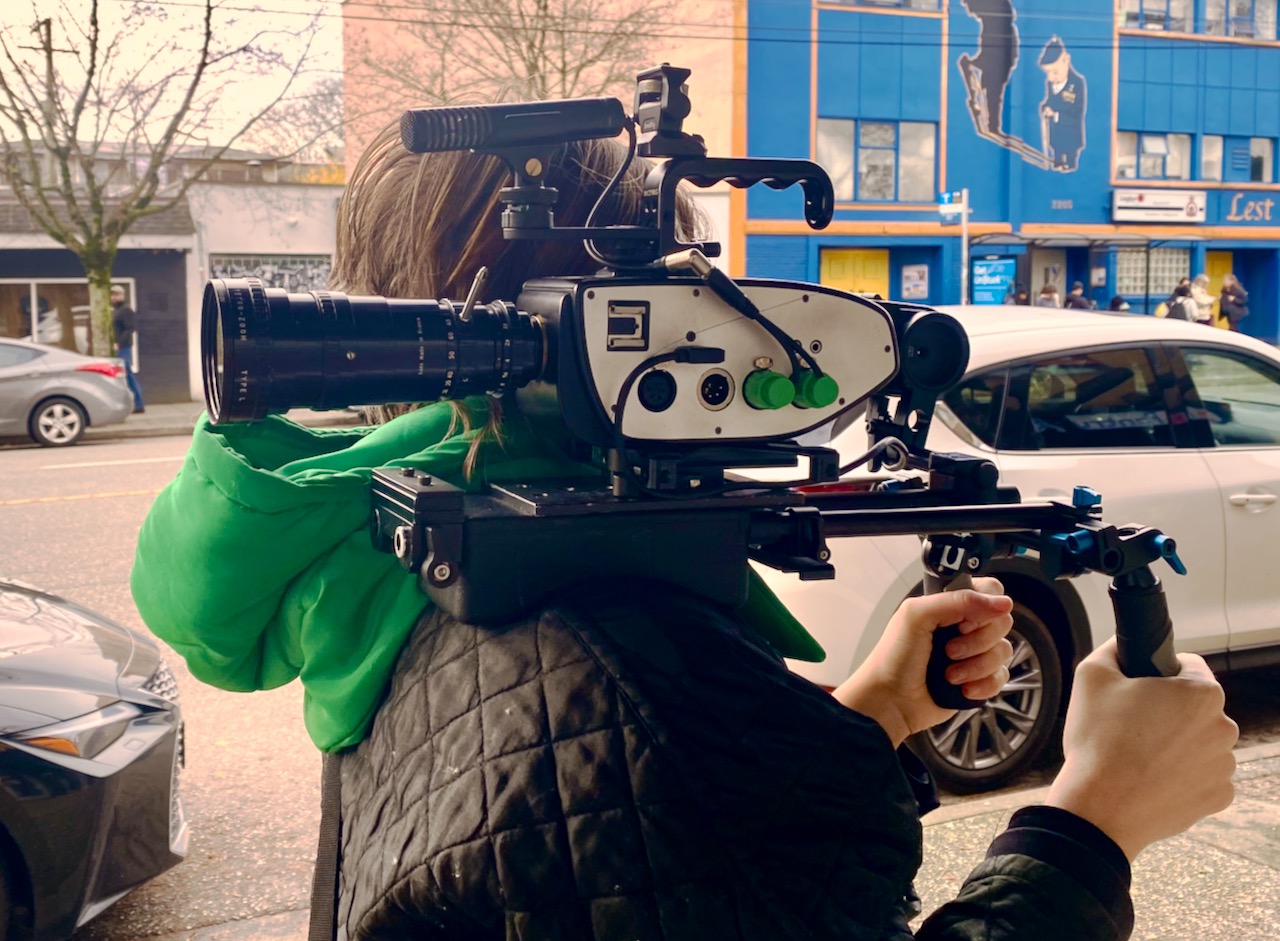
I use it both for my own films as well as I get hired to do music videos and events. I just finished a feature length experimental film shot entirely with it called Shapes, Colours, Patterns. (There's a trailer for it on my Tumblr. https://clarknikolai.tumblr.com ) I'm very happy with it, and of course the image from that camera is gorgeous. Something I've discovered with the Digital Bolex's footage, is that it looks the best projected rather than shown on an LCD screen. I'm now working on a new project. It's a narrative, collectively written, performed and crewed by myself and three other artists. It's set in the present day in east Vancouver where three artists are working on their art projects. The characters are based on the people involved and their real lives (but fictionalized so we have more freedom.) We're using French New Wave and Availablism methods. Quick half-day shoots. It's self funded, using what we have around us, the equipment we already own, locations we already have, etc. (I think so far all we've spent on it was some coffees.) I plan to enter it in to film festivals when it's done. Here's a picture with the camera mounted backwards on the shoulder rig. This is so the camera operator can walk forward while the talent is behind them and they don't need a spotter. It's tricky to learn how to move but it's going okay. It works fine with a wide lens but not easy when zoomed in (as you'd expect.) We have to flip the image in the monitor or it's disorienting.
-
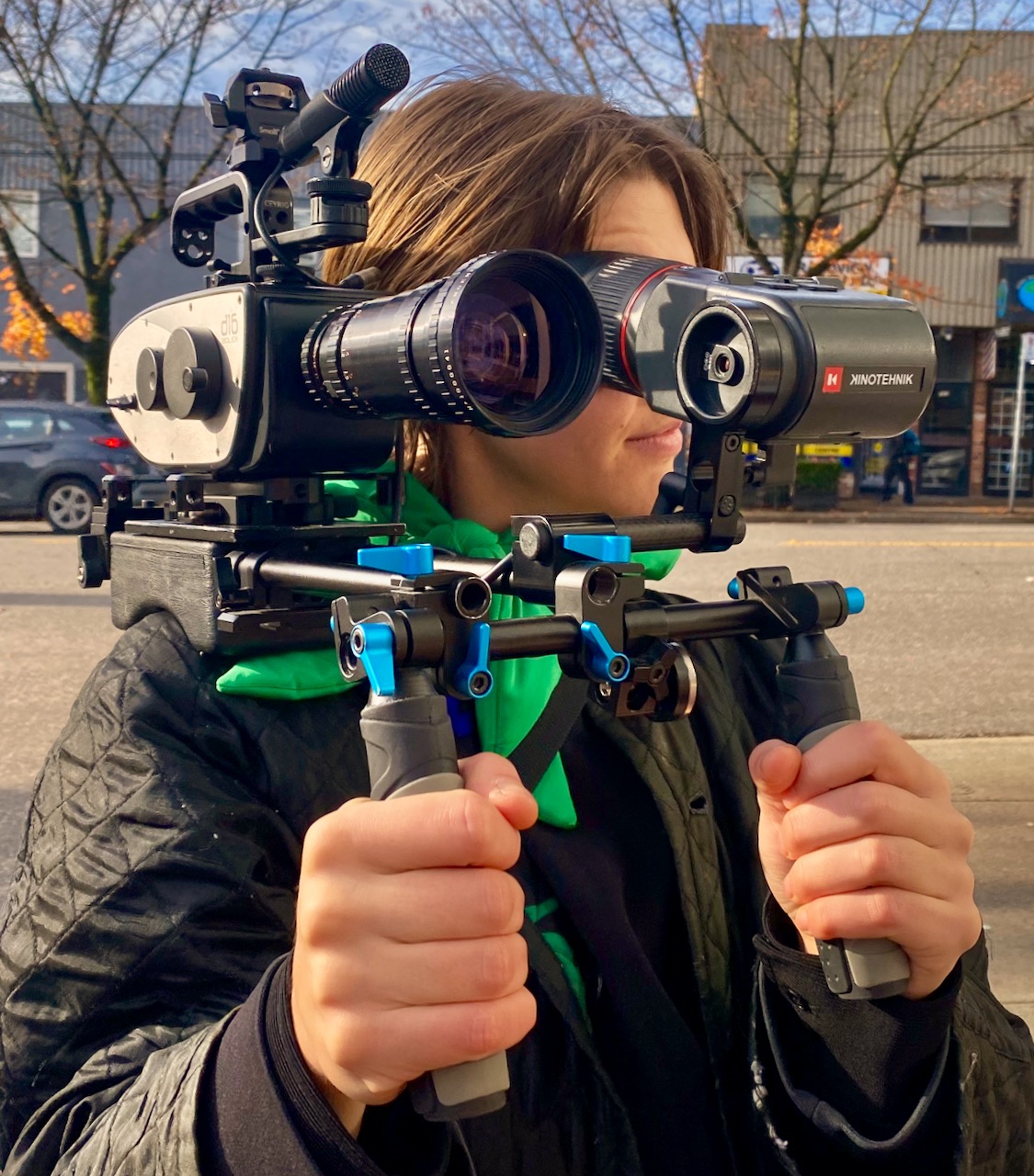
Here's a pic from a shoot I did last December. I don't know the brand of the shoulder rig (as I got it used on Craigslist), the EVF is the (sadly discontinued) Kinotehnik LCDVFE. The camera attaches to the rig with a Niceyrig quick-release plate (that has feet). The lens is a vintage Angenieux 17-68mm zoom with a screw on wide angle adapter, on top is a Niceyrig top handle holding an Audio-Technica stereo mic and a monitor mount. A bit hard to see is an attachment that goes below the rails between the shoulder pad and the grips for two wireless mic receivers.
-
"A man of his time", a French film which was part of the official selection at Cannes and was very well received, was shot entirely on a digital Bolex. https://www.screendaily.com/reviews/a-man-of-his-time-review-a-superb-swann-arlaud-powers-emmanuel-marres-ambitious-overlong-vichy-france-drama/5217030.article
-
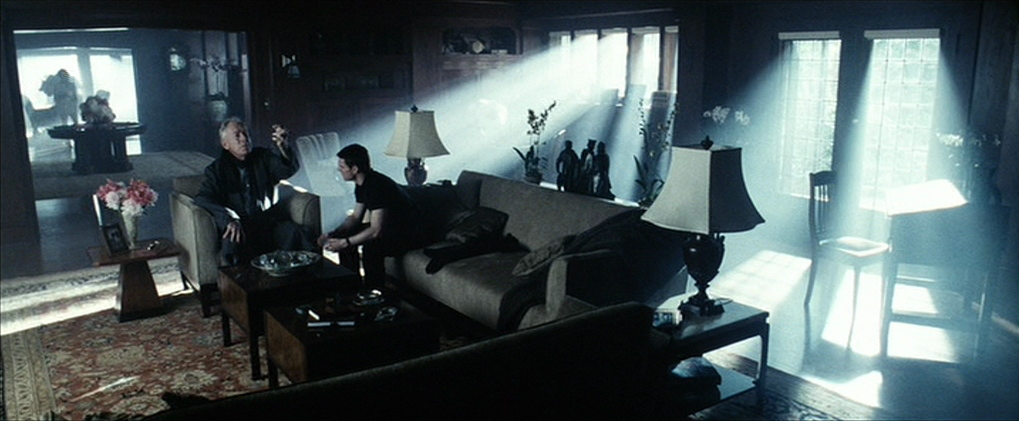
 Old cameras have a number of challenges, including: - weak codecs, often 8-bit low bitrate files - terrible low-light - dated colour science and no log profile (rec709 profiles only) - poor DR - lack of IBIS or EIS - etc At the time these were pretty significant challenges. Now they aren't the challenges they used to be, because fast lenses and film emulation assist with all these limitations. Let's take these one at a time. Weak codecs Weak codecs, including 8-bit low-bitrate files can be soft, and can be overwhelmed by motion. By shooting with faster lenses you render more of the frame out-of-focus and therefore the limited bit-rate only has to focus on a smaller percentage of the frame. Thanks to cheap Chinese optics companies, we are now awash in F1.4, F1.2, and even F0.95 primes. The soft image is now no longer a liability, because compared to our modern 4K sensibilities, even 35mm film is noticeably soft by comparison. This means that by adding film emulation you'll be softening those edges and smoothing over any subtle compression artefacts. Film often has a more compressed colour palette, pushing hues closer together in many instances, lessening the visibility of artefacts. It doesn't work magic, but every bit helps. Terrible low light Cheap F1.4, F1.2 or even F0.95 primes sure make a big difference after the sun goes down. That "fast" F2.8 vintage lens you were shooting on back then is 3 stops slower than these things now. That can really bring a lot of situations back from being unusable to being at, or close to, native ISO. Dated colour science and no log profile Rec709 colour profiles are basically a creative filter the camera has applied, and they often weren't that good. Film emulation takes that image and applies an incredibly large transformation over it, which goes a long way to hiding any imperfections the colour profile might have had. It's like if you put on a pair of rose-tinted-glasses, you can still see that things have different colours, but any subtle differences aren't visible because the image has had a strong look put over the top. Also, film emulation plugins often come with controls for exposure and WB etc, which can help to grade the 709 footage, which was a major pain back before we had colour management pipelines. Poor Dynamic Range You know what else has pretty poor DR? Print film! Kodak 2383 has about 5-6 stops in the linear region, and then everything else in the image is squished into the highlight or shadow rolloffs. Yes, you can see into those rolloffs a bit, but if your camera has 8 stops then you've got at least a stop to put into each rolloff. People think film has huge DR, and it did at the time compared to consumer digital cameras, but it was the negative film that had the huge DR, not the print film. It's very common now for people to shoot on film, scan it, and then do everything else digitally, so they keep the full DR of the negative, rather than taking half of it and pushing it into the rolloffs. This is a still from Minority Report from 2002: It's not exactly a dynamic range demo - the streams of light INSIDE THE ROOM are blown out and every item of clothing the main character is wearing is crushed blacks. Lack of IBIS or EIS So there's a little shake in the files... well, film had this thing called Gate Weave, which was where each frame didn't perfectly align in the camera and so when played back there was movement of the whole image. Once we started doing digital intermediates people started stabilising the images digitally and that went away. When I went to the cinema and saw Goodfellas projected on celluloid they played a bunch of old ads and movie previews also on celluloid, and some were jumping around all over the place and some were rock solid (which means the projector the theatre was using wasn't the source of it) and much to my surprise, Goodfellas itself had quite a bit of it. By just using modern tools you can now stabilise things pretty easily, but this will create artefacts if you do it too strongly (especially if the camera had bad RS), but applying film emulation gives you much more leeway. This is because you can stabilise the image, then apply some Gate Weave, and once the viewer notices your images look like film they'll potentially just accept the shake in the image as being part of the film look. By adding Gate Weave and getting some grace from the viewer you can potentially increase the strength of the stabilisation you're applying too, with there being more wiggle room, and also because the softening of the image will mean that any distortions in the image will be slightly less visible. I was inspired to write this partly from my GX85 Super-16 camera project, but also partly by this video of the GH2 shooting at night. You can still see the ISO noise and macro-blocking creep in as blue hour ends, but he was also using the 9mm F1.7 and 35-100mm F2.8, the F1.7 is reasonably bright, but the F2.8 is pretty slow compared to things like the TTartisan 50mm F1.2 or the 7Artisans 35mm F1.2 primes that are $109 and $97 on B&H. These won't offer OIS, so your options for these on non-IBIS cameras are to spend more (Canon and Sony both offer 35mm and 50mm F1.8 primes with OIS) or to use a tripod or larger rig of some kind. Far from perfect, but much more useable than you'd think. These cameras have actually gotten better over time as the rest of the ecosystem is better able to support them. The only reason we don't think so is that our expectations have inflated faster than their potential.
-
I just learnt very early in my career, unless I did not do that, it left me open to all kinds of issues. I make it very plain before each and every client books that other than a handful of things that are more or less a given, I do not and will not shoot to shot lists as they both stifle creativity and are open to interpretation and potential recrimination. Nor will I edit or produce a result to any other specification than my portfolio would suggest. Despite it being in the contract, I will still get someone every now and again who will send me a detailed shot list of 50 other individuals work on 50 other days, that may or may not even be the same season never mind time of day, captured at 50 different venues...and then have to politely remind them I cannot do that...and they will STILL complain after the fact I have not done what they paid me to do. Well actually, I have done EXACTLY what you paid me to do, but fortunately these freaks are maybe 1/100 clients and all you can do ultimately is politely and professionally move them on. Having said that, if I feel I can accommodate or work something in, I will at least try, but we are never going to get close to that 50 'Must Have' list...and you still won't win, but at least you can occupy the moral high ground and state you bent over backwards even though you did not need to. It's just part of running a business and anyone who has been doing so for 25 years, will have experienced issues from time to time and as long as they are not the norm, then you are doing just fine. I can count on just 2 hands from 850+ jobs/clients over 25 years those who have had a hissy fit and hand on heart, can say with 100% conviction, it was them not me! But I do work in a very specific niche where I can operate in this manner and I am the type of person who is comfortable saying no with a smile.
-
100% Of course, completely irrational biases still exist. One of the major ones is that people seem to only want lenses so sharp they need to wear gloves to even pick them up, or lenses so distorted that it's like most peoples memories of Woodstock. There is a secret third option. These lenses have a subtle hint of the vintage vibe, but aren't completely out of control divas that need to be babied all the time. They're also cheap, freely available, have modern features like AF and OIS, and are fast and easy to use. To discover this secret, here's the thread where I talk about them, and reveal what they are and how to get them.
-
No worries! In terms of the lens, not a clue, but it really shouldn't matter.